Cherokee Building Materials Tulsa Oklahoma: 2026 Supply Trends
Explore 2026 supply chain trends, material availability, and procurement strategies impacting Cherokee Building Materials Tulsa Oklahoma contractors.

The Shift in Green Country's Construction Supply Chain
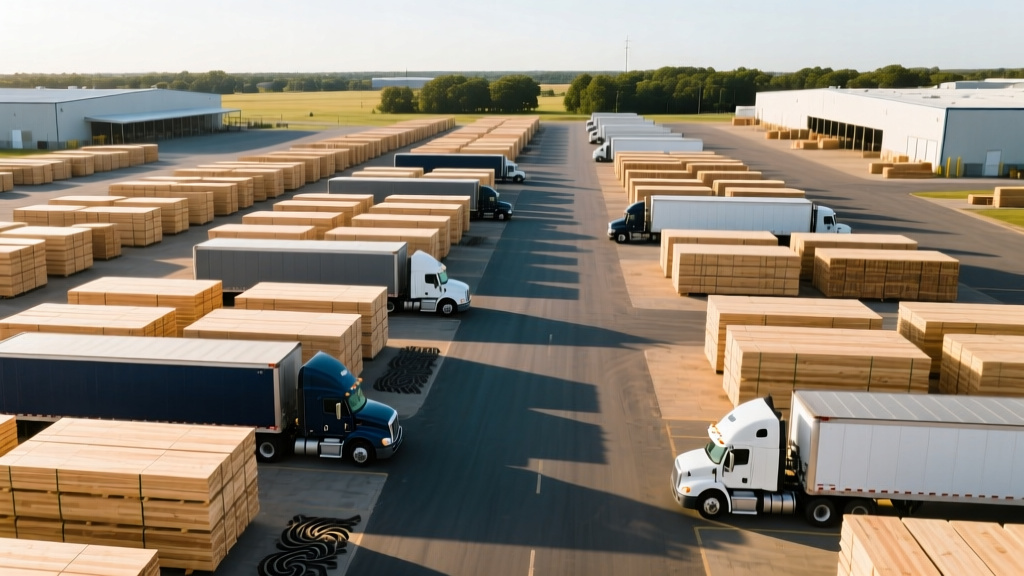
The eastern Oklahoma construction market has undergone a significant transformation over the last 24 months. Driven by a surge in both residential developments in the Tulsa metro area and commercial retrofits in surrounding counties, contractors are rethinking how they source critical components. When evaluating regional supply chain resilience, the inventory and distribution strategies employed by Cherokee Building Materials Tulsa Oklahoma serve as a prime indicator of broader Green Country market shifts. Rather than relying solely on national big-box supply chains, regional distributors are leveraging localized warehousing and direct-mill partnerships to mitigate the freight bottlenecks that plagued the industry in previous years.
2026 Tulsa Market Data Highlight
- Housing Starts: Tulsa MSA residential permits increased by 8.4% year-over-year, driving a 12% spike in engineered lumber demand.
- Freight Costs: Last-mile delivery costs for flatbed building materials in the 741xx zip codes have stabilized at roughly $2.15 per loaded mile, down from the $3.40 peak seen in 2023.
- Lead Times: Custom millwork and specialty window lead times have compressed from 16 weeks to an average of 6-8 weeks through regional specialist networks.
Core Material Categories Driving Regional Demand
The transition to stricter energy codes and the persistent demand for durable, weather-resistant envelopes have fundamentally altered what sits on the shelves of regional lumber yards. According to the U.S. Department of Energy's Building Envelope guidelines, optimizing the thermal boundary is no longer optional for high-performance builds, forcing suppliers to stock deeper inventories of advanced weatherization products.
Advanced Framing and Engineered Lumber
Traditional dimensional lumber (SPF #2) is increasingly relegated to non-load-bearing partitions and blocking. For primary structural elements, Tulsa builders are heavily specifying Laminated Veneer Lumber (LVL) and I-joists. Boise Cascade and Weyerhaeuser LVL beams (specifically the 1.9E and 2.0E stress grades) are moving quickly. In 2026, expect to pay between $48 and $65 per linear foot for 11-7/8" LVL beams, depending on the specific span rating and treatment. Regional suppliers have adapted by maintaining deeper stock of 24-foot to 40-foot continuous lengths, reducing the need for on-site splicing and the associated labor costs.
High-Performance Building Envelopes
With Oklahoma's adoption of updated iterations of the International Energy Conservation Code (IECC), wall assemblies in Climate Zone 3 require higher continuous insulation (ci) values. The standard R-13 cavity insulation is no longer sufficient on its own; builders must incorporate R-7.5ci rigid foam or utilize advanced sheathing systems. Consequently, there is a massive uptick in the procurement of Huber ZIP System sheathing and Owens Corning FOAMULAR NGX extruded polystyrene. Suppliers that keep fluid-applied air barriers (like Prosoco R-Guard) and high-tape-adhesion membrane rolls in stock are winning the commercial bids over competitors who rely on special-ordering these critical envelope components.
Distribution Models: National Big-Box vs. Regional Specialists
Contractors operating in the Tulsa area face a distinct choice when establishing their procurement pipelines. The following matrix breaks down the operational differences between national retail chains and specialized regional distributors like the Cherokee Building Materials model.
| Procurement Feature | National Big-Box Retailer | Regional Specialist (Cherokee Model) |
|---|---|---|
| Engineered Lumber Stock | Limited to standard 20ft lengths; special orders take 10-14 days. | Deep inventory of 24ft-40ft LVLs and custom I-joist cutting on-site. |
| Delivery Equipment | Standard flatbeds; limited crane reach for multi-story staging. | Articulating boom trucks (e.g., Moffett forklifts) for precise roof/second-story drops. |
| Envelope & Code Compliance | Basic house wraps and standard rigid foam. | Full ZIP system inventory, fluid-applied barriers, and IECC-compliant ci panels. |
| Account Management | Rotating pro-desk staff; limited project-level tracking. | Dedicated estimators who track multi-phase draw schedules and material staging. |
Navigating Logistics and Lead Times in Eastern Oklahoma
The geography of the Tulsa metro, stretching from the dense urban core to the sprawling developments in Owasso, Bixby, and Broken Arrow, presents unique logistical challenges. Heavy materials like fiber-cement siding (e.g., James Hardie or LP SmartSide) and masonry veneers require precise delivery timing to avoid site congestion and material damage.
"The biggest hidden cost in 2026 isn't the material itself; it's the labor wasted on double-handling. Regional distributors that offer Moffett forklift delivery can drop a 4,000 lb pallet of LP SmartSide directly next to the cutting station, saving framing crews up to three hours of manual staging per build."
To optimize logistics, project managers are now utilizing just-in-time (JIT) delivery schedules coordinated directly through supplier portals. By breaking large material orders into phased drops—foundation framing first, followed by sheathing and weatherization, and finally interior trim—contractors minimize the risk of weather damage to stored materials and reduce site theft, a metric that the National Association of Home Builders (NAHB) continues to track as a major concern for urban infill projects.
Sustainability and Code Compliance Updates for 2026
Oklahoma's building departments are increasingly scrutinizing energy compliance and material sustainability. The International Code Council's IECC frameworks have set the baseline, but local municipalities are enforcing stricter blower-door test thresholds (often requiring 3.0 ACH50 or lower). This mandates the use of premium air-sealing materials.
Furthermore, commercial projects in the Tulsa area are seeing a rise in specifications for FSC-certified (Forest Stewardship Council) wood products and low-VOC structural adhesives. Regional suppliers have responded by dedicating specific warehouse zones to green-certified materials, allowing contractors to easily pull the necessary chain-of-custody documentation required for LEED or NGBS (National Green Building Standard) certifications.
Strategic Procurement Framework for Contractors
To leverage current market conditions, Tulsa-area builders should implement the following procurement strategy:
- Lock in Engineered Lumber Early: Mill allocations for LVL and I-joists are typically finalized 60 days out. Submit structural framing packages to your regional supplier during the permitting phase, not after the foundation is poured.
- Standardize Envelope Systems: Instead of mixing OSB, house wrap, and tape from different manufacturers, standardize on integrated systems (like the Huber ZIP ecosystem) to secure volume pricing and ensure warranty validity.
- Audit Delivery Access: Before scheduling boom-truck deliveries for engineered trusses or heavy masonry, verify lot grading and overhead wire clearances. Soft ground after spring rains in Green Country can result in expensive truck winching fees if access isn't prepped with crushed rock or track-out mats.
Frequently Asked Questions
How do regional suppliers handle sudden price spikes in commodities like OSB?
Specialized distributors typically utilize a mix of spot-market purchasing and long-term mill contracts. While big-box stores update pricing weekly based on national algorithms, regional yards often honor quoted prices for 30 to 45 days for active, permitted projects, providing contractors with crucial budget stability.
What is the most critical material shortage to watch for in the Tulsa market this year?
Electrical switchgear and specialized HVAC components remain the most volatile. While structural lumber and concrete have stabilized, contractors should order electrical panels and high-SEER heat pump units at least 12 weeks before they are needed on-site, as regional electrical wholesalers are still navigating manufacturing delays from overseas component suppliers.
Can local suppliers provide custom milling for historical renovations in downtown Tulsa?
Yes. Unlike national chains, regional building material specialists often maintain relationships with local architectural millwork shops. They can source rough-sawn, old-growth pine or custom-profile cedar trim to match the historic districts in Midtown and the Brady Arts District, ensuring compliance with local historical preservation guidelines.
Written by
Marcus ChenMarcus Chen is a licensed structural engineer (PE) and building materials analyst with over 12 years of experience across residential, commercial, and industrial construction. He holds a Master of Science in Civil Engineering from UC Berkeley and spent six years at Thornton Tomasetti before transitioning to independent consulting and technical writing. Marcus specializes in material selection for seismic-prone regions, concrete reinforcement strategies, and lifecycle cost analysis. His work has been cited by the American Concrete Institute (ACI) and the Structural Engineers Association of California (SEAOC). When he is not on a job site or at his desk, you will find him hiking the Sierra Nevada or restoring a 1920s craftsman bungalow in Oakland, CA.
More from Marcus Chen
View all
Construction Cost
How Much Did the Eiffel Tower Cost to Build?
How much did the Eiffel Tower cost to build in 1889? We adjust for inflation and compare its budget to modern skyscraper construction.
Aug 4, 2026

Fire Resistance
What Is a Fire Resistant Material? Testing & Certification Guide
Discover what is a fire resistant material through ASTM and UL testing. Learn how fire ratings, certifications, and assemblies work in construction.
Aug 4, 2026

Construction Cost
How Much Did the Burj Khalifa Cost to Build?
How much did the Burj Khalifa cost to build? We break down the $1.5B project and extract 5 money-saving strategies for your next build.
Jul 30, 2026