Fiberglass Insulation Rolls: R-Value Taxonomy & Selection Guide
Compare fiberglass insulation rolls by R-value, facing type, and density. Expert taxonomy guide for selecting the right glass-fiber batt for your build.
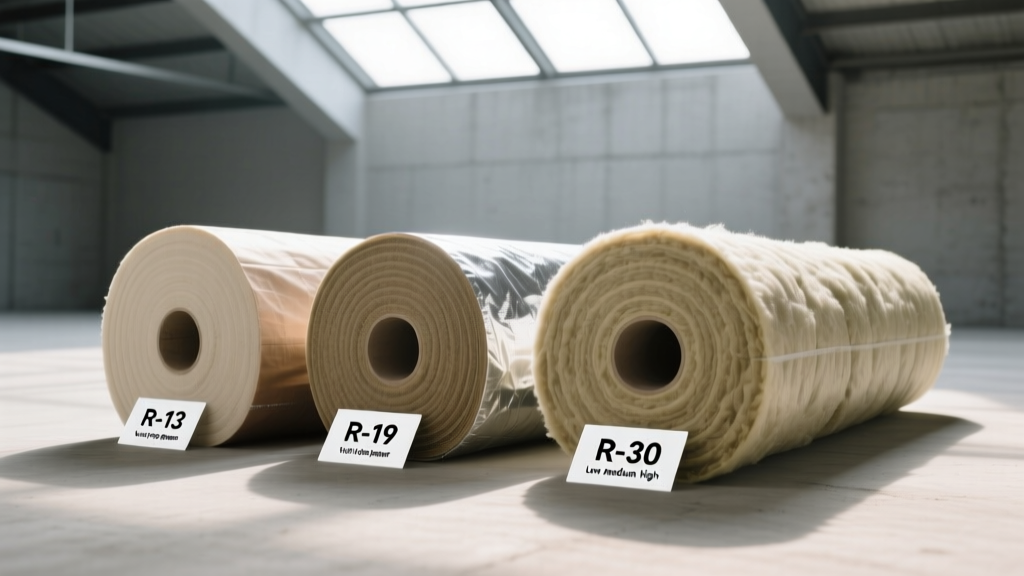
The Glass-Fiber Matrix: Understanding Roll Composition
Fiberglass insulation rolls, technically classified as glass wool, are manufactured by melting recycled glass cullet and silica sand at temperatures exceeding 2,500°F, then spinning the molten material into microscopic fibers. These fibers are bound together using either traditional phenol-formaldehyde resins or modern acrylic-based, formaldehyde-free binders (such as Owens Corning’s EcoTouch or Knauf’s EcoBatt lines). The resulting continuous blanket is compressed and rolled for transport, expanding upon unrolling to trap pockets of still air, which provides the material's thermal resistance.
Selecting the correct roll requires navigating a complex taxonomy of R-values, densities, facings, and dimensional tolerances. Misapplication—such as compressing a high-R-value roll into a shallow cavity or misplacing a vapor retarder—can degrade thermal performance by up to 40% and trigger interstitial condensation. This guide provides a structural taxonomy for specifying fiberglass rolls across residential and light-commercial building envelopes.
R-Value Taxonomy: Matching Thickness to Cavity Depth
The U.S. Department of Energy mandates that insulation R-values be calculated based on the material's fully expanded, uncompressed state. Fiberglass rolls typically offer an R-value of 2.9 to 3.4 per inch of thickness, depending on the density of the glass-fiber matrix.
| Nominal R-Value | Actual Thickness (Expanded) | Standard Application | Framing Cavity Size |
|---|---|---|---|
| R-11 | 3.5" | High-Density 2x4 Walls | 14.5" to 22.5" |
| R-13 | 3.5" | Standard 2x4 Exterior Walls | 14.5" to 22.5" |
| R-15 | 3.5" | Premium High-Density 2x4 Walls | 14.5" to 22.5" |
| R-19 | 6.25" | Standard 2x6 Exterior Walls / Floors | 14.5" to 22.5" |
| R-21 | 5.5" | High-Density 2x6 Exterior Walls | 14.5" to 22.5" |
| R-30 | 8.5" - 9.5" | Cathedral Ceilings / Attic Floors | Joist Cavities |
| R-38 | 12.0" | Attic Floors (Climate Zones 4-5) | Joist Cavities |
Facing Materials: Vapor Retarder Selection Matrix
Fiberglass rolls are manufactured either "unfaced" (friction-fit bare glass) or with an adhered facing that acts as a vapor retarder, air barrier, or radiant reflector. The ENERGY STAR Seal and Insulate Program emphasizes that facing selection must align with the local climate zone's vapor drive direction.
1. Kraft Paper Facing (Class II Vapor Retarder)
Kraft-faced rolls feature an asphalt-laminated brown paper backing. They possess a perm rating of approximately 0.4 to 1.0, classifying them as Class II vapor retarders.
- Best For: Exterior walls in mixed-humid and cold climates (IECC Zones 4 through 7).
- Installation Rule: The kraft facing must always point toward the conditioned interior space (the "warm-in-winter" side) to prevent moisture from migrating into the cold wall cavity and condensing on the exterior sheathing.
2. FSK Facing (Foil-Scrim-Kraft, Class I Vapor Barrier)
FSK-faced rolls utilize a layer of aluminum foil reinforced with fiberglass scrim and backed by kraft paper. They carry a perm rating of less than 0.1, making them a true vapor barrier.
- Best For: High-humidity interiors (bathrooms, indoor pools), unvented crawlspaces, and commercial HVAC plenums.
- Installation Rule: Requires meticulous tape-sealing at all seams and edges with FSK-compatible aluminum tape to maintain the continuous vapor barrier. If left untaped, the barrier is compromised.
3. Unfaced Rolls (No Vapor Retarder)
Unfaced rolls rely on precise dimensional cutting and the natural resilience of the glass fibers for friction-fit installation.
- Best For: Hot-humid climates (Zones 1-3) where interior vapor barriers trap exterior moisture inside the wall, or for adding secondary insulation layers over existing faced insulation.
- Installation Rule: Must be paired with a separate continuous air barrier (like exterior Zip-R sheathing or interior drywall sealed with airtight gaskets) to prevent convective heat loss.
Acoustic vs. Thermal Rolls: Density and Binder Variations
While all fiberglass rolls provide some level of sound dampening, manufacturers produce specialized acoustic rolls (e.g., Johns Manville SpiderGlass Acoustic or Owens Corning SoundProof). These rolls differ from standard thermal batts in two key ways:
1. Higher Density Matrix: Acoustic rolls pack 15% to 20% more glass fiber per cubic inch. This increased mass and friction absorb mid-to-high frequency airborne sound (voices, television noise) more effectively than standard thermal rolls.
2. Dimensional Width: Acoustic rolls are frequently manufactured at exact stud cavity widths (e.g., 14.5" for 16" on-center framing) rather than the 15" width used for thermal friction-fit. This allows them to slide into interior partition walls without lateral compression, ensuring the wall cavity remains completely filled without bowing the drywall.
Sizing Tolerances and Framing Compatibility
Fiberglass rolls are pre-cut to accommodate standard framing tolerances. Understanding these dimensions is critical for procurement and waste reduction:
- 16" On-Center Framing: The actual stud cavity is 14.5" wide. Manufacturers cut standard thermal rolls to 15" wide. The extra 0.5" provides the lateral compression required for a secure friction-fit without mechanical fasteners.
- 24" On-Center Framing: The actual cavity is 22.5" wide. Rolls are cut to 23" wide to ensure the same 0.5" compression fit.
- Advanced Framing (2x6 at 24" OC): Requires 23" wide R-19 or R-21 rolls. Using 15" wide rolls and splitting them leads to severe edge gaps, creating thermal bypass channels that can reduce whole-wall R-value by up to 25%.
Common Installation Failure Modes & Edge Cases
Even premium fiberglass rolls will fail if subjected to poor installation practices. Building science diagnostics frequently identify the following edge cases in the field:
Convection Loops at Top Plates: If a roll is cut too short and fails to reach the top plate of a wall cavity, air will circulate in a continuous loop within the cavity (warm air rises, hits the cold sheathing, drops, and repeats). This convective loop can negate the insulation's R-value entirely. Rolls must be cut 1 inch longer than the cavity height and tucked tightly behind the top and bottom plates.
Electrical Box Intrusions: Standard practice involves splitting the batt behind electrical boxes, stuffing one half behind the box and the other around it. This creates massive density variations and voids. The correct taxonomy of installation requires cutting precise notches in the roll to fit tightly around the box, or using spray foam to seal the perimeter of the electrical box to the drywall before insulating.
2026 Procurement and Pricing Benchmarks
Pricing for fiberglass insulation rolls fluctuates with energy costs (natural gas is a primary input for melting glass) and regional supply chain dynamics. The table below outlines average wholesale-to-contractor pricing benchmarks for standard 16" on-center widths.
| Product Specification | Facing Type | Avg. Cost per Sq. Ft. | Primary Use Case |
|---|---|---|---|
| R-13 Standard (3.5") | Unfaced | $0.65 - $0.80 | Basement walls, interior partitions |
| R-13 Standard (3.5") | Kraft-Faced | $0.75 - $0.95 | Zone 4-5 exterior 2x4 walls |
| R-15 High-Density (3.5") | Kraft-Faced | $1.05 - $1.25 | Premium 2x4 exterior walls |
| R-19 Standard (6.25") | Unfaced | $1.10 - $1.30 | 2x6 floors, hot-climate walls |
| R-21 High-Density (5.5") | Kraft-Faced | $1.50 - $1.85 | Zone 6-8 exterior 2x6 walls |
| R-38 Attic Blanket (12") | Unfaced | $1.40 - $1.70 | Attic floor overlays |
When specifying fiberglass rolls, prioritize the exact cavity depth and local vapor drive requirements over nominal R-value alone. A perfectly installed R-15 high-density batt will consistently outperform a poorly fitted, compressed R-19 standard batt in real-world thermal imaging and energy modeling.