Fiberglass Shower Performance Ratings and 2026 Specs
Analyze fiberglass shower performance ratings, ANSI Z124.1.2 specs, gelcoat thickness, and load-bearing data for 2026 procurement.
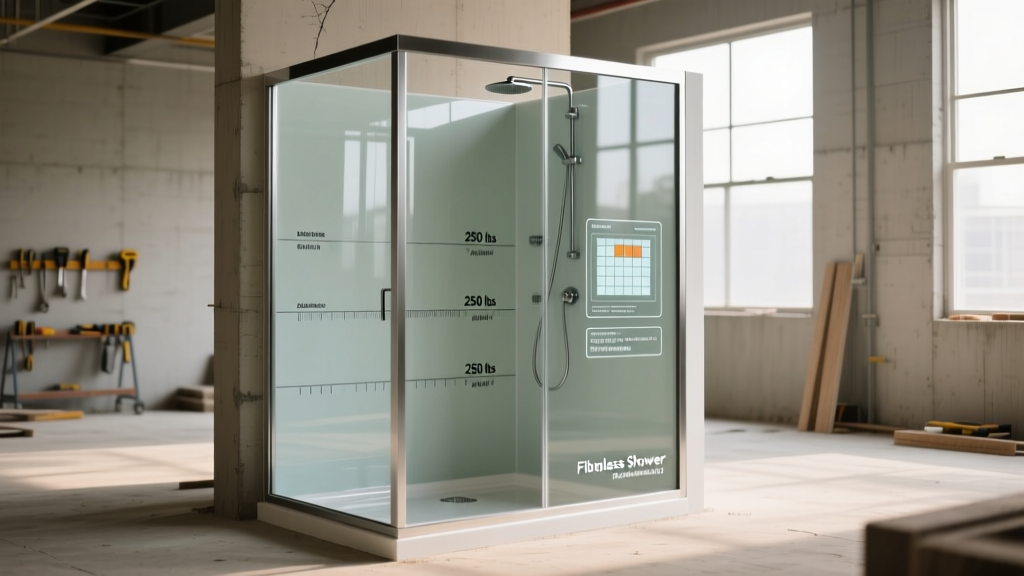
The Baseline: ANSI Z124.1.2 and IAPMO Certifications
Procuring fiberglass-reinforced plastic (FRP) shower units requires navigating a dense matrix of material science and building codes. In the United States, the legal and functional baseline for these fixtures is governed by the ANSI Z124.1.2 standard for Plastic Plumbing Fixtures. This standard dictates the minimum acceptable thresholds for load-bearing capacity, thermal shock resistance, and chemical durability. Compliance with ANSI Z124.1.2 is not merely a recommendation; it is a prerequisite for certification by the International Association of Plumbing and Mechanical Officials (IAPMO), which in turn is required for legal installation under the Uniform Plumbing Code (UPC) in most North American jurisdictions.
However, meeting the minimum ANSI threshold only guarantees that a unit will not catastrophically fail under standard residential conditions. It does not guarantee longevity, aesthetic retention, or resistance to structural deflection over a 15-year lifecycle. For commercial applications, high-traffic residential rentals, or premium custom builds, contractors and architects must look beyond baseline code compliance and scrutinize the specific material specifications of the gelcoat, laminate matrix, and structural backing.
Surface Chemistry: Gelcoat Thickness and Resin Matrices
The visible surface of a fiberglass shower is not the structural fiberglass itself, but a specialized polyester gelcoat. This layer is the primary defense against water intrusion, chemical staining, and UV degradation. The performance of this gelcoat is dictated by two critical specifications: resin chemistry and applied thickness (measured in mils).
Manufacturers typically utilize either orthophthalic or isophthalic polyester resins. Orthophthalic resins are cost-effective and dominate the builder-grade market, but they are highly susceptible to water penetration and alkaline degradation over time. Isophthalic resins feature a tighter molecular cross-link density, offering superior resistance to osmotic blistering and harsh bathroom cleaning chemicals. For any application where the expected lifecycle exceeds seven years, isophthalic gelcoat is a non-negotiable specification.
| Gelcoat Thickness | Market Tier | Resin Type | Expected Lifespan & Failure Risk |
|---|---|---|---|
| 10 - 14 mils | Builder Grade / Multi-Family | Orthophthalic | 5-8 years. High risk of micro-crazing and osmotic blistering. |
| 15 - 19 mils | Standard Residential | Orthophthalic / Blend | 10-12 years. Moderate risk of surface scratching and dulling. |
| 20 - 24 mils | Premium Residential | Isophthalic | 15-20 years. Excellent chemical and thermal shock resistance. |
| 25+ mils | Commercial / Heavy Duty | Isophthalic / Vinylester | 20+ years. Required for institutional or high-traffic hospitality use. |
Structural Deflection and Load-Bearing Tolerances
A fiberglass shower pan is essentially a composite beam. When a user stands in the unit, the floor must transfer the dynamic load to the subfloor without deflecting beyond the gelcoat's elastic limit. The ANSI Z124.1.2 standard mandates that a shower base must support a concentrated 300-pound load applied to a 2-inch diameter area without sustaining permanent deformation or cracking. While 300 pounds satisfies the legal code, it is widely considered inadequate for modern residential realities, where dynamic loads (e.g., dropping a heavy object, or the combined weight of two users) frequently exceed this threshold.
Premium manufacturers engineer their units to withstand 500 to 1,000 pounds by altering the structural backing. The backing material is just as critical as the fiberglass laminate itself.
Gelcoat is a brittle material. If the underlying fiberglass laminate and backing deflect more than 1/8th of an inch under load, the gelcoat will develop micro-fractures known as crazing. When reviewing spec sheets, do not just look at the ultimate load failure point; demand data on the deflection rate at 300 lbs. A unit that holds 500 lbs but deflects 1/4 inch at 300 lbs will still suffer premature surface failure.
The most robust backing systems utilize injected polyurethane foam or engineered structural honeycomb cores, which provide 100% subfloor contact and eliminate the air gaps common in cheaper wood-framed or corrugated cardboard-backed units. Mortar-bed installations, while traditional, introduce variables in curing and leveling that can create void spaces if not executed flawlessly by the installer.
Thermal Shock and Chemical Resistance Protocols
Fiberglass showers operate in a highly volatile thermal environment. A typical shower session introduces 120°F water to a fixture sitting in a 65°F ambient room. This rapid temperature delta causes the gelcoat and the underlying fiberglass laminate to expand at different rates. If the coefficient of thermal expansion (CTE) between the gelcoat and the structural layers is mismatched, or if the laminate is too thin to absorb the stress, the surface will craze.
To mitigate this, manufacturers must adhere to strict thermal cycling tests outlined by ASTM International committees for plastics. High-performance units are engineered with a specialized 'tie-layer' or barrier coat between the gelcoat and the chopped strand mat (CSM) fiberglass. This layer acts as a mechanical buffer, absorbing the shear stress generated during rapid thermal expansion and contraction.
Chemical resistance is equally critical. Modern bathroom cleaners frequently feature alkaline pH levels between 10 and 12 to combat hard water and soap scum. Orthophthalic gelcoats will rapidly saponify and degrade under these conditions, leading to a porous, dull surface that traps dirt. Isophthalic and vinylester gelcoats maintain their structural integrity and gloss retention even when subjected to prolonged exposure to alkaline cleaning agents.
Field Diagnostics: Identifying Specification Failures
Understanding how fiberglass showers fail in the field allows procurement teams to identify red flags in manufacturer spec sheets before purchasing. The three most common failure modes are directly traceable to compromised material specifications.
Osmotic Blistering
This manifests as small, fluid-filled bubbles beneath the gelcoat surface. It occurs when water molecules penetrate a gelcoat that is either too thin (under 15 mils) or formulated with inferior orthophthalic resins. The water reacts with unreacted styrene or water-soluble impurities in the fiberglass mat, creating a concentrated solution that draws more water through the gelcoat via osmosis. Once blistering begins, the structural integrity of the laminate is compromised, and the unit must be replaced.
Micro-Crazing and Stress Fractures
Crazing appears as a network of tiny, spider-web cracks, usually concentrated in the corners of the shower pan or around the drain flange. This is rarely a surface defect; it is a structural failure. Crazing indicates that the subfloor was uneven, the backing material failed to provide 100% support, or the fiberglass laminate was too thin to prevent deflection under load. Specifying units with rigid polyurethane foam backing and a minimum laminate thickness of 1/8 inch drastically reduces the incidence of field crazing.
Delamination
Delamination occurs when the fiberglass reinforced plastic (FRP) layers separate from the structural backing or when the gelcoat separates from the fiberglass mat. This is typically caused by improper catalyst ratios during the manufacturing process, resulting in incomplete curing, or by the use of contaminated materials in the layup process. A hollow sound when tapping the shower floor with a knuckle is the primary field diagnostic for early-stage delamination.
2026 Procurement Checklist for Contractors
To ensure long-term durability and minimize warranty callbacks, procurement managers and general contractors should require suppliers to provide the following verified data points before approving a fiberglass shower submittal:
- Gelcoat Chemistry: Explicit confirmation of isophthalic or vinylester resin (reject orthophthalic for premium/commercial projects).
- Gelcoat Thickness: Minimum 20 mils for residential master baths; 25+ mils for commercial or hospitality applications.
- Load-Bearing Capacity: Minimum 500 lbs concentrated load rating, with documented deflection data at 300 lbs (must be less than 1/8 inch).
- Backing System: 100% solid backing (injected polyurethane foam or engineered structural core). Reject units requiring on-site mortar beds unless specifically detailed in the structural plans.
- Certifications: Current IAPMO listing and ANSI Z124.1.2 compliance documentation, verifiable via the IAPMO online directory.
- Laminate Schedule: Minimum 1/8 inch total FRP laminate thickness, utilizing a combination of chopped strand mat (CSM) and woven roving for optimal tensile strength.
By shifting the focus from baseline code compliance to rigorous material specifications, construction professionals can eliminate the primary failure modes associated with fiberglass plumbing fixtures, ensuring the installed product performs flawlessly throughout its intended lifecycle.