What Is the Best Material for Pickleball Paddles? A 2026 Composite Guide
Discover what is the best material for pickleball paddles in 2026. Compare raw carbon fiber, fiberglass, and PP honeycomb cores for optimal performance.

The Structural Evolution of Paddle Composites
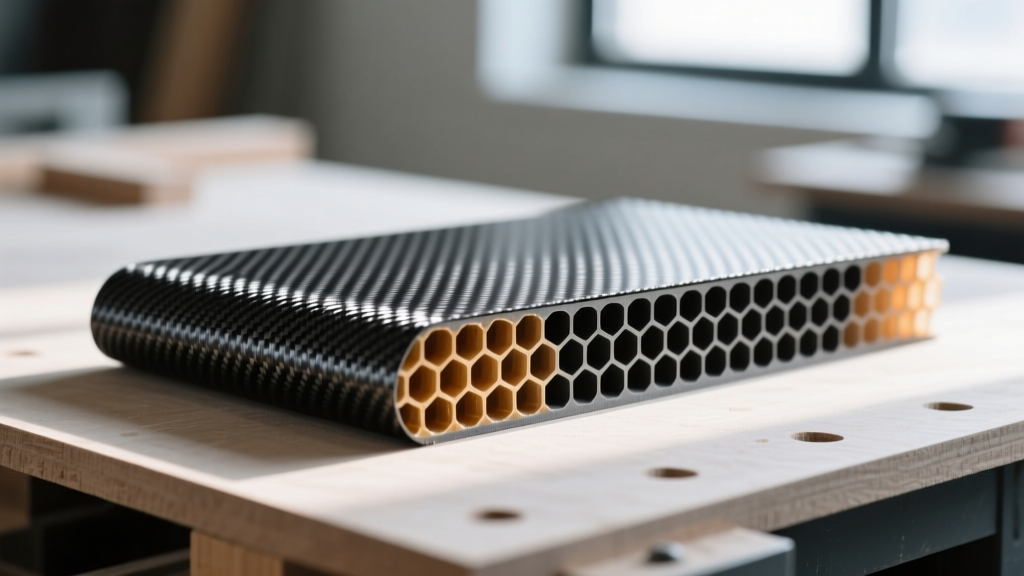
Determining what is the best material for pickleball paddles requires looking past marketing terminology and analyzing the structural engineering, polymer chemistry, and composite layup techniques used in modern manufacturing. In 2026, the industry has largely abandoned legacy materials like aluminum and Nomex in favor of advanced aerospace-grade composites. The optimal paddle is not defined by a single material, but by a synergistic combination of a high-friction surface skin, a polymeric honeycomb core, and a thermoformed unibody chassis.
From a materials science perspective, a pickleball paddle is a flat-panel composite structure designed to manage kinetic energy transfer, dampen vibrational frequencies, and maximize surface friction within strict regulatory limits. Below, we deconstruct the exact material specifications that define elite-tier paddle construction.
Surface Skins: The Friction and Power Matrix
The face of the paddle dictates spin generation, dwell time, and power output. Manufacturers primarily utilize three composite skins, each with distinct tensile properties and deflection rates.
| Surface Material | Weave / Composition | Surface Grit (Rz Limit) | Deflection Rate | Primary Structural Benefit |
|---|---|---|---|---|
| Raw Carbon Fiber | T700 / T800 Unidirectional or 11K/18K Weave | Up to 40μm (Regulation Max) | Low (High Stiffness) | Superior energy transfer, extreme spin, low weight |
| Fiberglass (Composite) | E-Glass or S-Glass with Polyurethane Resin | Variable (Often lower friction) | High (Trampoline Effect) | Maximum power, larger sweet spot, softer feel |
| Kevlar / Aramid | Woven Aramid Fibers | Low to Medium | Medium | Extreme impact resistance, vibration dampening |
T700 Raw Carbon Fiber (The 2026 Industry Standard)
When asking what is the best material for pickleball paddles regarding control and spin, raw carbon fiber is the undisputed leader. Specifically, T700 carbon fiber offers an optimal balance of high tensile strength and low weight. Unlike painted or coated carbon, 'raw' carbon fiber leaves the textured resin matrix exposed. This inherent texture allows manufacturers to approach the USA Pickleball Equipment Standards maximum surface roughness limit (typically measured at an Rz of 40 microns) without applying aftermarket grit sprays that degrade over time. The stiffness of carbon fiber minimizes the trampoline effect, keeping the ball on the face longer (dwell time) for precise directional control and heavy topspin generation.
Fiberglass (Composite)
Fiberglass remains the premier choice for power-oriented players. The molecular structure of E-Glass and S-Glass fibers allows for greater elastic deformation upon impact. This creates a 'trampoline effect' that propels the ball with less physical exertion from the player. However, fiberglass is heavier than carbon fiber and more susceptible to micro-fracturing and dead spots over hundreds of hours of play.
Kevlar and Aramid Blends
Kevlar is rarely used as a standalone face material due to its poor UV resistance and difficulty in achieving high surface friction. Instead, in 2026, engineers use Kevlar as a secondary layer beneath the carbon face or woven into the edge rails to absorb high-frequency shock waves, protecting the player's elbow from lateral torsion.
Core Architecture: Polypropylene Honeycomb Dominance
The core material accounts for the majority of the paddle's volume and dictates its acoustic profile and shock absorption. While early paddles used aluminum (prone to denting) or Nomex aramid (loud and overly stiff), the modern standard is exclusively Polypropylene (PP) Honeycomb.
Core Thickness & Structural Behavior
- 13mm Core: Lower mass, higher swing speed, increased core deflection. Ideal for advanced players generating their own power who require rapid hand-speed at the kitchen line.
- 14mm Core: The optimal middle ground. Balances the plush feel of a 16mm with the maneuverability of a 13mm. Highly prevalent in thermoformed unibody designs.
- 16mm Core: Maximum polymer volume for energy absorption. Drastically reduces vibration transfer to the handle. Provides the highest dwell time for resets and drop shots, but increases rotational swing weight.
Polypropylene is selected for its closed-cell structure, which prevents moisture ingress and maintains consistent density across varying temperature and humidity conditions. The hexagonal cell geometry distributes impact loads laterally across the face, preventing localized core crushing—a common failure mode in cheaper, low-density polymer foams.
Chassis Construction: Thermoforming vs. Traditional Edge Guards
The method used to bind the surface skin to the core is just as critical as the materials themselves. Traditional paddles utilize a flat layup process, cutting the face and core to size and gluing an injection-molded plastic edge guard around the perimeter. This creates a structural weak point at the glue line and adds dead weight to the perimeter, increasing swing weight without expanding the sweet spot.
In 2026, elite manufacturing relies on Thermoforming. This process involves wrapping the carbon fiber or fiberglass skin completely around the polypropylene core and subjecting the entire assembly to high heat and pressure in a steel mold. This fuses the composite layers into a single, continuous unibody structure. The edges are then injected with structural EVA (Ethylene Vinyl Acetate) foam. This foam-injected, thermoformed edge creates a perimeter that is structurally integral to the paddle, dramatically increasing torsional rigidity (resistance to twisting on off-center hits) and expanding the effective sweet spot to the extreme edges of the face.
Regulatory Constraints and Material Testing
Material selection is heavily constrained by governing bodies to prevent an equipment arms race. The ASTM Committee F08 on Sports Equipment and USA Pickleball mandate rigorous testing for surface friction, deflection, and structural integrity. Paddles must pass a star-gauge deflection test to ensure the core and face do not exhibit a trampoline effect exceeding legal thresholds. Furthermore, surface materials are tested using a digital surface roughness gauge to ensure the grit does not exceed 40 microns (Rz), preventing players from generating unreturnable, hyper-exaggerated spin that compromises the integrity of the sport. Any advanced composite layup must be engineered to maximize performance while hovering just below these strict regulatory ceilings.
Material Selection Framework by Player Profile
Selecting the right material requires matching the composite properties to your biomechanical output and strategic playstyle. Use this decision matrix to specify your ideal paddle construction:
| Player Profile | Recommended Surface Skin | Recommended Core Spec | Chassis Requirement |
|---|---|---|---|
| The Power Banger (Relies on drive speed, aggressive put-aways, high kinetic output) |
Fiberglass or Carbon-Fiberglass Hybrid | 13mm or 14mm PP Honeycomb | Thermoformed with dense EVA edge foam for stability on heavy impacts |
| The Soft-Game Specialist (Prioritizes drops, resets, dinks, and spin-induced angles) |
Raw T700 Carbon Fiber (11K or 18K weave) | 16mm PP Honeycomb | Thermoformed unibody to maximize torsional rigidity on off-center soft touches |
| The All-Court Aggressor (Requires a balance of hand-speed at the net and power from the baseline) |
Raw Carbon Fiber with high-grit resin matrix | 14mm PP Honeycomb | Unibody with lightweight perimeter weighting to optimize rotational inertia |
Ultimately, the best material for a pickleball paddle in 2026 is a thermoformed, raw T700 carbon fiber face bonded to a 14mm or 16mm polypropylene honeycomb core. This specific composite layup provides the highest degree of structural integrity, maximizes legal surface friction for spin, and offers the precise energy dampening required for the modern, highly technical pickleball meta.
Written by
Priya KapoorPriya Kapoor is a real estate market analyst and construction economics researcher with expertise in housing affordability, development feasibility, and infrastructure investment. She holds a Master of Regional Planning from Cornell University and previously worked as a senior analyst at CBRE's Investment Properties group, where she modeled returns for $4B in mixed-use development pipelines. Priya now runs an independent research practice advising developers, municipalities, and REITs on construction cost forecasting and market timing. She publishes the quarterly "BuildMat Market Pulse" report tracking material price indices across 12 commodity categories. Based in Austin, TX, Priya serves on the board of Habitat for Humanity Austin and is a marathon runner.
More from Priya Kapoor
View all
Construction Cost
Cost to Build a 1600 Sq Ft Home in 2026: Full Breakdown
Accurate 2026 cost to build a 1600 sq ft home—material, labor, and regional pricing breakdowns included. Plan your budget with real-time estimates.
Aug 11, 2026

Wood & Lumber
Name the Types of Wood for Pressure Treatment and Preservation
Learn how to name the types of wood best suited for pressure treatment. Compare species treatability, chemical retention levels, and 2026 preservation costs.
Aug 4, 2026

Stone & Masonry
Stone Veneer Suppliers Lindenhurst: 2026 Cost Analysis
Analyze 2026 stone veneer costs in Lindenhurst, NY. Compare local supplier pricing, delivery fees, and Suffolk County installation labor rates.
Aug 4, 2026