Best Designer Sign Materials for Hotels: 2026 Guide
Discover the best designer sign materials for hotels in 2026. Compare PVD metals, backlit stone, and architectural resins for luxury wayfinding.

The Shift Toward Experiential Graphic Design in Hospitality
In the luxury hospitality sector, wayfinding is no longer merely functional; it is a critical extension of the brand narrative. As we move through 2026, the Society for Experiential Graphic Design (SEGD) notes that top-tier hotel properties are treating signage as bespoke architectural elements rather than post-construction add-ons. Specifying the best designer sign materials for hotels requires balancing high-end aesthetics with rigorous durability standards, particularly in high-traffic zones like lobbies, spas, and exterior porticos.
This application guide details the material science, illumination engineering, and mounting protocols required to execute luxury hotel signage that withstands the rigors of commercial hospitality environments while maintaining a premium visual profile.
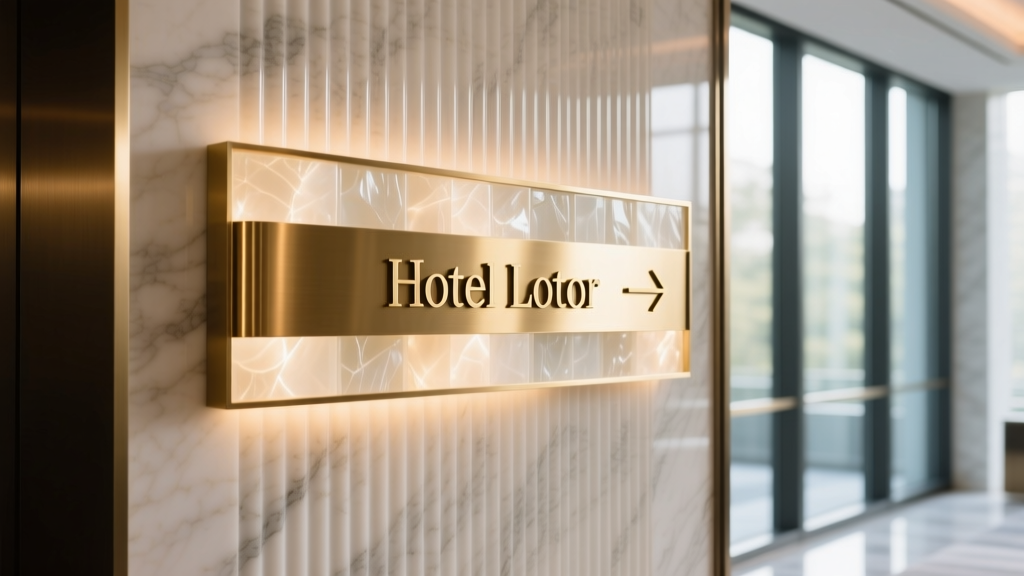
Premium Material Profiles for Hotel Wayfinding
PVD-Coated Architectural Metals (Brass, Bronze, Copper)
Raw brass and bronze offer unparalleled warmth, but they are highly susceptible to oxidation and fingerprint etching in high-touch hotel environments. The 2026 standard for luxury metal signage relies on Physical Vapor Deposition (PVD) coatings. PVD creates a microscopic ceramic-metal layer (typically 0.5 to 1.5 microns thick) that bonds at the molecular level.
- Specification: Require PVD finishes tested to ASTM B117 salt-spray standards for a minimum of 1,000 hours without blistering or delamination.
- Edge Case: Avoid PVD coatings on exterior signage in coastal resort properties unless paired with a marine-grade 316 stainless steel substrate. Standard 304 stainless will rust from the inside out, compromising the PVD layer.
- Cost Impact: PVD coating adds approximately $45 to $85 per square foot to the base metal fabrication cost.
Backlit Natural Stone and Sintered Glass
Translucent natural stones like onyx and alabaster create a striking, high-end glow for reception desks and elevator lobbies. However, natural stone is brittle and requires meticulous CNC routing for LED integration. Sintered glass (such as Neolith or Dekton) offers a more durable, consistent alternative with similar translucent properties.
Fabricator Note: When routing natural onyx for edge-lighting, maintain a minimum material thickness of 8mm. Thinner cuts risk catastrophic fracturing during the mounting phase due to the torque applied by standoff hardware.
Architectural Resin and Dichroic Interlayers
Polyethylene terephthalate glycol (PETG) based architectural resins, such as 3form Varia or Lumicor panels, allow designers to encapsulate organic materials (leaves, fabrics, metal meshes) within a shatter-resistant matrix. For a more dynamic optical effect, dichroic glass interlayers shift color based on the viewer's angle and the ambient lighting temperature.
- Fire Rating: Ensure the specified resin carries a Class A fire rating per ASTM E84, which is mandatory for egress corridors and stairwell wayfinding in commercial hotels.
- Machining: Architectural resin can be routed with standard carbide V-bits, but feed rates must be slowed by 20% compared to acrylic to prevent melting and edge-burring.
Material Application & Performance Matrix
| Material Category | Best Hotel Application | Impact Resistance | Est. Cost (Fabricated) | Maintenance Protocol |
|---|---|---|---|---|
| PVD Brass / Bronze | Lobby Directories, Suite Plaques | High (with 316 SS core) | $220 - $350 / sq ft | Dust with microfiber; no chemical solvents |
| Backlit Onyx / Alabaster | Reception Desks, Spa Entrances | Low (Requires protective backing) | $400 - $650 / sq ft | pH-neutral stone cleaner; annual sealing |
| Architectural Resin (PETG) | Corridor Wayfinding, F&B Menus | Very High (Shatterproof) | $150 - $240 / sq ft | Glass cleaner or mild soap and water |
| Matte Anodized Aluminum | Exterior Porticos, Parking Garages | Moderate (Scratch prone) | $120 - $180 / sq ft | Rinse with deionized water; avoid abrasives |
Illumination Engineering for Luxury Signage
The visual impact of designer sign materials is entirely dependent on the quality of the integrated illumination. According to guidelines published by the Illuminating Engineering Society (IES), hospitality environments demand high-fidelity lighting to accurately render material textures and brand colors.
LED Specification Requirements
- Color Rendering Index (CRI): Mandate a minimum CRI of 95 for all backlit stone and resin signs. A lower CRI will cast a green or magenta tint through translucent materials, ruining the luxury aesthetic.
- Color Temperature: Stick to 2700K or 3000K for interior hotel signage to match the warm ambient lighting of lobbies and corridors. Avoid 4000K, which reads as clinical and cheapens natural materials like wood and stone.
- Pixelation Prevention: For edge-lit acrylic or stone, specify LED tape with a minimum of 120 diodes per meter (e.g., WAC Lighting InvisiLED Pro 2) and pair it with a 1/8-inch opal acrylic diffuser layer to eliminate LED hot-spotting.
Substrate Preparation and Concealed Mounting
Designer signs fail when the mounting hardware distracts from the material. Concealed mounting requires precise coordination between the sign fabricator and the general contractor during the rough-in phase.
Blind Threaded Studs
For flush-mounted metal or resin plaques, use 1/4"-20 threaded blind studs welded to the rear of the sign face. The wall must be pre-drilled using a CNC-machined paper template. Inject a high-modulus silicone adhesive (such as GE Silicone II) into the wall holes alongside the studs to provide sheer strength and prevent the sign from pulling out of drywall anchors over time.
Standoff Mounting with Internal Tension
When floating a heavy material like sintered glass or thick brass off the wall, standard standoff caps are visually intrusive. Specify internal tension standoffs where the mounting hardware is completely hidden inside the sign cavity, leaving only a clean 1/2-inch gap between the sign face and the architectural wall finish.
Accessibility and ADA Compliance in Designer Signs
Luxury aesthetics cannot override federal accessibility mandates. The ADA National Network provides strict guidelines for permanent room identification and directional signage in commercial lodging.
- Contrast Ratios: Tactile characters must maintain a minimum 70% light reflectance value (LRV) contrast against the background. PVD brass characters on a dark bronze background often fail this test; designers must specify a matte black or dark slate substrate to ensure compliance while maintaining a moody, high-end look.
- Tactile Character Specs: Raised characters must be between 5/8 inch and 2 inches high, with a matte finish to prevent glare. Avoid polishing the edges of tactile letters, as the resulting glare can impede readability for visually impaired guests.
- Grade 2 Braille: Ensure Braille cells are domed (not flat-topped) and positioned exactly 3/8 inch below the corresponding tactile text.
Lifecycle Maintenance and Facility Handover
The final step in the application process is equipping the hotel's engineering team with the correct maintenance protocols. Designer materials are easily ruined by standard commercial janitorial chemicals.
Facility Manager Handover Checklist
- Metals: Ban the use of ammonia-based glass cleaners (like Windex) near PVD brass or bronze. Ammonia strips the protective clear coat and causes rapid oxidation. Use only pH-neutral, non-abrasive microfiber dusting.
- Stone: Natural alabaster and onyx are highly porous. Specify a penetrating, color-enhancing stone sealer to be reapplied every 18 months in high-humidity areas like spa reception desks.
- LED Drivers: Ensure all remote LED drivers are mounted in accessible ceiling plenums or dedicated millwork closets, never sealed permanently behind the sign face. Drivers have a 50,000-hour lifespan and will require replacement long before the physical sign degrades.
By specifying advanced material coatings, precision illumination, and concealed structural integration, architects and designers can deploy hotel wayfinding that functions as a permanent, high-value architectural asset rather than a replaceable commodity.
Written by
Elena RodriguezElena Rodriguez is a civil engineer and technical writer specializing in concrete technology, masonry systems, and ASTM/ACI compliance. She earned her B.S. in Civil Engineering from Texas A&M University and spent a decade at a materials testing laboratory, performing over 2,000 concrete compressive strength tests and masonry prism evaluations. Elena is an ACI-certified Field Testing Technician (Grade I) and a member of ASTM Committee C12 on Natural Building Stone. She currently consults on forensic engineering cases involving concrete failures and moisture intrusion. Based in San Antonio, TX, Elena is a proud member of the Society of Women Engineers (SWE) and coaches her daughter's FIRST Robotics team.
More from Elena Rodriguez
View all
Walls & Panels
Cost Analysis: Light Gauge Steel Framing Advantages and Disadvantages
Evaluate light gauge steel framing advantages and disadvantages through a strict cost analysis lens, comparing material, labor, and lifecycle expenses.
Aug 4, 2026

Walls & Panels
Gypsum Board Types: Exact Specifications, Thickness & Dimensions
Compare standard, Type X, and moisture-resistant gypsum board types. Get exact specifications, thicknesses, dimensions, and ASTM standards for your project.
Aug 4, 2026

Fire Resistance
Best Fire-Resistant Outdoor Decking Materials: 2026 Buyer Guide
Discover the best fire-resistant outdoor decking materials for 2026. Compare Class A PVC, aluminum, and hardwood options for WUI compliance and safety.
Aug 4, 2026