R19 Insulation Lifespan: How Long Does It Really Last?
Discover the true lifespan of R19 insulation across fiberglass, mineral wool, and cellulose. Learn failure modes, compression penalties, and 2026 costs.
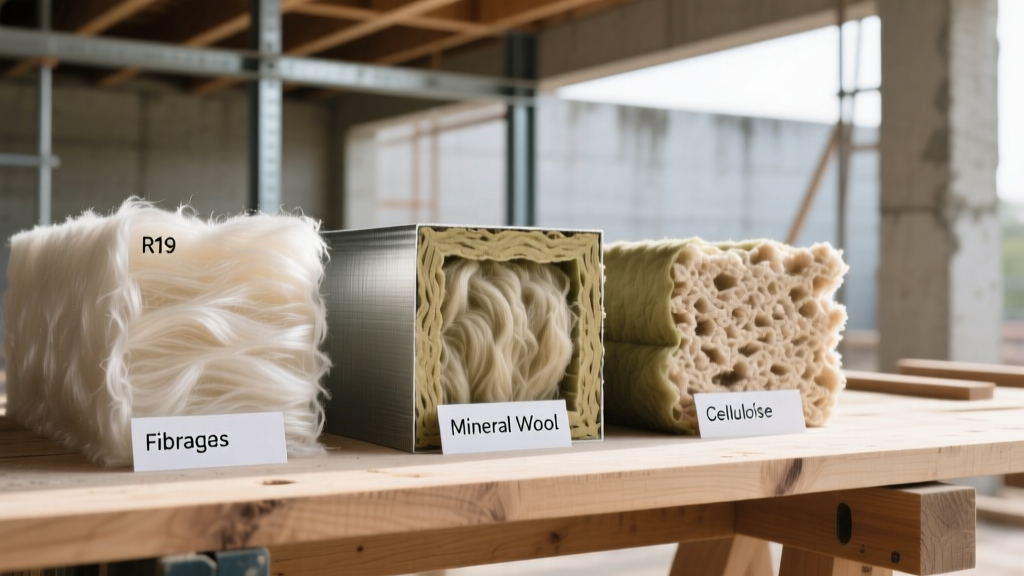
The Real Lifespan of R19 Insulation: Material by Material Breakdown
R19 is a measure of thermal resistance, not a specific material. In residential and light commercial construction, R19 insulation is predominantly engineered to fit standard 2x6 framing cavities, which offer an actual depth of 5.5 inches. While the building envelope is designed to last 50 to 100 years, the insulation hidden within those walls does not always share the same longevity. The lifespan of R19 insulation depends entirely on its chemical composition, installation precision, and environmental exposure.
According to the U.S. Department of Energy, properly installed and protected insulation can last the lifetime of the home. However, real-world field data reveals that moisture intrusion, physical compression, and material settling routinely truncate this lifespan. Below is a durability matrix comparing the most common materials used to achieve an R19 rating in 2026.
| Material Type | Expected Baseline Lifespan | R-Value Retention at Year 25 | Primary Degradation Vector | 2026 Avg. Material Cost (per sq. ft.) |
|---|---|---|---|---|
| Fiberglass Batts (Kraft-Faced) | 80–100 Years | 95% (if dry) | Moisture retention, facing delamination | $0.68 – $0.82 |
| Mineral Wool Batts | 100+ Years | 99% | Physical displacement (rare) | $1.15 – $1.35 |
| Dense-Pack Cellulose | 30–40 Years | 80–85% | Gravitational settling, mold susceptibility | $0.90 – $1.10 |
| Closed-Cell Spray Foam (3" depth) | 80+ Years | 98% | UV degradation (if exposed), off-gassing | $4.50 – $5.20 |
Degradation Mechanics: Why R19 Insulation Fails Before Its Time
Insulation does not simply "expire." When an R19 assembly fails to deliver its rated thermal resistance, it is almost always due to physical or environmental alteration. Understanding these mechanics is critical for builders and homeowners evaluating long-term building performance.
The Compression Penalty
The most common installation error affecting R19 fiberglass and mineral wool is compression. R19 batts are manufactured to achieve their thermal resistance at a specific thickness—typically 5.5 inches for high-density fiberglass or 5.5 to 6 inches for mineral wool. When installers force an R19 batt into a standard 2x4 cavity (3.5 inches actual depth), the R-value does not scale linearly.
Moisture and Capillary Action
Fiberglass and mineral wool are inherently inorganic and do not serve as food sources for mold. However, their thermal resistance relies on trapped pockets of still air. When moisture infiltrates the cavity—whether from a roof leak, plumbing failure, or interior vapor drive—water displaces the air. Water conducts heat roughly 25 times faster than still air. According to field studies referenced by the North American Insulation Manufacturers Association (NAIMA), a moisture content of just 1% by volume in fiberglass insulation can reduce its R-value by up to 25%. If the moisture is not allowed to dry, the kraft paper facing on products like Owens Corning EcoTouch R19 will degrade, delaminate, and foster mold growth on the adjacent drywall or sheathing.
R19 Material Deep-Dive: Longevity Profiles
Fiberglass Batts (e.g., Owens Corning R-19 Kraft Faced)
The glass fibers themselves are virtually immortal; they do not decompose, rust, or burn. The 80-to-100-year lifespan estimate for fiberglass is actually a reflection of the binders and the kraft paper vapor retarder. Over decades, the acrylic binders can become brittle under extreme thermal cycling, and the kraft paper will deteriorate if subjected to repeated high-humidity cycles. In a climate-controlled, properly vented wall assembly, R19 fiberglass will easily outlast the structural framing.
Mineral Wool (e.g., ROCKWOOL Comfortbatt R19)
Mineral wool (stone wool) offers the highest durability profile among batt insulations. Manufactured from basalt rock and slag, it is completely hydrophobic. If a plumbing leak saturates a ROCKWOOL Comfortbatt R19, the water will drain through the material without compromising the fiber structure. Once the cavity dries, the insulation returns to 100% of its original R19 thermal resistance. Furthermore, mineral wool is non-combustible up to 2,150°F, meaning it will not melt or degrade in the event of a structural fire, maintaining its integrity indefinitely.
Dense-Pack Cellulose
Cellulose insulation achieves an R19 rating in a 2x6 wall at a density of roughly 3.0 to 3.5 lbs per cubic foot. While treated with borates for fire and pest resistance, cellulose is fundamentally recycled paper. Its primary durability threat is gravitational settling. Even when dense-packed, cellulose can settle 5% to 10% over the first decade. In a horizontal application (like an attic floor), settling can leave the top plates of the wall uninsulated, creating massive thermal bridges. To ensure a 30-year lifespan, installers must over-blow the cavity by 15% to 20% to account for long-term compaction.
"The longevity of cellulose is entirely dependent on moisture management. Unlike mineral wool, wet cellulose acts like a sponge, holding moisture against wood framing and accelerating structural rot long before the insulation itself fails."
Inspection and Maintenance Framework
Because R19 insulation is concealed behind drywall and exterior sheathing, visual inspection is impossible without destructive testing. Building professionals in 2026 rely on non-destructive diagnostic frameworks to assess insulation health.
- Infrared Thermography (FLIR): Conduct an interior thermal scan during a temperature differential of at least 20°F between inside and outside. Dark blue or purple streaks on the thermal camera indicate missing insulation, severe settling (in cellulose), or wet cavities (which appear colder due to evaporative cooling and higher thermal conductivity).
- Borescope Verification: Drill a 1/2-inch hole in an inconspicuous area (e.g., behind a baseboard or inside a closet) and insert a fiber-optic borescope. This allows you to verify the presence of the R19 material, check for compression against wiring or plumbing, and inspect the condition of the vapor retarder.
- Moisture Meter Mapping: Use a pinless dielectric moisture meter on the interior drywall. Readings above 15% moisture content in the gypsum strongly suggest that the R19 cavity behind it is saturated and actively losing thermal resistance.
When to Replace vs. When to Leave Alone
Do not replace R19 fiberglass or mineral wool simply because of its age. If a borescope inspection confirms the batts are fully expanded, dry, and completely filling the 5.5-inch cavity, they are performing as engineered. Replacement is only justified under three conditions:
- Contamination: The insulation has been saturated by gray/black water (sewage or floodwater) and cannot be professionally dried within 48 hours.
- Severe Compression: Previous renovations forced the R19 material into shallower cavities or compressed it behind new HVAC ducting or electrical sub-panels.
- Pest Infestation: Rodents have tunneled through fiberglass or cellulose, creating massive air channels that bypass the thermal barrier entirely.
By understanding the specific material properties and failure modes of R19 insulation, property owners can make data-driven decisions about maintenance, retrofitting, and long-term building envelope management, ensuring thermal performance lasts as long as the structure itself.