Best Insulated Cat House for Outdoor Cats: 2026 Brand Deep-Dive
We analyze the insulation materials in top outdoor cat houses. Compare EPS foam, Mylar, and polyurethane tech from K&H, Feral Villa, and Petsfit for 2026.
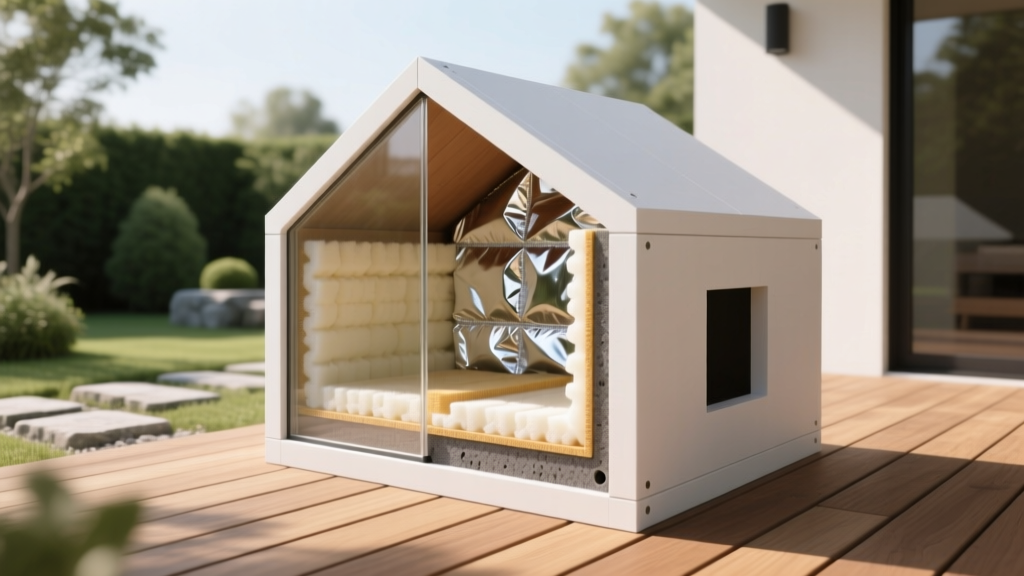
The Thermal Dynamics of Feline Microclimates
A domestic cat's core body temperature ranges from 100.5°F to 102.5°F. When ambient outdoor temperatures drop below 45°F, feral and outdoor cats rely heavily on shelter microclimates to prevent hypothermia. However, the vast majority of commercial pet shelters fail because they utilize thin polyester batting or single-wall plastics that offer virtually zero thermal resistance. As building material scientists, we evaluate outdoor cat houses not by their aesthetic appeal, but by their insulation R-values, moisture management, and structural thermal bridging.
In this 2026 deep-dive, we dissect the actual building materials used in the top-rated insulated cat houses for outdoor cats, analyzing how expanded polystyrene (EPS), extruded polystyrene (XPS), and reflective Mylar perform in extreme weather conditions.
Material Science: EPS vs. XPS vs. Polyurethane in Pet Shelters
Understanding the Department of Energy insulation standards is critical when evaluating pet shelters. The three primary insulation materials used in high-end outdoor cat houses are:
- Expanded Polystyrene (EPS): Often referred to as beadboard, EPS offers an R-value of R-3.6 to R-4.2 per inch. It is lightweight and cost-effective but has a higher water absorption rate (up to 4% by volume), which can degrade its thermal performance if the shelter's exterior seal fails.
- Extruded Polystyrene (XPS): Recognizable by its uniform color (often pink or blue), XPS provides R-5 per inch and boasts a closed-cell structure with a water absorption rate of less than 0.3%. This makes it the superior choice for ground-contact pet shelters where snowmelt and mud are prevalent.
- Polyurethane Foam & Reflective Mylar: Used in soft-sided or hybrid shelters, this combination relies on trapping dead air spaces and reflecting radiant body heat back to the animal. While the R-value of the foam itself is low (R-1 to R-2), the radiant barrier significantly improves the effective thermal envelope in small, enclosed spaces.
Brand Deep-Dive: Feral Villa (Rigid Foam Construction)
The Feral Villa, often distributed by feral cat coalitions, is the gold standard for unheated, passive insulation. It applies commercial building techniques to a micro-scale.
Material Specifications
The walls consist of a 1.5-inch EPS foam core sandwiched between a vinyl-coated exterior and a hard interior liner. This yields an approximate wall R-value of R-6. The roof is pitched and overhangs the walls to prevent capillary action and water ingress at the seams.
Current Pricing: $120 - $145 depending on the distributor.
Best For: Feral colonies in cold, dry climates (USDA Zones 4-6) where active electricity is unavailable.
Brand Deep-Dive: K&H Pet Products (Reflective & Active Heating)
K&H Pet Products dominates the soft-sided and hybrid market. Their 'Extra Wide Outdoor Kitty House' takes a different approach to thermal retention, focusing on wind-blocking and radiant reflection rather than thick rigid foam.
Material Specifications
The exterior is constructed from heavy-duty 600-denier polyester with a vinyl backing for water resistance. The interior walls are lined with a reflective Mylar film, and the floor features a removable polyurethane foam pad. The true thermal engine of this product is its compatibility with K&H's 20-watt MET safety-tested orthopedic heating pad.
Without the active heating pad, the Mylar and thin polyurethane pad only provide an R-value of roughly 1.2. The shelter functions primarily as a windbreak and radiant reflector, trapping the cat's own body heat.
Current Pricing: $55 - $75 (Shelter only); Heating pad sold separately for ~$25.
Best For: Suburban outdoor cats in moderate climates (USDA Zones 7-9) or setups where a GFCI-protected outdoor outlet is available.
Brand Deep-Dive: Petsfit (Soft-Sided Thermal Barriers)
The Petsfit Outdoor Cat House utilizes Oxford cloth with a sponge and fleece lining. From a building materials perspective, sponge insulation is highly problematic for outdoor use. Sponge is open-cell, meaning it readily absorbs ambient humidity. If the exterior Oxford cloth experiences micro-tears, the sponge lining will retain moisture, which can freeze solid in sub-zero temperatures.
Current Pricing: $40 - $50.
Best For: Enclosed porches, garages, or covered patios where direct precipitation and ground moisture are completely eliminated.
2026 Insulation Material Comparison Matrix
| Brand / Model | Primary Insulation | Est. R-Value | Moisture Resistance | Price Range |
|---|---|---|---|---|
| Feral Villa | 1.5-inch EPS Foam | R-6.0 | Moderate (Vinyl coated) | $120 - $145 |
| K&H Extra Wide | Mylar + Poly-Foam | R-1.2 (Passive) | High (600D Vinyl-backed) | $55 - $75 |
| Petsfit Outdoor | Sponge + Fleece | R-0.8 | Low (Open-cell) | $40 - $50 |
Critical Failure Modes and Moisture Management
The most common reason insulated cat houses fail in winter is not inadequate R-value, but internal condensation. A cat's respiration introduces significant moisture into a small, sealed microclimate. If the shelter lacks proper ventilation or uses the wrong interior bedding, this moisture compromises the insulation.
The Straw Imperative
According to the Humane Society's winter care guidelines, you must never use blankets, towels, or conventional pet beds in an unheated outdoor shelter. Cotton and fleece absorb ambient humidity and the cat's body moisture, eventually freezing into a solid, heat-sapping block. Agricultural straw (not hay, which retains moisture and molds) is the only acceptable bedding. Straw's hollow structure repels water and creates thousands of microscopic dead-air pockets, allowing the cat to burrow and generate a localized thermal envelope.
DIY Material Upgrades for Standard Totes
If commercial options exceed your budget, you can engineer a superior shelter using standard building materials. A standard 18-gallon plastic tote upgraded with XPS foam outperforms most $100 commercial units.
- Acquire Materials: Purchase a 1-inch thick sheet of Owens Corning FOAMULAR XPS (R-5) and a roll of Reflectix radiant barrier.
- Cut and Fit: Score and snap the XPS board to line the floor, four walls, and ceiling of the tote. Seal all seams with Tyvek tape or specialized foam board adhesive to prevent thermal bridging and moisture ingress.
- Install Radiant Barrier: Staple or tape the Reflectix over the XPS on the interior walls, ensuring the reflective side faces the center of the tote. This reflects the cat's radiant heat back into the space.
- Weatherproof the Entry: Cut a 6-inch diameter entry hole. Install a heavy-duty rubber floor mat flap over the hole, nailed at the top, to act as a wind-breaking door that the cat can easily push through.
- Ballast and Elevate: Place the tote on two pressure-treated 2x4s to prevent ground-freeze conduction, and place a brick inside the floor insulation layer to prevent the shelter from tipping in high winds.
Final Verdict for 2026
When selecting an insulated cat house for outdoor cats, prioritize closed-cell moisture resistance over sheer thickness. The Feral Villa remains the best passive, unheated option due to its rigid foam construction, while the K&H Extra Wide is the superior choice for setups utilizing active, GFCI-protected heating elements. Avoid open-cell sponge linings entirely, and always pair your shelter with dry agricultural straw to ensure the microclimate remains dry and thermally efficient throughout the winter.