Matching Insulation Tape to Your Project: HVAC, Vapor, and Pipes
Discover the exact insulation tape for HVAC ducts, vapor barriers, and pipes. Compare adhesives, UL ratings, and failure modes for a lasting seal.
The Hidden Cost of the Wrong Insulation Tape
Selecting insulation tape is rarely a one-size-fits-all decision. The adhesive chemistry and backing material required to seal a 140°F HVAC supply plenum will catastrophically fail if used to seam a polyethylene vapor retarder in a freezing crawl space. Field failures in building envelopes and mechanical systems are frequently traced back to tape delamination, adhesive bleed, or thermal degradation. According to the U.S. Department of Energy, improperly sealed ductwork can lose 20% to 30% of conditioned air, directly inflating utility costs and compromising indoor air quality. This guide maps specific tape formulations to their exact application scenarios, detailing the chemical and mechanical reasons behind their performance.
Scenario 1: HVAC Ductwork and Air Sealing (The UL 181 Mandate)
Duct sealing requires tapes that can withstand high static pressure, thermal cycling, and strict fire safety codes. Standard cloth-backed rubber tapes (commonly mislabeled as "duct tape") degrade rapidly when exposed to the 120°F–140°F air inside supply ducts, leaving a brittle, non-adhesive residue.
UL 181A vs. UL 181B Ratings
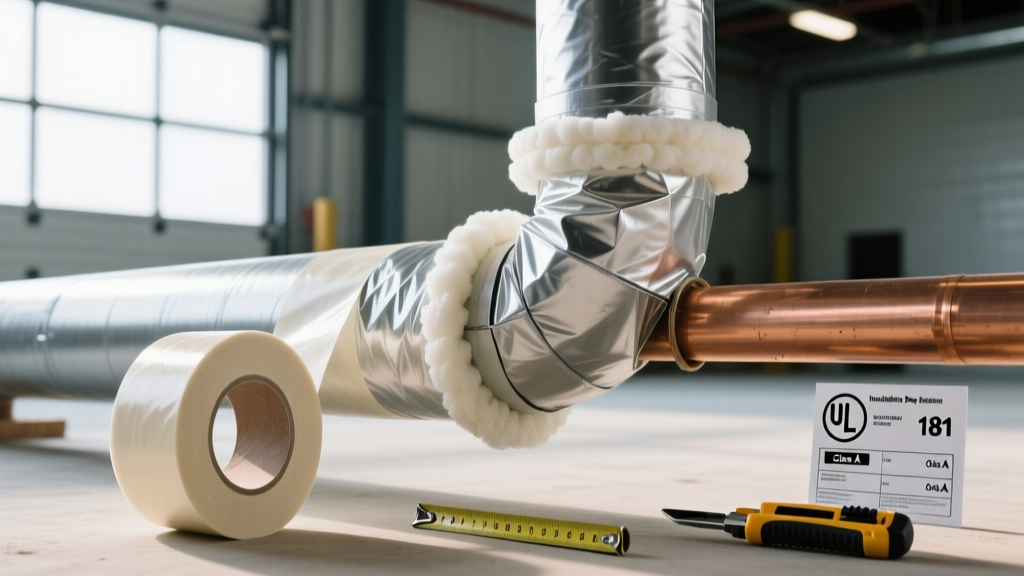
For rigid fiberglass duct board and sheet metal, you must use UL 181A-P (polypropylene) or UL 181A-FX (foil) listed tapes. For flexible air ducts, UL 181B-FX (foil) or UL 181B-M (mastic) are required. The Underwriters Laboratories (UL) 181 standard tests for flame spread, smoke development, and tensile strength under thermal stress.
Foil tapes rely on aggressive acrylic or rubber-based adhesives that fail when applied to dusty or oily sheet metal. Always wipe joints with a clean, dry rag before application. For optimal adhesion on rigid fiberglass duct board, apply the tape using a plastic squeegee or specialized tape roller to exert 15-20 lbs of pressure, ensuring the adhesive physically flows into the fiberglass matrix.
Recommended Products: Nashua 322 Premium Foil (UL 181A-FX) or 3M 3340 Aluminum Foil Tape. Expect to pay $12–$18 per 2-inch by 60-yard roll in 2026.
Scenario 2: Vapor Barriers and House Wraps (Permeability Matters)
When sealing polyethylene vapor retarders, house wraps (like Tyvek), or exterior rigid foam insulation, the tape must maintain a continuous air and moisture barrier despite structural settling and UV exposure during construction delays. The North American Insulation Manufacturers Association (NAIMA) emphasizes that unsealed insulation gaps destroy the effective R-value of the entire wall assembly.
Acrylic vs. Butyl Rubber Adhesives
The debate between acrylic and butyl adhesives dictates the longevity of the building envelope:
- Acrylic Adhesives: These tapes (e.g., Pro Clima Tescon Vana, Siga Wigluv) utilize cross-linking polymers that actually cure and strengthen over time. They offer superior UV resistance (often rated for 6-12 months of exposure) and age without turning brittle. However, they require a clean, relatively dry surface and application temperatures above 40°F (4°C).
- Butyl Rubber Adhesives: Butyl tapes (e.g., Zip System Tape) remain viscoelastic and aggressively tacky indefinitely. They excel at biting into rough, slightly damp, or cold surfaces (down to 14°F / -10°C). The trade-off is "cold flow" or creep; under continuous tension or high heat, butyl can squeeze out from the seam, potentially compromising the seal over decades.
Scenario 3: Pipe Insulation and Plumbing (Condensation Control)
Insulating chilled water lines, refrigerant lines, and domestic cold water pipes requires sealing elastomeric foam (like ArmaFlex) or fiberglass pipe wraps to prevent condensation drip. Moisture intrusion into fiberglass pipe insulation renders it thermally useless and promotes corrosion under insulation (CUI) on metal pipes.
Splicing Tapes vs. Jacketing Tapes
- Rubber Splicing Tape (e.g., 3M 2228 or Scotch 70): Used for sealing butt-joints on elastomeric foam. This tape contains no adhesive; instead, it is stretched to 3/4 of its width during application, fusing to itself to create a permanent, waterproof, dielectric seal.
- PVC Jacketing Tape (e.g., 3M Super 33+ or specialized 20-mil PVC tapes): Used to wrap the outer jacket of fiberglass pipe insulation. It provides mechanical protection and a secondary vapor barrier. Ensure the PVC is rated for the specific temperature of the pipe; standard electrical PVC tape adhesive will melt and slide off hot water lines exceeding 170°F.
Adhesive Chemistry and Failure Matrix
Understanding the chemical limitations of your tape prevents catastrophic field failures. Use the matrix below to match the adhesive type to your specific environmental constraints.
| Adhesive Type | Application Temp Range | Service Temp Range | Primary Failure Mode | Best Scenario |
|---|---|---|---|---|
| Hot Melt Rubber | 40°F to 110°F | -20°F to 150°F | Oxidizes and turns brittle after 2-3 years; poor UV resistance. | Interior, temporary construction sealing; interior poly sheeting. |
| Acrylic | 40°F to 110°F | -40°F to 240°F | Fails to bond if applied below 40°F without heat gun activation. | Exterior house wraps, long-term vapor barriers, exterior rigid foam. |
| Butyl Rubber | 14°F to 110°F | -40°F to 200°F | Creeps/oozes under high heat or continuous mechanical tension. | Cold-weather vapor sealing, rough masonry-to-membrane transitions. |
| Silicone | 32°F to 100°F | -60°F to 500°F | Poor initial tack; requires high pressure to bond; incompatible with some plastics. | High-temperature industrial pipe insulation, exhaust flue sealing. |
Scenario 4: Acoustic Decoupling and Soundproofing
In acoustic assemblies, insulation tape is used to seal seams in Mass Loaded Vinyl (MLV) or to secure acoustic mineral wool batts. The goal is airtightness, as sound will travel through even a 1/16-inch gap. Standard foil tape lacks the mass to block sound transmission and can create a "drum" effect over MLV seams.
For acoustic applications, utilize high-density lead-free foil tapes or specialized butyl acoustic sealant tapes (like Green Glue Noiseproofing Tape). These products add mass to the seam and remain viscoelastic, dampening structural vibrations rather than transmitting them. When taping MLV overlaps, apply a continuous bead of acoustic caulk beneath the tape joint for a redundant, airtight mass barrier.
2026 Procurement and Cost Guide
Supply chain stabilization has normalized insulation tape pricing, though raw material costs for high-performance acrylics have kept premium European building envelope tapes at a premium. When budgeting for large-scale commercial or residential projects, use these 2026 baseline costs:
Project Budgeting Baselines (Per 60-Yard Roll)
- Commodity UL 181A Foil Tape (2-inch): $8.00 – $12.00
- Premium Acrylic House Wrap Tape (4-inch): $45.00 – $65.00
- Butyl Rubber Zip/Sheathing Tape (3.75-inch): $35.00 – $45.00
- Rubber Splicing Tape (1.5-inch): $18.00 – $24.00
- Acoustic MLV Seam Tape (4-inch): $50.00 – $70.00
Note: Always factor in a 15% waste and overlap margin for complex geometries, particularly around duct fittings and pipe penetrations.
Matching the correct insulation tape to your specific scenario prevents costly call-backs, energy loss, and moisture damage. By prioritizing adhesive chemistry and UL/ASTM ratings over upfront commodity costs, builders ensure the building envelope and mechanical systems perform as engineered for the lifespan of the structure.