Noise Insulation Wall Panels Cost Calculator & Pricing Guide
Calculate exact costs for noise insulation wall panels. Get 2026 pricing, material comparisons, and a step-by-step quantity framework for your project.
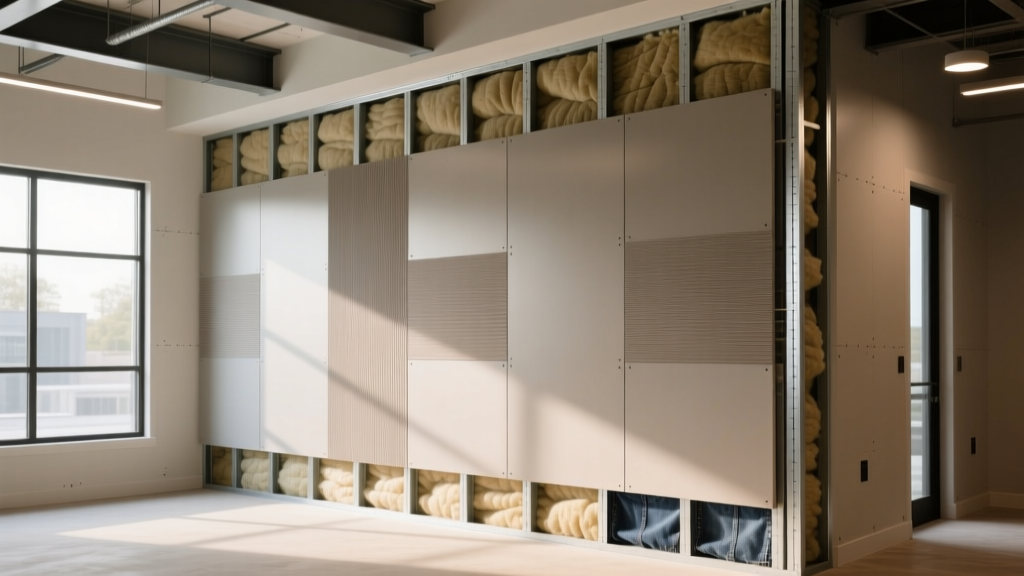
The Real Cost of Noise Insulation Wall Panels
Budgeting for acoustic treatments requires a precise understanding of both material science and spatial geometry. Unlike thermal insulation, which requires 100% coverage to prevent energy loss, surface-mounted noise insulation wall panels are strategically placed to manage reverberation and block specific sound frequencies. In 2026, the national average cost for professionally installed acoustic wall panels ranges from $14 to $38 per square foot, depending on the core material, fabric wrap, and mounting hardware. For DIY installations, material costs alone typically fall between $8 and $28 per square foot.
- PET Felt Panels (9mm-12mm): $8 - $14 (Material Only)
- Fabric-Wrapped Fiberglass (2-inch): $18 - $28 (Material Only)
- Wood Slat Acoustic Panels: $22 - $38 (Material Only)
- Professional Installation Labor: $4 - $9 per sq. ft.
Material Breakdown: Panel Types & Price Per Square Foot
Selecting the right panel dictates not only your budget but the acoustic performance of the room. The two primary metrics you must evaluate are the Noise Reduction Coefficient (NRC) for echo absorption and the Sound Transmission Class (STC) for blocking noise transfer between rooms. According to the Whole Building Design Guide (WBDG), achieving optimal speech intelligibility in commercial spaces requires an NRC of 0.70 or higher on primary reflection surfaces.
| Panel Type | Core Material | Avg NRC Rating | 2026 Cost (Per Sq Ft) | Best Application |
|---|---|---|---|---|
| PET Felt Boards | Recycled Polyethylene | 0.45 - 0.60 | $8 - $14 | Open offices, classrooms |
| Fabric-Wrapped Rigid Core | Owens Corning 703 / Rockwool | 0.85 - 1.05 | $18 - $28 | Studios, home theaters, boardrooms |
| Wood Slat Panels | MDF Veneer + PET Backing | 0.65 - 0.80 | $22 - $38 | Lobbies, executive offices, dining |
| Perforated Metal Absorbers | Aluminum + Mineral Wool | 0.70 - 0.90 | $35 - $55 | Gyms, pools, industrial spaces |
The STC vs. NRC Distinction: Avoiding Costly Mistakes
A frequent and expensive error in construction budgeting is confusing sound absorption with sound isolation. Surface-mounted noise insulation wall panels are primarily designed to improve the Noise Reduction Coefficient (NRC), which measures how much sound energy the panel absorbs to reduce echo and reverberation time (RT60). They do very little to stop sound from traveling through the wall into the adjacent room.
If your goal is to prevent a confidential conversation in an office from being heard in the hallway, you need a high Sound Transmission Class (STC) rating. Achieving a high STC (50+) requires mass, airtight sealing, and structural decoupling inside the wall cavity (such as resilient channels and Rockwool Safe'n'Sound batts), not just surface panels. The Environmental Protection Agency (EPA) notes that prolonged exposure to intrusive environmental and structural noise can significantly impact health and productivity, making correct material selection critical for both well-being and budget.
Step-by-Step Quantity Calculator Framework
Do not calculate acoustic panels based on total wall square footage. Doing so will result in a massively over-budgeted project and a 'dead' sounding room. Use this framework to calculate the exact quantity of panels required.
Step 1: Calculate Net Wall Area
Measure the perimeter of the room and multiply by the ceiling height. Then, deduct the square footage of all doors, windows, and large built-in cabinetry.
Example: A 20ft x 15ft room with a 9ft ceiling has a gross wall area of 630 sq. ft. Deducting two standard doors (40 sq. ft.) and one large window (25 sq. ft.) leaves a net wall area of 565 sq. ft.
Step 2: Apply the Acoustic Coverage Ratio
For standard commercial and residential spaces, covering 15% to 25% of the net wall area with high-NRC panels (0.85+) is sufficient to drop the reverberation time to an optimal 0.5 to 0.7 seconds.
Continuing the example: 20% of 565 sq. ft. = 113 sq. ft. of required acoustic treatment.
Step 3: Convert to Panel Units and Factor Waste
Acoustic panels are typically sold in standard sizes, such as 2ft x 4ft (8 sq. ft.) or 2ft x 2ft (4 sq. ft.). Divide your required square footage by the panel size, then add a 5% waste factor for edge cuts and outlet accommodations.
Math: 113 sq. ft. / 8 sq. ft. per panel = 14.12 panels. Add 5% waste = 14.8 panels. Round up and order 15 panels.
Step 4: Calculate Hardware and Adhesive Requirements
Mounting hardware is a hidden cost that breaks many budgets.
- Z-Clips (French Cleats): Required for heavy fabric-wrapped or wood slat panels. Budget one 24-inch aluminum Z-clip set per panel ($4.50 per set). For 15 panels, budget $67.50.
- Construction Adhesive: For lighter PET felt panels, use a high-grab acoustic adhesive (e.g., Loctite Power Grab). One 9oz tube covers approximately 35 linear feet or about four 2x4 panels. For 15 panels, budget 4 tubes at $8.50 each ($34.00).
- Impaling Clips: For commercial fiberglass panels, budget 4 impaling clips per panel at $1.20 each.
If you are investing in high-STC demountable partition panels to block noise between rooms, surface treatments will fail if you ignore 'flanking paths'. Sound will bypass your expensive wall panels by traveling through shared HVAC ductwork, suspended ceiling grids, and unsealed electrical outlets. Always budget an additional 10-15% of your total acoustic budget for HVAC duct liners, acoustic ceiling baffles, and putty pads for electrical boxes.
Labor Costs: DIY vs. Professional Installation
Installation complexity varies wildly based on the panel weight and wall substrate.
- DIY Installation (PET Felt & Lightweight Foam): These panels can be cut with a utility knife and adhered directly to drywall using double-sided acoustic tape or spray adhesive. Total time for a 120 sq. ft. layout is roughly 4-6 hours. Cost: $0 (your time).
- Professional Installation (Fabric-Wrapped & Wood Slat): These panels weigh between 12 and 25 lbs each and require laser leveling, drilling into studs or using heavy-duty drywall toggles for Z-clip mounting. Professional acoustic installers charge between $65 and $95 per hour. Expect a labor cost of $4 to $9 per square foot. For our 120 sq. ft. example (15 panels), professional labor will add $480 to $1,080 to your final invoice.
FAQ: Budgeting for Acoustic Treatments
Do I need to cover the ceiling as well as the walls?
In rooms with hard floors (concrete, LVT, or hardwood) and standard 9-foot ceilings, parallel hard surfaces create severe 'flutter echo'. If your wall panel budget is constrained, it is often more cost-effective to install acoustic ceiling baffles or a suspended acoustic ceiling grid than to double the wall panel coverage. Aim for a minimum of 40% ceiling absorption if wall coverage is limited to 15%.
Are acoustic foams cheaper than fabric-wrapped panels?
Open-cell polyurethane acoustic wedges or pyramids are cheaper upfront ($2 to $5 per square foot), but they are highly susceptible to UV degradation, dust accumulation, and physical tearing. In 2026, commercial building codes and fire marshals frequently reject untreated acoustic foam due to strict ASTM E84 Class A fire and smoke development requirements. Fabric-wrapped fiberglass with a Guilford of Maine FR701 fire-rated facing is the code-compliant standard for commercial spaces, despite the higher initial cost.
How do I calculate costs for curved or angled walls?
For curved walls, PET felt panels (9mm thickness) can be cold-bent to a minimum radius of 12 inches without scoring. However, you must factor in a 20% material waste increase due to the inability to reuse off-cuts on a curved plane. For rigid fiberglass or wood slat panels, curved walls require custom factory scoring and kerfing, which typically adds a 35% to 50% premium to the base material cost and extends lead times by 3 to 4 weeks.