Top Pipe Insulation Brands & Product Lines for 2026
Compare top pipe insulation brands like Armacell and Johns Manville. Explore elastomeric vs fiberglass product lines, costs, and CUI prevention.
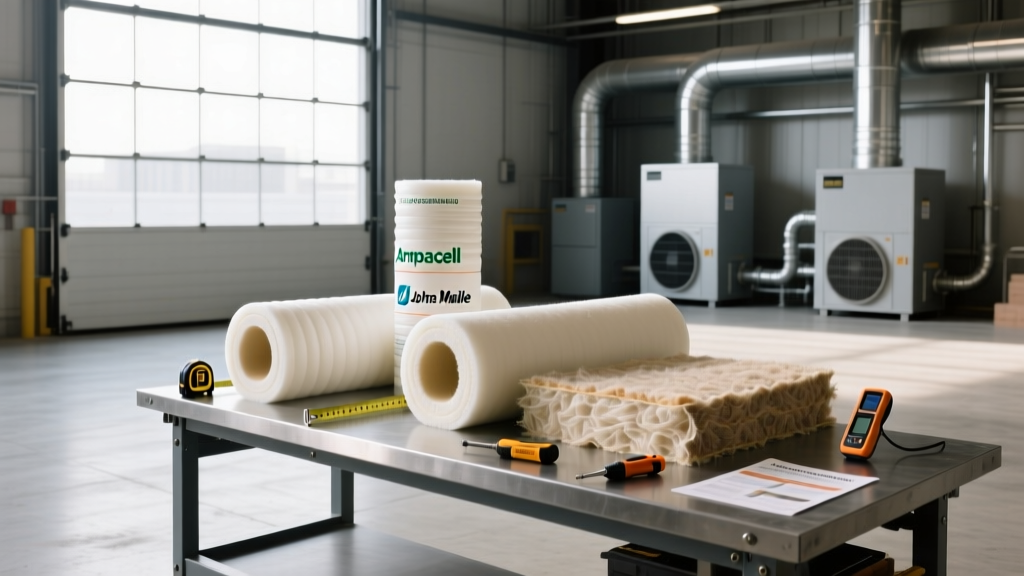
Material Science & Selection Matrix for Pipe Insulation
Specifying the correct pipe insulation requires navigating a complex matrix of operating temperatures, ambient humidity, and fire safety codes. Unlike wall or roof cavity insulation, pipe systems are highly susceptible to condensation, thermal shock, and Corrosion Under Insulation (CUI). In 2026, the market is dominated by specialized product lines from a few key manufacturers, each engineering their materials for distinct thermal envelopes.
According to the U.S. Department of Energy, properly insulated piping can reduce energy loss by up to 85% in commercial HVAC and industrial process systems. However, selecting the wrong material class for the operating temperature guarantees premature failure. Below is a baseline decision matrix for the three primary material categories.
- Closed-Cell Elastomeric Foam: Best for below-ambient (chilled water, refrigeration) and low-temp heating (up to 220°F). Superior moisture resistance.
- Fiberglass (ASJ Jacketed): Best for medium-temperature heating, domestic hot water, and steam condensate (up to 850°F). Requires strict vapor barrier management.
- Mineral Wool / Calcium Silicate: Best for high-temperature industrial process piping and steam mains (850°F to 1,200°F+).
Deep Dive: Elastomeric Foam Product Lines
Armacell: ArmaFlex AP vs. ArmaFlex Pro
Armacell remains the industry standard for closed-cell elastomeric pipe insulation. Their product lines are segmented by fire performance and indoor air quality requirements. ArmaFlex AP (Commercial) is the baseline closed-cell foam, offering an R-value of 4.2 per inch at 75°F and a water vapor transmission (WVT) rate of 0.03 perms. It is highly effective for chilled water systems where preventing condensation is the primary objective.
For healthcare, education, and high-specification commercial builds, ArmaFlex Pro is the required upgrade. Pro integrates Microban antimicrobial protection and achieves a stricter ASTM E84 Surface Burning Characteristics rating of 25/50 (Flame/Smoke) across all thicknesses, whereas standard AP is only rated 25/50 up to 1-inch thickness. In 2026, the price premium for Pro is approximately $0.35 to $0.50 more per linear foot, a justifiable cost to avoid failing fire marshal inspections in return-air plenums.
K-Flex: Insul-Tube and Acoustic Variants
K-Flex competes directly with Armacell, offering Insul-Tube with comparable R-values and temperature limits. Where K-Flex differentiates is in specialized acoustic and high-temperature elastomeric lines. Their K-FONIK product line integrates mass-loaded vinyl (MLV) layers with elastomeric foam, specifically designed to dampen structure-borne noise from high-velocity compressor discharge lines and sanitary drainage stacks.
Deep Dive: Fiberglass & Mineral Wool Systems
Johns Manville: Micro-Lok HP and Zeston Jacketing
When operating temperatures exceed the 220°F limit of elastomeric foam, fiberglass becomes the default. Johns Manville’s Micro-Lok HP (High Performance) is engineered with a 3.0 lbs/ft³ density, providing an R-value of 3.1 to 3.4 per inch depending on the mean temperature. Micro-Lok HP is rated for continuous operation up to 850°F, making it the standard for commercial steam and high-temperature hot water (HTHW) systems.
The critical component of any fiberglass pipe system is the outer jacket. Standard All-Service Jacket (ASJ) is a kraft paper/foil/scrim laminate. However, in high-abuse mechanical rooms, JM’s Zeston 2000 PVC jacketing is mandatory. Zeston provides a 20-mil thick, puncture-resistant vapor barrier that prevents the fiberglass core from wicking ambient moisture—a primary catalyst for CUI.
Owens Corning: ASJ/SSL Technology
Owens Corning addresses the labor-intensive nature of traditional fiberglass installation with their ASJ/SSL (Self-Sealing Lap) product line. Traditional ASJ requires the installer to apply mastic to the longitudinal seam and secure it with staple-out tape. The SSL line features a factory-applied, pressure-sensitive adhesive strip with a release liner. Field time-studies indicate that SSL reduces longitudinal seam sealing labor by 18-22%, significantly lowering installed costs on large-scale commercial projects.
The CUI Threat: Moisture Management & Failure Modes
Corrosion Under Insulation (CUI) is the most expensive failure mode in insulated piping. It occurs when water breaches the insulation jacket and becomes trapped against the pipe surface, accelerating oxidation. The North American Insulation Manufacturers Association (NAIMA) emphasizes that CUI is rarely a material defect; it is almost always an installation or maintenance failure.
On below-ambient (chilled water) fiberglass systems, a single pinhole puncture in the ASJ jacket will cause the fiberglass to act as a sponge, wicking condensation directly to the carbon steel pipe. Elastomeric foam (ArmaFlex) does not wick water due to its closed-cell structure, but if the longitudinal seams are not glued with a full 3-inch overlap using a specialized contact adhesive (like Armacell 520), moisture will migrate through the unsealed joints.
2026 Procurement & Cost Data
Pricing for pipe insulation is typically calculated per linear foot based on Iron Pipe Size (IPS). The table below reflects Q1 2026 wholesale distributor pricing for 1-inch thick insulation on 2-inch IPS piping.
| Material / Brand | Product Line | Est. Cost (per lin. ft.) | Max Temp Rating |
|---|---|---|---|
| Elastomeric | Armacell ArmaFlex AP | $1.85 - $2.15 | 220°F |
| Elastomeric | Armacell ArmaFlex Pro | $2.30 - $2.65 | 220°F |
| Fiberglass | JM Micro-Lok HP (ASJ) | $1.25 - $1.55 | 850°F |
| Fiberglass | OC ASJ/SSL (Self-Sealing) | $1.40 - $1.70 | 850°F |
| Mineral Wool | Thermo-1200 (Calcium Silicate) | $4.10 - $5.50 | 1,200°F |
Installation Tolerances & Edge Cases
Even the highest-tier product line will fail if installation tolerances are ignored. When writing specifications or overseeing field installation, enforce the following non-negotiable parameters:
- Vapor Dam Spacing: On all below-ambient (chilled water) systems, install closed-cell elastomeric vapor dams every 10 to 15 linear feet, and at every valve or fitting. This prevents a single jacket breach from compromising the entire run.
- Adhesive Curing Time: When using Armacell 520 or equivalent contact adhesive on elastomeric seams, installers must allow a 3-to-5 minute flash-off time before joining the 3-inch overlap. Joining the seam while the adhesive is still wet traps solvents, leading to seam blistering and eventual peeling.
- Staggered Joint Alignment: When applying multiple layers of insulation (e.g., 2 inches total using two 1-inch layers), the longitudinal and circumferential joints of the inner layer must be staggered by at least 2 inches from the outer layer to prevent thermal bridging and direct moisture pathways.
- UV Protection for Exterior Runs: Elastomeric foam has zero inherent UV resistance. Any ArmaFlex or Insul-Tube installed on exterior roof piping must be coated with a water-based acrylic coating (like ArmaFinish 500) or wrapped in a specialized UV-rated aluminum jacket within 48 hours of installation to prevent surface chalking and micro-cracking.
Frequently Asked Questions
Can I use standard fiberglass pipe insulation on chilled water lines?
Technically yes, but it is highly discouraged. Chilled water lines operate below the dew point, meaning condensation is constant. Fiberglass is an open-cell material; if the ASJ vapor barrier is compromised even slightly, the fiberglass will absorb water, lose its R-value, and cause severe CUI on carbon steel pipes. Closed-cell elastomeric foam is the required standard for below-ambient applications.
What is the difference between IPS and CTS sizing for pipe insulation?
IPS (Iron Pipe Size) is used for steel, PVC, and copper pipes above 1-inch nominal. CTS (Copper Tubing Size) is used for smaller copper plumbing lines. Insulation manufacturers produce distinct molds for IPS and CTS. Ordering IPS insulation for a CTS pipe will result in a loose fit, creating an air gap that drastically reduces thermal performance and invites condensation.