Insulation Rigid Foam Board: Scenario Matching for XPS, EPS, Polyiso
Match the right insulation rigid foam board to your project. Compare XPS, EPS, and polyiso for below-grade, wall, and roof scenarios with 2026 data.
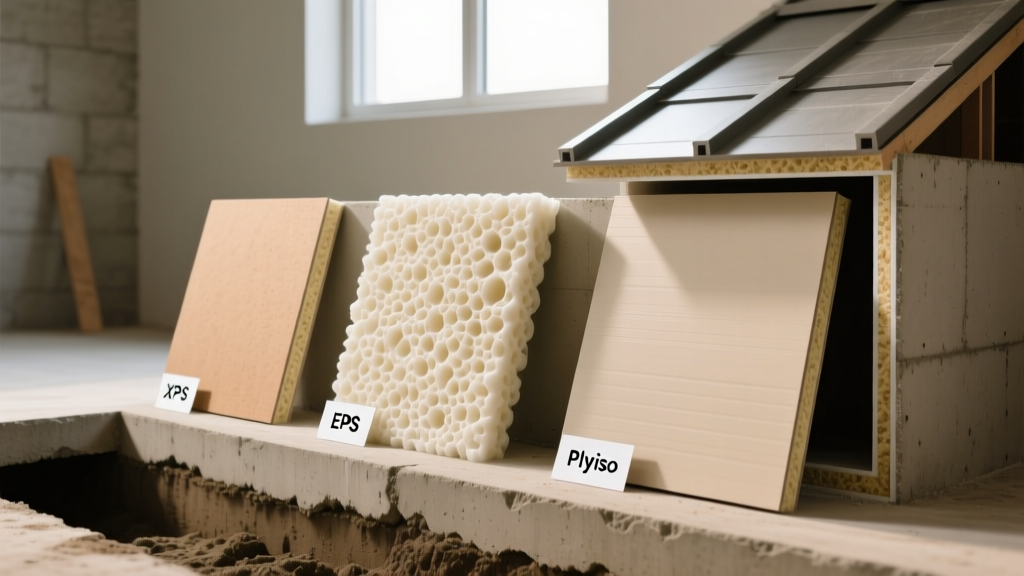
The Core Chemistry: Why One Foam Doesn't Fit All
Selecting an insulation rigid foam board based solely on the R-value printed on the label is a primary cause of building envelope failure. Rigid foam is not a monolith; it comprises three distinct chemical structures—Expanded Polystyrene (EPS), Extruded Polystyrene (XPS), and Polyisocyanurate (Polyiso). Each possesses unique vapor permeability, compressive strength, and thermal drift characteristics that dictate its exact application fit.
According to the U.S. Department of Energy, rigid foam boards provide excellent thermal resistance, but their performance degrades rapidly when deployed in environments that contradict their chemical properties. Matching the foam to the specific moisture, structural, and thermal scenario of your project is non-negotiable for long-term envelope durability.
Scenario Decision Matrix: Matching Foam to Application
Use this framework to immediately narrow down your material choice based on the primary environmental stressor of your assembly.
| Application Scenario | Primary Recommendation | Runner-Up | Fatal Flaw to Avoid |
|---|---|---|---|
| Below-Grade Foundation (Exterior) | XPS (High Compressive) | EPS (Type II or higher) | Using Polyiso (foil facers wick water, foam degrades) |
| Under-Slab (Heated Basement) | XPS (40+ psi) | High-Density EPS | Using standard EPS (crushes under point loads) |
| Above-Grade Continuous Insulation | Polyiso (Foil-Faced) | XPS | Using unfaced EPS (requires separate WRB, low R/inch) |
| Low-Slope Commercial Roofing | Polyiso (Cover Board) | XPS (Inverted Roof) | Using EPS (melts under hot asphalt or high heat) |
| Vented Crawl Space Walls | EPS (Unfaced) | XPS | Trapping moisture against wood sills with impermeable foil |
Deep Dive: Below-Grade and Foundation Applications
Subterranean environments subject insulation to hydrostatic pressure, constant soil moisture, and alkaline degradation. The primary debate here is XPS versus EPS. Historically, XPS has dominated below-grade applications due to its closed-cell extrusion process, which yields a water absorption rate of less than 0.3% by volume (ASTM C272).
While XPS absorbs less water initially, Building Science Corporation notes that EPS actually dries out much faster toward the interior if it does get wet. If your foundation waterproofing is compromised, XPS can trap moisture against the concrete wall indefinitely, whereas high-density EPS allows inward drying, potentially saving the structural concrete from freeze-thaw spalling.
Compressive Strength and Point Loads
Do not confuse compressive strength (ASTM D1621) with overall density. When placing rigid foam under a structural slab or deck footing, you must calculate point loads. A standard 4x4 wooden post supporting a 2,000 lb deck load exerts 125 psi on the insulation beneath it. Standard EPS Type II yields at 15 psi and will crush, causing structural settling. You must specify XPS 40 (40 psi) or XPS 60 (60 psi) for any concentrated structural point loads.
Deep Dive: Above-Grade Wall and Roof Assemblies
For above-grade continuous insulation (ci) and roof assemblies, Polyisocyanurate is the undisputed leader, offering an initial R-value of 6.0 to 6.5 per inch. Its thermoset chemical structure means it will not melt in a fire, giving it superior flame spread and smoke developed ratings (ASTM E84) compared to the thermoplastic EPS and XPS, which melt and drip.
The Thermal Drift Reality Check
Polyiso suffers from a well-documented phenomenon known as thermal drift or cold-temperature R-value degradation. The blowing agents trapped in the polyiso cells condense at low temperatures. At a mean temperature of 75°F, polyiso performs at R-6.5. However, at 20°F, its performance drops to approximately R-5.0 per inch. If you are building in Climate Zones 6 or higher, you must calculate your wall assembly dew point using the cold-temperature R-value, not the label R-value, to prevent interstitial condensation.
Edge Cases and Failure Modes to Avoid
Never install foil-faced polyiso below grade. The aluminum foil facer acts as a wick in damp soil, drawing moisture into the board edges. Once the polyiso core gets wet, it loses nearly all structural integrity and R-value, and it cannot dry out in a subterranean environment.
When adhering XPS or EPS to foundation walls or sheathing, never use solvent-based construction adhesives or asphalt-based damp-proofing coatings. The solvents will chemically melt the polystyrene, destroying the board. Always specify foam-compatible, water-based or polyurethane adhesives.
2026 Code Compliance and Environmental Shifts
The manufacturing landscape for rigid foam has shifted dramatically due to the EPA's implementation of the AIM Act, which mandates the phase-down of high-GWP (Global Warming Potential) hydrofluorocarbons (HFCs).
Historically, XPS was blown with HFC-134a, carrying a GWP of 1,430. As of 2026, major manufacturers like Owens Corning have transitioned their XPS lines (e.g., FOAMULAR NGX) to next-generation blowing agents like HFOs, dropping the GWP to less than 2. When specifying XPS for LEED v4.1 or Living Building Challenge projects, you must explicitly request HFO-blown XPS in your procurement documents to ensure compliance with modern embodied carbon limits. The EPA's HFC reduction guidelines strictly enforce these transitions across the building materials sector.
Quick-Reference 2026 Cost & Performance Breakdown
Pricing fluctuates based on regional supply chains and petroleum indices, but the following baseline metrics represent national averages for 1-inch thick, 4x8 sheets in early 2026.
| Material Type | Avg. Cost (per sq. ft.) | R-Value (per inch) | Compressive Strength | Vapor Permeability |
|---|---|---|---|---|
| EPS (Type I) | $0.42 | 3.6 - 3.8 | 10 psi | High (Perm rating ~3.5) |
| EPS (Type II) | $0.55 | 3.8 - 4.2 | 15 psi | Moderate (Perm rating ~2.5) |
| XPS (Standard) | $0.78 | 5.0 | 25 psi | Low (Perm rating ~1.1) |
| XPS (High Density) | $1.15 | 5.0 | 40 - 60 psi | Very Low (Perm rating ~0.8) |
| Polyiso (Foil-Faced) | $0.95 | 6.0 - 6.5 (Warm) 5.0 (Cold) |
40+ psi (Facer dependent) | Zero (Foil acts as Class I vapor retarder) |
Specify your insulation rigid foam board by matching the exact mechanical and hygrothermal demands of your assembly. Relying on generic 'rigid foam' specifications in your architectural plans leaves the material choice to the lowest-bidding supplier, virtually guaranteeing a mismatch between the foam's chemical limits and your building's physical reality.