Best Insulate Material Choices for High-Performance Walls
Compare top insulate material options for high-performance walls. Discover R-values, costs, and moisture resistance for fiberglass, foam, and mineral wool.

The Physics of Thermal Resistance in Modern Envelopes
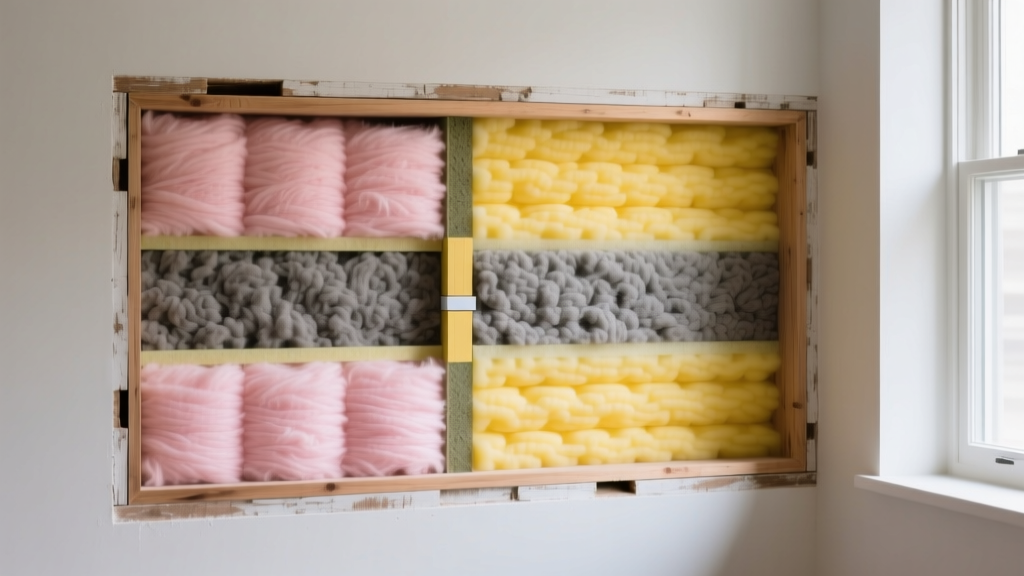
Choosing the right insulate material for high-performance wall assemblies requires moving beyond basic R-value charts. In 2026, building codes and energy standards demand a holistic approach to heat transfer, encompassing conduction, convection, and radiation. A material's nominal R-value only tells half the story; real-world thermal performance is dictated by installed density, air sealing capabilities, and hygrothermal behavior (moisture and heat interaction). According to the U.S. Department of Energy, improper installation and thermal bridging can reduce the effective R-value of a wall cavity by up to 30%. Therefore, selecting an insulate material is fundamentally an exercise in risk management and climate-specific engineering.
Head-to-Head Matrix: Cavity Insulation Contenders
The table below compares the three dominant cavity insulation categories used in residential and light-commercial framing. Data reflects standard 2x6 framing (5.5-inch cavity depth) with high-performance product lines.
| Metric | High-Density Fiberglass | Semi-Rigid Mineral Wool | Closed-Cell Spray Foam (ccSPF) |
|---|---|---|---|
| Representative Product | Owens Corning EcoTouch R-21 | ROCKWOOL Comfortbatt R-23 | Demilec Heatlok Sojourn |
| R-Value per Inch | 3.8 | 4.2 | 6.5 to 7.0 |
| Total Cavity R-Value | R-21 | R-23 | R-35 to R-38 |
| Density (lbs/ft³) | 1.2 | 8.0 | 2.0 |
| Vapor Permeability | High (Vapor Open) | High (Vapor Open) | Class II Retarder (at 1.5") |
| Acoustic STC Rating | STC 39 | STC 45 | STC 37 |
| Air Sealing Capability | Poor (Requires separate membrane) | Moderate (Friction fit) | Excellent (Expands to seal) |
Deep Dive: Fiberglass vs. Mineral Wool Batt Insulation
When evaluating a traditional insulate material, the choice often narrows to fiberglass or mineral wool. While both are vapor-open and allow walls to dry to the interior or exterior, their physical properties diverge significantly under stress.
High-Density Fiberglass Batts
Modern high-density fiberglass, such as Owens Corning's EcoTouch line, utilizes advanced binder chemistry to eliminate formaldehyde and improve recovery after compression. In a 2x6 wall, an R-21 high-density batt fills the 5.5-inch cavity completely, mitigating the convective loops that plague older, under-sized R-19 batts. However, fiberglass remains highly susceptible to installation defects. If a batt is compressed by wiring or plumbing, its R-value drops proportionally. Furthermore, fiberglass offers minimal resistance to airflow; without a meticulously taped interior air barrier (like a smart vapor retarder), wind washing will severely degrade its thermal performance.
Semi-Rigid Mineral Wool
Mineral wool, specifically stone wool like ROCKWOOL Comfortbatt, solves many of fiberglass's mechanical weaknesses. With a density of 8.0 lbs/ft³ (nearly seven times denser than standard fiberglass), mineral wool is dimensionally stable. It friction-fits tightly into stud bays, effectively blocking convective air movement without the need for spray foam sealants at the edges. Its non-combustible nature (fire-rated to over 2,150°F per ASTM E119) makes it the mandatory choice for fire-blocking applications and exterior continuous insulation in wildfire-prone zones. The primary drawback is cost and cutting difficulty; installers require specialized serrated knives and heavy-duty PPE to manage the denser fibers.
Both fiberglass and mineral wool are vapor-permeable. In cold climates (IECC Zones 5 and higher), if you use these materials without an interior Class I or II vapor retarder, warm interior moisture will migrate into the cold wall cavity and condense on the exterior sheathing, leading to rot. Always pair vapor-open cavity insulation with a smart vapor retarder (like CertainTeed MemBrain) that adapts its permeability based on seasonal humidity levels.
The Premium Tier: Closed-Cell Spray Foam (ccSPF)
Closed-cell spray polyurethane foam represents the highest performing insulate material for space-constrained assemblies. Expanding to a density of 2.0 lbs/ft³, ccSPF provides an R-value of up to 7.0 per inch. More importantly, it acts as both an insulation layer and a structural air/water barrier. At just 1.5 inches of thickness, it qualifies as a Class II vapor retarder, eliminating the need for separate interior poly sheeting in many climate zones.
In 2026, the industry has largely transitioned to Hydrofluoroolefin (HFO) blowing agents for ccSPF. Unlike the older HFC agents that had a Global Warming Potential (GWP) over 1,000, modern HFO-blown foams like Demilec Heatlok Sojourn boast a GWP of less than 10, making them compliant with stringent EPA environmental regulations without sacrificing yield or thermal resistance.
Failure Modes and Edge Cases
- Shrinkage and Delamination: If applied in lifts that are too thick (over 2 inches per pass), the exothermic chemical reaction can cause the foam to char internally, shrink, and pull away from the studs, creating massive thermal bridges.
- Roof Assembly Traps: Applying ccSPF directly to the underside of roof sheathing in a humid climate can mask leaks. If water penetrates the roof, the foam prevents it from dripping into the attic, allowing the sheathing to rot undetected until structural failure occurs.
Cost Analysis: Material vs. Installed Pricing
Budgeting for an insulate material requires looking beyond the per-square-foot material cost. Labor, specialized equipment, and secondary air-sealing requirements drastically alter the final price tag. The North American Insulation Manufacturers Association (NAIMA) notes that while fiberglass has the lowest upfront cost, the lifecycle energy savings of higher-tier materials often offset the premium in extreme climates.
| Insulation Type | Material Cost (per sq ft) | Installed Cost (per sq ft) | Secondary Costs Required |
|---|---|---|---|
| High-Density Fiberglass | $0.75 - $0.95 | $1.80 - $2.40 | Interior air barrier / Smart vapor retarder ($0.40/sq ft) |
| Mineral Wool Batt | $1.30 - $1.60 | $2.60 - $3.30 | Interior air barrier / Smart vapor retarder ($0.40/sq ft) |
| Closed-Cell Spray Foam | N/A (Sold as a service) | $3.50 - $4.80 | None (Acts as its own air/vapor barrier) |
Decision Framework: Matching Material to Climate Zone
To finalize your insulate material selection, apply this framework based on your specific IECC Climate Zone and structural requirements:
- Hot-Humid Climates (Zones 1-3): Prioritize moisture management over extreme R-values. Use closed-cell spray foam on the interior side of the sheathing to prevent warm, humid exterior air from condensing on cool, air-conditioned interior surfaces. Avoid interior vapor barriers.
- Mixed Climates (Zone 4): Mineral wool is the optimal choice here. Its vapor-open nature allows the wall to dry in both directions (inward during summer cooling, outward during winter heating), while its high density provides excellent acoustic dampening for dense urban builds.
- Cold and Very Cold Climates (Zones 5-8): Cavity insulation alone is insufficient due to thermal bridging through wood studs. You must pair high-density fiberglass or mineral wool in the cavity with a continuous exterior layer of rigid mineral wool or polyiso board (minimum R-10) to keep the sheathing above the dew point. Always include an interior Class II vapor retarder.
Ultimately, there is no single 'best' insulate material. High-performance building science dictates that the material must be matched to the hygrothermal profile of the specific climate zone, ensuring the wall assembly can dry effectively while minimizing conductive and convective heat loss.
Written by
Marcus ChenMarcus Chen is a licensed structural engineer (PE) and building materials analyst with over 12 years of experience across residential, commercial, and industrial construction. He holds a Master of Science in Civil Engineering from UC Berkeley and spent six years at Thornton Tomasetti before transitioning to independent consulting and technical writing. Marcus specializes in material selection for seismic-prone regions, concrete reinforcement strategies, and lifecycle cost analysis. His work has been cited by the American Concrete Institute (ACI) and the Structural Engineers Association of California (SEAOC). When he is not on a job site or at his desk, you will find him hiking the Sierra Nevada or restoring a 1920s craftsman bungalow in Oakland, CA.
More from Marcus Chen
View all
Construction Cost
How Much Did the Eiffel Tower Cost to Build?
How much did the Eiffel Tower cost to build in 1889? We adjust for inflation and compare its budget to modern skyscraper construction.
Aug 4, 2026

Fire Resistance
What Is a Fire Resistant Material? Testing & Certification Guide
Discover what is a fire resistant material through ASTM and UL testing. Learn how fire ratings, certifications, and assemblies work in construction.
Aug 4, 2026

Construction Cost
How Much Did the Burj Khalifa Cost to Build?
How much did the Burj Khalifa cost to build? We break down the $1.5B project and extract 5 money-saving strategies for your next build.
Jul 30, 2026