Brickyard Building Materials Sacramento: Brick Types & Grades
Explore brickyard building materials Sacramento contractors use. Compare brick types, ASTM grades, 2026 pricing, and seismic mortar specs.
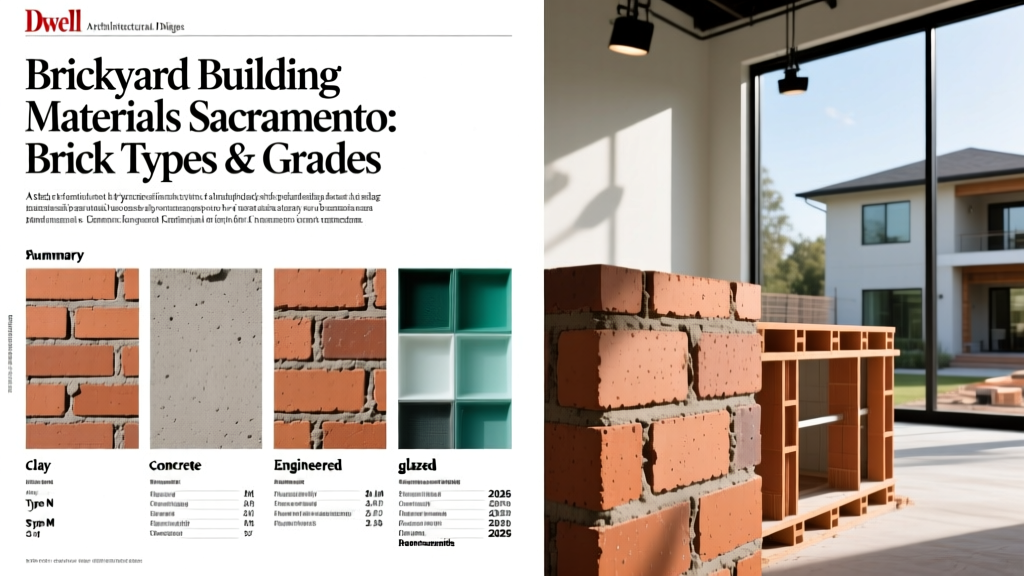
Navigating Sacramento’s Brick Supply Landscape
Sourcing masonry supplies in Northern California requires a nuanced understanding of both regional climate demands and local manufacturing shifts. When evaluating brickyard building materials Sacramento contractors must account for the Central Valley’s extreme summer heat (frequently exceeding 100°F) and its occasional, yet destructive, winter freeze-thaw cycles. Furthermore, the closure of historic regional manufacturers like McNear Brick and Tile has fundamentally altered the local supply chain, making it critical for builders to know exactly which regional distributors, salvage yards, and alternative manufacturers (such as Gladding McBean in nearby Lincoln, CA) to leverage for specific brick grades and types.
Decoding Brick Grades for the Central Valley
The Brick Industry Association (BIA) categorizes bricks based on their resistance to weathering. Understanding these grades is non-negotiable when ordering from a local brickyard, as misapplication leads to catastrophic moisture failure within the first five years.
| Grade | ASTM Standard | Max Water Absorption | Sacramento Application |
|---|---|---|---|
| SW (Severe Weathering) | ASTM C216 / C62 | ≤ 17.0% (Average) | Retaining walls, paving, parapets, planters, and any masonry below grade or exposed to standing water. |
| MW (Moderate Weathering) | ASTM C216 / C62 | ≤ 22.0% (Average) | Standard vertical exterior walls, veneers, and above-grade load-bearing walls protected by adequate roof overhangs. |
| NW (Negligible Weathering) | ASTM C62 | Not Restricted | Interior partition walls, backup wythes in cavity walls, and completely sheltered architectural accents. |
Popular Brick Types Stocked at Sacramento Brickyards
Local masonry supply yards typically segment their inventory into four primary categories. Knowing the exact terminology ensures you receive the correct structural and aesthetic product.
1. Face Brick (Exterior Veneer)
Manufactured to ASTM C216 standards, face brick is engineered for aesthetic consistency, tight dimensional tolerances, and weather resistance. In the Sacramento market, extruded face bricks with core holes (which reduce weight and improve kiln firing consistency) dominate the residential veneer market. For historic renovations in neighborhoods like Midtown or East Sacramento, specify 'sand-struck' or 'water-struck' molded face bricks to replicate the irregular, rustic textures of early 20th-century masonry.
2. Common Building Brick
Governed by ASTM C62, common bricks are the workhorses of structural masonry. They lack the strict color and texture controls of face brick but offer high compressive strength (typically 3,000 to 5,000 psi). Sacramento yards frequently stock these for structural backup wythes, utility buildings, and interior exposed-brick accent walls in commercial builds.
3. Heavy-Duty Paving Brick
Do not substitute standard face brick for paving. Paving bricks must meet ASTM C902 (Pedestrian) or ASTM C1272 (Vehicular) standards. They are fired to much higher temperatures, achieving compressive strengths exceeding 8,000 psi and near-zero water absorption. Local suppliers stock these for driveways, commercial walkways, and permeable paver systems required by Sacramento’s municipal stormwater management codes.
4. Fire Brick (Refractory)
With the surge in custom outdoor kitchens and wood-fired pizza ovens in the greater Sacramento area, high-duty fire bricks (capable of withstanding 2,500°F+) are a staple at specialized yards. These are composed of high-alumina clay and must be laid with refractory mortar, never standard Portland cement mixtures.
Seismic & Mortar Considerations for Northern California
Sacramento County falls under Seismic Design Category C and D, depending on specific soil profiles (Site Class D or E). The California Building Standards Commission (CBSC) mandates strict reinforcement protocols for unreinforced and reinforced masonry. Brick is brittle; therefore, the mortar used must accommodate minor seismic flexing without crushing the brick units.
Expert Insight: 'Never use a mortar that is harder than the brick it binds. In seismic zones, a rigid, high-cement mortar will trap stress and cause the brick faces to spall or crack during ground motion. The mortar should act as a sacrificial, flexible cushion.' — Masonry Society Structural Guidelines
The Mortar Selection Matrix
- Type N (Medium Strength, 750 psi): The default choice for most Sacramento exterior veneers and above-grade walls. It offers the ideal balance of flexibility and weather resistance for the local climate.
- Type S (High Strength, 1,800 psi): Required for below-grade foundations, retaining walls, and areas subject to high lateral loads or seismic shear. Use only with high-compressive-strength SW grade bricks.
- Type O (Low Strength, 350 psi): Reserved exclusively for historic tuckpointing and interior non-load-bearing walls. Never use Type O on Sacramento exteriors.
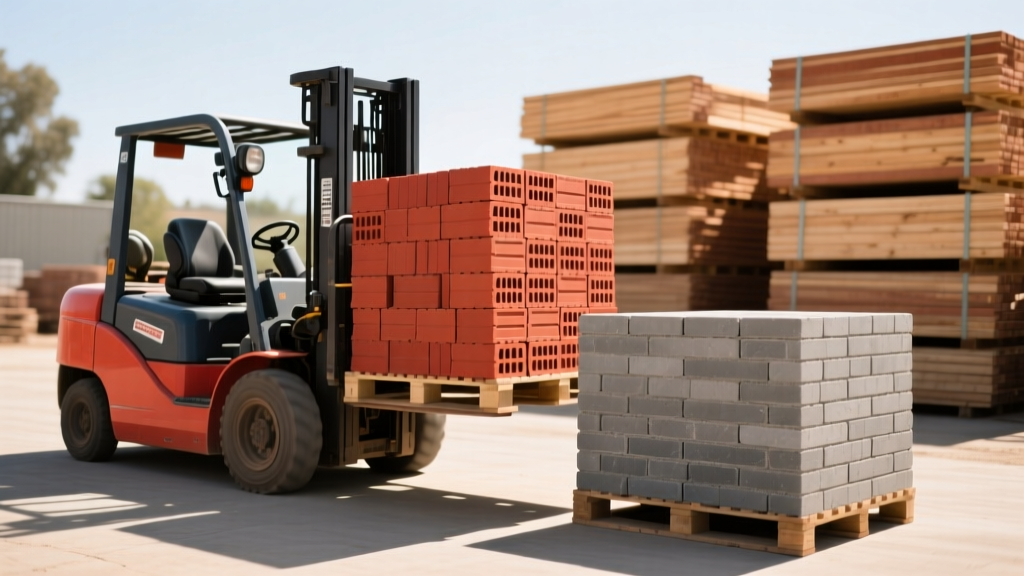
2026 Pricing & Sourcing Framework
Material costs fluctuate based on clay availability, kiln energy prices, and freight. Because heavy clay products are expensive to ship long distances, sourcing from Northern California manufacturers (or local salvage) keeps freight surcharges manageable. Below is the current 2026 pricing matrix for materials sourced from regional brickyards.
| Brick Category | Cost Per Brick (2026) | Cost Per Sq. Ft. (Material Only) | Local Availability |
|---|---|---|---|
| Standard Common (Red) | $0.55 - $0.75 | $3.85 - $5.25 | High (Readily stocked) |
| Extruded Face Brick | $0.80 - $1.30 | $5.60 - $9.10 | High (Multiple colorways) |
| Molded / Sand-Struck Face | $1.40 - $2.20 | $9.80 - $15.40 | Moderate (Often special order) |
| Heavy-Duty Paving Brick | $1.50 - $2.80 | $7.50 - $14.00 | High (Standard & Permeable) |
| Historic Salvage (McNear/Era) | $1.25 - $3.00+ | $8.75 - $21.00 | Low (Requires yard scavenging) |
FAQ: Sourcing from Local Yards
How do I match historic brick for an older Sacramento home?
Because original local kilns have closed, exact new-manufacture matches are rare. Your best strategy is to visit architectural salvage yards in the Sacramento region (such as those specializing in reclaimed Bay Area and Central Valley materials) with a physical sample. If salvage yields insufficient quantity, consult a local distributor about 'tumbled' or 'antique' finish bricks from regional manufacturers that mimic the color variations and slight dimensional irregularities of early 1900s clay.
Do I need to seal exterior brick in Sacramento?
Generally, no. High-quality SW or MW grade bricks are naturally breathable. Applying a film-forming acrylic sealer traps moisture inside the masonry wall. When Sacramento's winter temperatures drop below freezing, this trapped moisture expands and causes the brick face to pop off (spalling). If water repellency is absolutely necessary due to driving rain exposure, use only a silane/siloxane-based penetrating breathable sealer, never a surface coating.
What is the minimum lead time for custom brick orders?
While standard red and buff face bricks are usually available for immediate pickup at local masonry supply yards, custom colors, specific molded profiles, or large-scale commercial runs ordered from regional kilns typically require a 6 to 10-week lead time. For 2026 construction schedules, finalize masonry selections and place deposits during the initial permitting phase to avoid project delays.
Written by
James ThorntonJames Thornton is a construction industry veteran with 25 years of hands-on experience in wood framing, lumber grading, and residential building codes. He started as a framing carpenter in rural Oregon, earned his ICC Residential Building Inspector certification, and eventually became a senior plan reviewer for the City of Portland Bureau of Development Services. James holds a B.S. in Wood Science & Technology from Oregon State University and is a certified lumber grader through the West Coast Lumber Inspection Bureau (WCLIB). He has inspected over 3,000 residential construction sites and authored the city's internal guide on advanced framing techniques (2x6 at 24" O.C.). James lives in Bend, OR, where he builds custom timber-frame cabins and competes in lumberjack sports.
More from James Thornton
View all
Insulation
Best Home Insulation Materials: Complete 2026 Guide
Compare top home insulation materials for 2026. Find R-values, installed costs per square foot, and best uses for fiberglass, spray foam, and mineral wool.
Aug 4, 2026

Sustainable Building
Certify Your Green Building Material for LEED and WELL
Step-by-step guide to certifying a green building material for LEED v5 and WELL v2. Master EPDs, HPDs, and VOC limits for 2026 project specifications.
Aug 4, 2026

Stone & Masonry
Veneer Stacked Stone Panels: Interior Design & Style Showcase
Discover how veneer stacked stone panels transform interiors. Explore modern design profiles, material pairings, and technical installation specs.
Aug 4, 2026