Black White or Purple Egg Pokemon Brick Bronze vs Standard Masonry
Compare custom black, white, or purple egg-shaped bronze-glazed bricks to standard masonry. Explore costs, mortar specs, and structural alternatives.

The Anatomy of Custom Ovoid Bronze-Glazed Masonry
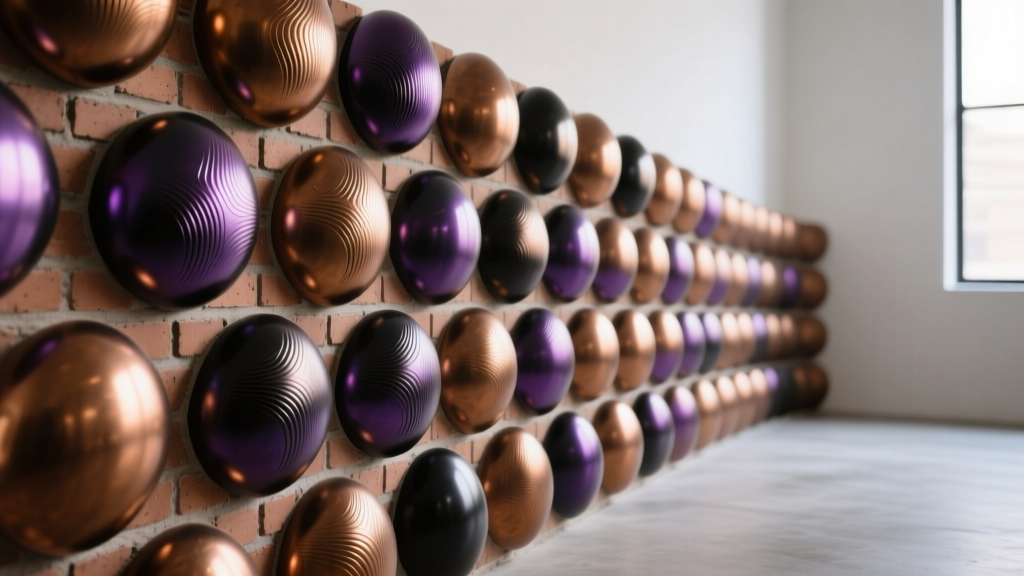
When sourcing bespoke masonry for experiential retail, themed entertainment venues, or avant-garde architectural facades, designers frequently encounter highly specific supplier catalogs and niche search queries. Most notable is the demand for black, white, or purple egg-shaped bricks with a bronze finish—often colloquially tagged in design forums and 3D rendering communities under the novelty moniker 'pokemon brick bronze' due to their modular, ovoid geometry resembling popular digital collectibles. While the terminology may sound unconventional, the physical product represents the absolute pinnacle of custom architectural ceramics.
Unlike standard extruded clay bricks, which are pushed through a die and wire-cut, ovoid (egg-shaped) bricks cannot be extruded. They must be manufactured via slip-casting in plaster molds or hydraulic dry-pressing using custom-milled steel dies. The base colors (black, white, or purple) are achieved through specific engobe formulations applied before the bisque firing. Purple requires precise blends of cobalt and manganese oxides, while deep blacks rely on iron and chromium. The signature bronze luster is applied as a secondary glaze containing copper and iron compounds, fired at cone 06 (approximately 1830°F) in a heavy reduction atmosphere to draw out the metallic sheen.
Material Comparison Matrix: Ovoid Glazed vs. Traditional Alternatives
When evaluating whether to specify custom ovoid bronze-glazed units or pivot to a more traditional masonry alternative, architects must weigh aesthetic impact against structural reality, installation complexity, and budget. Below is a direct comparison of the custom egg-shaped profile against three standard alternatives.
| Feature | Custom Ovoid Bronze-Glazed | Standard Extruded Clay (ASTM C216) | Cast Architectural CMU | 3D-Printed Ceramic |
|---|---|---|---|---|
| Compressive Strength | N/A (Veneer Only) | 8,000 - 12,000+ PSI | 3,000 - 5,000 PSI | 2,500 - 4,000 PSI |
| Aesthetic Versatility | High (Metallic Luster) | Medium (Matte/Textured) | Low (Utilitarian) | High (Complex Geometry) |
| Installation Speed | Very Slow (Custom fitting) | Fast (Standard coursing) | Moderate | Slow (Fragile handling) |
| Water Absorption | < 0.5% (Impervious) | < 3.0% (Severe Weathering) | 8.0 - 12.0% | Varies (Usually > 5%) |
| Typical Lead Time | 14 - 22 Weeks | 1 - 4 Weeks | 2 - 6 Weeks | 6 - 12 Weeks |
Mortar Selection for Curved and Metallic Surfaces
The most common failure mode when installing bronze-glazed ovoid bricks is chemical etching and efflorescence caused by improper mortar selection. Standard Type N or Type S Portland cement mortars contain free lime and soluble salts. When moisture migrates through the wall assembly, these salts leach out and permanently cloud the metallic bronze glaze, ruining the reflective luster.
To prevent this, the Brick Industry Association (BIA) recommends strict protocols for glazed masonry. For ovoid bronze-glazed units, installers must utilize one of the following specialized bedding materials:
- Non-Staining Epoxy Mortar: Products like LATICRETE SpectraLOCK PRO or equivalent high-modulus epoxy systems provide a chemical-resistant, zero-efflorescence bond. Because ovoid bricks lack flat bed joints, the epoxy must be mixed to a stiff, non-sag consistency to support the curved geometry while curing.
- Polymer-Modified White Cement Mortar: If epoxy is cost-prohibitive, a specialized white Portland cement mortar blended with integral silane water repellents and latex polymers can be used. This reduces water migration and minimizes the risk of salt deposition on the metallic surface.
Furthermore, joint tooling on curved surfaces requires custom convex jointers. Recessed or raked joints are strictly prohibited on ovoid bricks, as they create water dams on the curved upper surfaces, accelerating freeze-thaw degradation in exterior applications.
2026 Cost Breakdown and Lead Times
Bespoke architectural ceramics command a significant premium over commodity masonry. As of 2026, the pricing structure for custom slip-cast, bronze-glazed ovoid bricks reflects the intensive labor and multi-stage firing process required.
Custom Ovoid Glazed
$22.00 - $38.00
Per unit (approx. 4x8x2 inch equivalent). Includes custom mold setup and two-stage reduction firing.
Standard Face Brick
$0.65 - $1.40
Per unit. Mass-produced extruded clay brick meeting ASTM C216 standards for severe weathering.
Epoxy Mortar Add-on
+$8.50 - $12.00
Per square foot of wall area. Premium for chemical-resistant, non-staining bedding materials.
Lead times are the secondary cost factor. While a standard brick distributor can fulfill a 50,000-unit order from regional inventory within days, custom ovoid bricks require 14 to 22 weeks for mold fabrication, slip-casting, drying, bisque firing, glazing, and final reduction firing. Projects requiring these units must lock in masonry scopes during the schematic design phase to avoid critical path delays.
Decision Framework: When to Pivot to Alternatives
Not every project justifies the expense and logistical friction of custom ovoid masonry. Use this framework to determine if an alternative is more appropriate:
- Pivot to Cast Architectural CMU if: The project requires load-bearing capacity, fire-rated structural assemblies, or the budget is constrained below $45 per square foot for installed masonry.
- Pivot to 3D-Printed Ceramic if: The design requires complex, non-repeating geometric variations that would make traditional plaster mold-making cost-prohibitive. 3D printing allows for parametric facade variations without tooling costs.
- Pivot to Standard Glazed Brick if: The metallic bronze aesthetic is desired, but the ovoid shape is not structurally or programmatically necessary. Standard flat-bed glazed bricks can be fired with identical copper-iron luster glazes at a 40% lower unit cost and can be laid using standard masonry practices.
Sourcing and Quality Control Standards
When specifying custom bronze-glazed masonry, architects must mandate rigorous quality control. Metallic glazes are notoriously difficult to control in a kiln; slight variations in oxygen levels during the reduction firing can cause the bronze finish to flash green, oxidize to dull brown, or pool unevenly on the curved ovoid surface.
Require the manufacturer to submit a 50-unit range sample panel before full production begins. This panel must demonstrate the acceptable variance in the bronze luster across the black, white, and purple base colors. According to industry best practices highlighted in Masonry Magazine, mock-ups should be constructed on-site and approved by the design team under the exact lighting conditions (both natural and artificial) that will be present in the final installation, as metallic glazes shift dramatically in appearance depending on the angle of incident light.
By understanding the manufacturing constraints, chemical sensitivities, and structural limitations of these highly specialized units, architects and contractors can successfully integrate avant-garde masonry profiles into modern construction without compromising the integrity of the building envelope or the project schedule.
Written by
Marcus ChenMarcus Chen is a licensed structural engineer (PE) and building materials analyst with over 12 years of experience across residential, commercial, and industrial construction. He holds a Master of Science in Civil Engineering from UC Berkeley and spent six years at Thornton Tomasetti before transitioning to independent consulting and technical writing. Marcus specializes in material selection for seismic-prone regions, concrete reinforcement strategies, and lifecycle cost analysis. His work has been cited by the American Concrete Institute (ACI) and the Structural Engineers Association of California (SEAOC). When he is not on a job site or at his desk, you will find him hiking the Sierra Nevada or restoring a 1920s craftsman bungalow in Oakland, CA.
More from Marcus Chen
View all
Construction Cost
How Much Did the Eiffel Tower Cost to Build?
How much did the Eiffel Tower cost to build in 1889? We adjust for inflation and compare its budget to modern skyscraper construction.
Aug 4, 2026

Fire Resistance
What Is a Fire Resistant Material? Testing & Certification Guide
Discover what is a fire resistant material through ASTM and UL testing. Learn how fire ratings, certifications, and assemblies work in construction.
Aug 4, 2026

Construction Cost
How Much Did the Burj Khalifa Cost to Build?
How much did the Burj Khalifa cost to build? We break down the $1.5B project and extract 5 money-saving strategies for your next build.
Jul 30, 2026