Fireside Brick Durability: Lifespan Analysis & Thermal Shock Fixes
Analyze fireside brick durability, expected lifespan, and thermal shock failure modes. Learn how to select, install, and maintain refractory masonry.
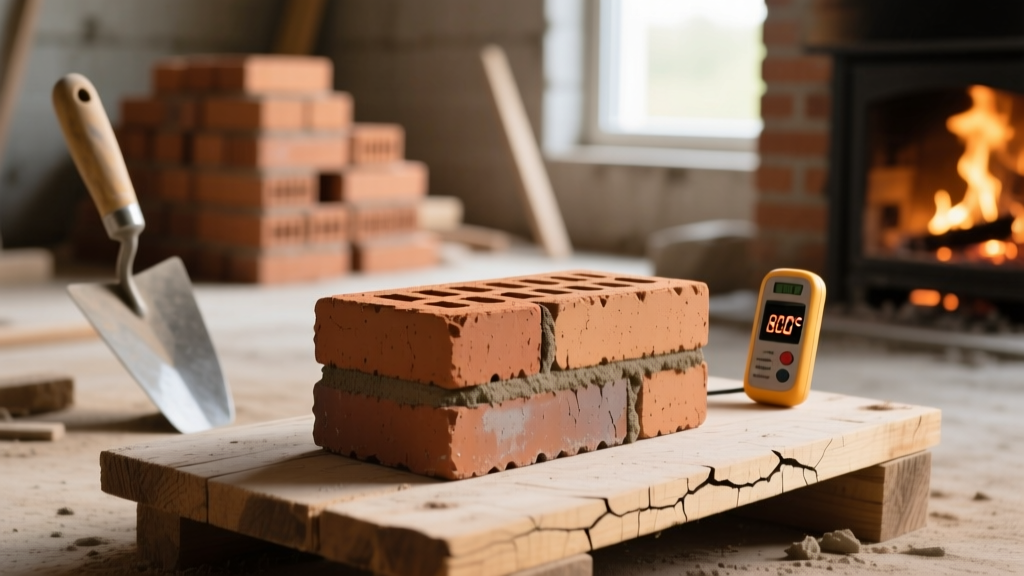
Fireside brick, technically classified as refractory brick or firebrick, forms the critical thermal barrier in residential fireplaces, wood stoves, pizza ovens, and outdoor fire pits. Unlike standard clay masonry, fireside brick is engineered from fireclay and high-alumina materials to withstand continuous temperatures exceeding 2,000°F without degrading. However, durability is not infinite. The lifespan of a refractory installation is dictated by a complex interplay of material density, thermal cycling rates, moisture exposure, and mortar chemistry.
The Science of Fireside Brick Degradation
To understand lifespan expectancy, one must first understand the failure mechanics of alumina-silicate ceramics. Fireside brick degradation rarely occurs from simple heat exposure; rather, it is driven by thermal shock and chemical slagging. When a cold firebrick is rapidly exposed to a 1,500°F fire, the surface expands while the core remains cool. This differential expansion creates immense internal shear stress. If the brick's tensile strength is exceeded, micro-fractures form, eventually leading to macro-cracking and structural spalling.
According to Forno Bravo refractory guidelines, the alumina content in residential fireside brick typically ranges from 30% to 40%. This specific chemical ratio provides the optimal balance between thermal mass (heat retention) and thermal shock resistance. Bricks with higher alumina content (50%+) are harder and more durable but become increasingly brittle and susceptible to cracking during rapid temperature spikes.
Lifespan Expectancy by Brick Density
Not all fireside bricks are manufactured equally. The ASTM C27 standard classifies fireclay bricks by density and duty rating. Selecting the wrong density for a specific application is the leading cause of premature failure.
| Brick Classification | Density (pcf) | Max Temp Rating | Thermal Shock Resistance | Expected Lifespan (Residential) |
|---|---|---|---|---|
| Dense Firebrick (ASTM C27) | 130 - 150 | 2,800°F | Moderate | 50+ years |
| Insulating Firebrick (ASTM C155) | 35 - 75 | 2,600°F | High | 10 - 15 years |
| Standard Clay Brick (Non-Refractory) | 120 - 130 | 800°F (Failure Point) | Very Low | 1 - 3 years (Spalls rapidly) |
Dense Firebrick is the mandatory choice for the firebox floor and lower walls of wood-burning fireplaces. Its high thermal mass absorbs and radiates heat, and its structural integrity withstands the mechanical abrasion of loading firewood. Insulating Firebrick (IFB) is highly porous and lightweight. While it excels at keeping heat inside high-temperature enclosures like kilns or pizza oven domes, its fragile surface will quickly erode if struck by logs or exposed to direct wood ash abrasion.
Critical Failure Modes and Diagnostics
Identifying the specific failure mode of your fireside brick is essential for determining whether a localized repair or a complete firebox rebuild is required.
The most catastrophic failure mode occurs when porous fireside brick absorbs ambient moisture during summer months, followed by a rapid winter fire. Water trapped inside the brick turns to steam at 212°F. If the surface temperature of the brick rises faster than the steam can escape through the pores, internal pressure exceeds 1,000 PSI, literally exploding the face of the brick off the core. Always cure new refractory masonry slowly and ensure the chimney cap prevents rain ingress.
Chemical Slagging and Ash Corrosion
Wood ash is highly alkaline and contains potassium carbonate. When ash accumulates against fireside brick and reaches temperatures above 1,200°F, it undergoes a phase change, melting into a glassy substance known as slag. This slag chemically bonds to the silica in the firebrick. When the fire dies down and the slag cools, it contracts at a different rate than the brick, pulling the brick's surface layer away. Regular ash removal (leaving a 1-inch protective bed, but no more) is critical to preventing this chemical erosion.
Mortar Selection: The Hidden Lifespan Variable
A firebox built with premium ASTM C27 dense firebrick will still fail in under five years if laid with standard Portland cement-based masonry mortar. Portland cement begins to chemically dehydrate and lose structural cohesion at temperatures exceeding 800°F. For fireside applications, refractory mortar is non-negotiable.
Refractory Mortar Types and Ratings
- Calcium Aluminate Cement Mortars: These are heat-setting mortars that require firing to achieve full structural strength. They withstand temperatures up to 3,000°F and are the industry standard for structural firebox walls.
- Sodium Silicate (Air-Setting) Mortars: These cure via evaporation and chemical reaction at room temperature. They are excellent for thin-joint applications (1/16 to 1/8 inch) and are frequently used in pizza oven domes and flue liner installations.
The Chimney Safety Institute of America (CSIA) mandates that any masonry within the firebox and smoke chamber must utilize refractory materials capable of withstanding continuous 1,000°F exposure without loss of adhesion. Standard Type N or Type S mortar joints will shrink, crack, and allow carbon monoxide and extreme heat to bypass the firebox, posing a severe structural fire hazard to the surrounding wood framing.
Proactive Maintenance: The Refractory Curing Schedule
The lifespan of fireside brick and its mortar is heavily dependent on the initial curing process. Rushing the first fire will boil the moisture out of the refractory mortar, causing it to crumble into powder. Follow this exact step-by-step firing schedule for newly installed fireside brick:
- Air Cure (Days 1-3): Allow the refractory mortar to air-dry at ambient temperature. Do not light a fire. Maintain room humidity below 50% if possible.
- Phase 1 Fire (Day 4): Light a small, low-intensity fire using only kindling. Target an internal firebox temperature of 200°F. Maintain for 2 hours. This drives off superficial surface moisture.
- Phase 2 Fire (Day 5): Build a slightly larger fire, adding small split logs. Target 400°F. Maintain for 3 hours. This initiates the chemical hydration process in calcium aluminate mortars.
- Phase 3 Fire (Day 6): Build a standard-sized fire, targeting 600°F to 800°F. This completes the heat-setting process, permanently locking the mortar joints and stabilizing the fireside brick matrix.
For ongoing maintenance, the EPA BurnWise program recommends annual inspections of the firebox refractory lining. Look for hairline cracks wider than 1/16 inch. While vertical thermal expansion cracks in the brick itself are normal and often self-seal with ash, horizontal cracks or missing chunks of the brick face indicate structural failure requiring immediate replacement.
Frequently Asked Questions
Can I patch a cracked fireside brick instead of replacing it?
Yes, but only under specific conditions. If the crack is strictly vertical and less than 1/8 inch wide, it is a standard thermal expansion joint and requires no patching. If the brick has spalled (the face has chipped off) but the structural core remains intact and flush with the surrounding bricks, you can patch it using a high-temperature refractory patching compound (rated to 2,000°F). Do not use standard fireplace caulk or silicone, as these will combust and release toxic fumes.
Why is my outdoor fire pit fireside brick crumbling after one winter?
Outdoor fire pits are subjected to severe freeze-thaw cycles combined with thermal shock. If the fireside brick was not sealed with a breathable, high-temperature siloxane masonry sealer, it absorbs snowmelt. When you light a fire, the trapped water flashes to steam, destroying the brick face. Additionally, many DIY fire pits use standard red clay pavers instead of true ASTM-rated refractory brick, which will naturally disintegrate under direct flame impingement within 12 to 18 months.
Does insulating firebrick (IFB) need to be covered?
In high-wear areas, yes. IFB is incredibly fragile and easily gouged by firewood. In applications like wood-fired ovens, IFB is often used as a secondary backup insulation layer behind a primary wear layer of dense firebrick. If used as the primary interior surface, it must be protected from direct mechanical impact, though it will still suffer from gradual surface dusting and abrasion over a 10-year lifespan.