Canvas Granite Slab Lines: Grading, Pricing, and Fabrication Specs
Explore Canvas granite product lines, slab grading standards, fabrication requirements, and 2026 pricing for premium kitchen and bathroom installations.
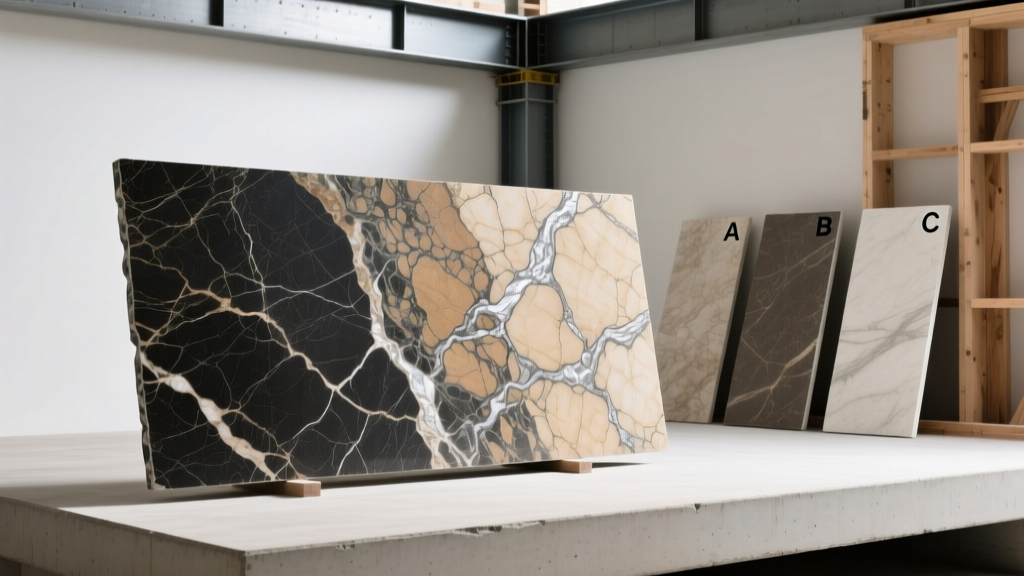
The Commercial Anatomy of Canvas Granite Product Lines
Within the natural stone industry, 'Canvas granite' is not a single geological formation but a commercial trade name applied to a specific visual category of leukocratic (light-colored) granites. Characterized by a soft, off-white or pale beige background with sweeping, intricate veining and speckling that mimics a painted canvas, these slabs are primarily sourced from quarries in the Minas Gerais region of Brazil and select deposits in Rajasthan, India. For architects, fabricators, and high-end residential builders, understanding how major distributors classify, process, and price Canvas granite product lines is critical for accurate project estimation and quality control.
Unlike homogenous materials, Canvas granite features large feldspar megacrysts interspersed with translucent quartz and minor biotite mica. This specific mineralogical makeup dictates everything from the factory resin-filling process to the CNC routing parameters required on the fabrication floor. According to the Natural Stone Institute technical bulletins, the natural fissures inherent in coarse-grained granites require rigorous factory stabilization before the slabs ever reach a distributor's warehouse.
Canvas Granite: Baseline Geological Specifications
- Primary Minerals: Plagioclase feldspar (60-70%), Quartz (20-30%), Biotite/Muscovite Mica (5-10%)
- Average Density: 2.65 to 2.75 g/cm³
- Water Absorption (ASTM C97): 0.15% to 0.35% (Post-resin treatment)
- Mohs Hardness: 6.0 to 7.0 (Highly variable due to quartz/feldspar interlocking)
- Flexural Strength (ASTM C99): 1,500 to 2,200 psi (Dependent on resin penetration depth)
Slab Grading Tiers: Navigating Distributor Classifications
When sourcing Canvas granite from major national distributors or regional importers, you will encounter distinct product line tiers. The visual appeal of the 'canvas' effect relies heavily on the consistency of the feldspar background and the distribution of the gray and taupe veining. Distributors sort these slabs into three primary commercial grades, which directly impact both the aesthetic outcome and the material cost per square foot.
| Grade Classification | Visual & Structural Traits | Resin Treatment | 2026 Material Cost (3cm) |
|---|---|---|---|
| Commercial / Standard | High color variation, frequent natural fissures, clustered mica deposits, uneven background. | Heavy polyester resin fill; surface mesh backing common. | $45 - $60 / sq. ft. |
| Selection / Choice | Moderate veining consistency, minor micro-fissures, reliable off-white background. | Epoxy-polyester blend; vacuum-vibrated penetration. | $65 - $85 / sq. ft. |
| Premium / First Choice | Tight grain, sweeping continuous 'canvas' veining, virtually no open fissures, uniform tone. | Premium clear epoxy; UV-cured, no mesh backing required. | $90 - $125 / sq. ft. |
For high-visibility applications like large kitchen islands or commercial hospitality vanities, specifying Premium / First Choice is non-negotiable. Commercial grade slabs often suffer from 'blotching'—areas where the feldspar megacrysts are overly dense, creating dark patches that ruin the delicate canvas illusion. Furthermore, the heavy polyester resin used on commercial grades can yellow over time when exposed to direct UV light, a critical failure mode for sunrooms or outdoor kitchen applications.
Fabrication Protocols for High-Feldspar Megacryst Stone
The intersection of hard quartz and relatively softer, cleavage-prone feldspar makes Canvas granite uniquely challenging on the fabrication floor. The sweeping mica veins, while visually stunning, act as natural fault lines during CNC routing and edge profiling. Fabricators must adjust their standard operating procedures to prevent blowout, chipping, and lippage.
Tooling and CNC Routing Parameters
Standard segmented diamond blades often tear the feldspar crystals, leaving a micro-chattered edge that requires extensive hand-polishing. To achieve a factory-grade polish on the edge profiles, fabrication shops should utilize the following specifications:
- Blade Selection: Use continuous-rim, turbo-wave diamond blades specifically rated for highly siliceous, coarse-grained stone. A 14-inch blade with a soft-to-medium bond matrix prevents glazing while maintaining a clean cut.
- CNC Router Bits: For ogee or bullnose profiles, employ 1/2-inch shank diamond compression bits. The compression geometry shears the stone fibers cleanly on both the top and bottom surfaces, eliminating the top-edge chipping common with standard V-bits.
- Feed Rates and RPMs: Maintain a steady, moderate feed rate. Pushing the feed rate too fast will snap the mica veins; moving too slow will generate excessive heat, burning the resin fill and leaving permanent white scorch marks on the feldspar.
Seaming and Color-Matching Complexities
Because Canvas granite features a busy, multi-tonal background, hiding seams is generally easier than with solid-color granites. However, the translucency of the quartz crystals complicates the epoxy color-matching process. If the seam epoxy is too opaque, it will look like a painted line; if it is too transparent, the dark substrate or adhesive will show through. Expert fabricators use a dual-part clear epoxy, tinted with microscopic amounts of titanium dioxide and raw umber pigments, testing the cure on a scrap piece of the exact slab before executing the final seam.
2026 Market Pricing and Installed Cost Breakdown
The macroeconomic factors affecting the USGS dimension stone market, including international freight rates and quarry labor costs, have stabilized in 2026, but premium natural stone remains a significant investment. Below is a realistic breakdown of the total installed cost for a 50-square-foot kitchen perimeter and island using Premium First Choice Canvas granite (3cm thickness).
- Material (Premium 3cm Slabs): $4,500 - $6,250 (Requires 2.5 slabs to account for waste and pattern matching)
- Template & Laser Measurement: $250 - $400
- Fabrication (Cutouts, Edge Profiling, Polish): $2,250 - $3,500 ($45-$70 per sq. ft.)
- Plumbing Cutouts & Core Drilling: $150 - $300
- Delivery & Installation (Seaming, Leveling): $1,200 - $1,800
- Total Estimated Project Cost: $8,350 - $12,250
Comparative Analysis: Canvas Granite vs. Quartzite Alternatives
Designers often cross-shop Canvas granite with light-colored quartzites like Macaubas or Taj Mahal. While they share a similar color palette, their physical properties and maintenance requirements diverge significantly. Industry publications like Stone World frequently highlight the mislabeling of dolomites and granites in the market, making geological verification essential.
Canvas granite is virtually impervious to etching from acidic substances (lemon juice, vinegar, wine) due to its lack of calcite. Quartzites, while harder and more scratch-resistant, can sometimes contain calcium carbonate veins that will etch upon contact with acids. Furthermore, Canvas granite's resin-filled surface requires zero annual sealing in most residential environments, whereas quartzites often require penetrating impregnating sealers every 12 to 18 months to prevent oil staining. For high-traffic rental properties or commercial hospitality spaces, Canvas granite offers a vastly superior lifecycle cost and lower maintenance burden.
Technical FAQ: Performance and Maintenance
Does Canvas granite require a topical sealer?
No. Premium grades of Canvas granite are factory-treated with deep-penetrating, UV-cured epoxy resins that fill the micro-porosity of the stone. This reduces the water absorption rate to well below 0.2%. Applying a topical wax or acrylic sealer will only create a hazy film that traps dirt and degrades the optical clarity of the polished feldspar. A high-quality, solvent-based penetrating impregnator applied once every 3-5 years is sufficient for spill resistance.
Can Canvas granite be used for exterior cladding in freeze-thaw climates?
Yes, but with strict caveats. The stone itself is highly resistant to freeze-thaw cycling due to its low absorption rate. However, the factory resin fill can degrade under prolonged UV exposure and extreme temperature fluctuations. For exterior applications in northern climates, specify 'honed' or 'flamed' finishes that have not been heavily resined, and ensure the installation utilizes a mechanical anchoring system rather than thin-set mortar adhesion alone.
How do I repair a micro-chip on a Canvas granite edge?
Micro-chips along the eased or beveled edge can be repaired using a clear, low-viscosity cyanoacrylate (CA) adhesive mixed with a fine granite dust collected from the fabrication saw. Apply the mixture to the chip, allow it to cure for 15 minutes, and carefully scrape it flush with a single-edge razor blade. Finish by hand-polishing the spot with a 3,000-grit diamond polishing pad to restore the optical continuity of the quartz crystals.