Complete Guide to Grey Stone Veneer: Costs, Styles & Installation
Explore the complete guide to grey stone veneer. Compare natural vs. manufactured options, analyze 2026 costs, and master critical installation specs.

Understanding Grey Stone Veneer: Architectural Impact and Material Science
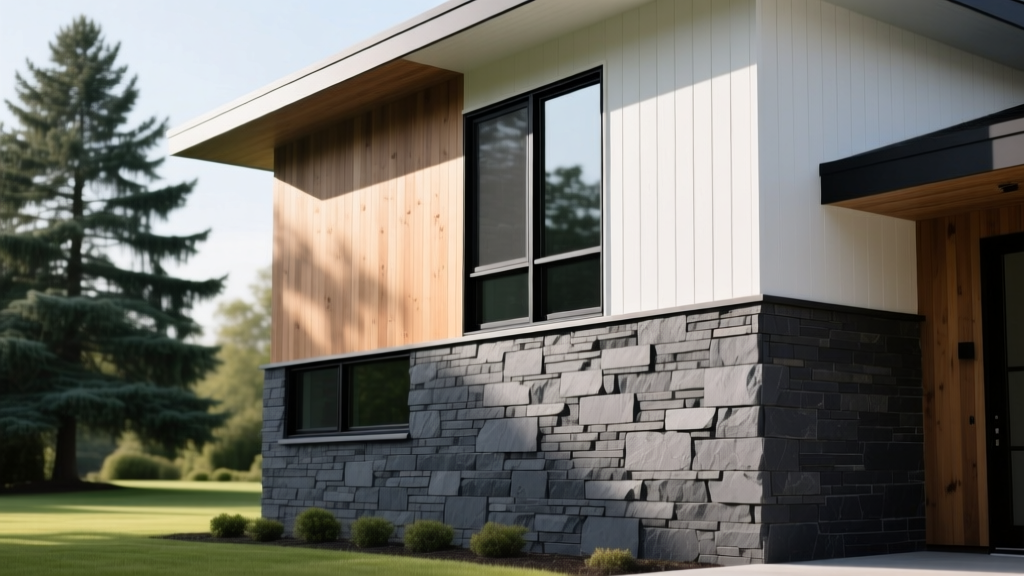
Grey stone veneer has become a dominant force in both residential and commercial architecture, prized for its ability to bridge modern minimalism and rustic traditionalism. Unlike full-bed masonry, stone veneer is a non-structural cladding system designed to replicate the aesthetic of solid stone while significantly reducing weight, structural load requirements, and overall project costs. The grey color palette—ranging from warm pewter and weathered ash to deep charcoal and cool slate—offers unparalleled versatility, pairing seamlessly with black steel windows, white fiber-cement siding, and natural timber accents.
Quick Material Specifications
- Thickness: 1 to 2.5 inches (varies by profile)
- Weight: 6 to 15 lbs per square foot (psf)
- Thermal Resistance: Negligible inherent R-value (R-0.1 to R-0.4); requires continuous insulation behind the substrate
- Fire Rating: Non-combustible (ASTM E136 compliant for manufactured and natural variants)
Natural vs. Manufactured Grey Stone Veneer
Choosing between natural and manufactured stone veneer (MSV) dictates your budget, structural requirements, and long-term maintenance. Natural grey stone is quarried from the earth—typically slate, granite, or limestone—and sliced into thin veneers. Manufactured stone is cast in molds taken from real stone, utilizing a blend of Portland cement, lightweight aggregates, and iron-oxide pigments to achieve hyper-realistic coloration.
| Feature | Natural Grey Stone | Manufactured Stone (MSV) |
|---|---|---|
| Material Cost | $14.00 – $22.00 / sq. ft. | $7.00 – $11.00 / sq. ft. |
| Weight | 10 – 15 lbs / sq. ft. | 6 – 8 lbs / sq. ft. |
| Color Consistency | High variation; natural veining | Controlled; batch-dependent |
| ASTM Standard | ASTM C568 (Limestone), C616 (Sandstone) | ASTM C1670 (Manufactured Stone) |
| Corner Pieces | Difficult to source; expensive | Readily available; U-shaped returns |
Architectural Profiles and Design Applications
The visual weight of grey stone veneer is heavily influenced by its profile. Selecting the correct pattern is critical for matching the architectural style of the structure.
1. Stacked and Linear Ledger
Characterized by clean, horizontal lines with tight, dry-stack joints (no visible mortar). Linear ledger panels in charcoal or slate grey are the standard for contemporary facades, modern fireplace surrounds, and exterior accent walls. Installation is faster due to the interlocking nature of the panels, though a tight fit requires precise substrate leveling.
2. Fieldstone and Rubble
Irregular, organic shapes with wide, prominent mortar joints. Grey fieldstone mimics river rock or gathered fieldstone, providing a rustic, traditional aesthetic. This profile requires a highly skilled mason to balance the visual weight of disparate stone sizes and maintain consistent 0.5-inch to 1-inch mortar joints.
3. Ashlar and Squared
Rectangular, cut stones of varying heights and lengths. Ashlar patterns in weathered grey tones bridge the gap between formal and rustic, often used on craftsman-style homes and high-end commercial exteriors. It offers a structured look while retaining natural texture on the stone faces.
2026 Cost Breakdown: Material, Labor, and Accessories
Budgeting for a stone veneer project requires looking beyond the per-square-foot cost of the stone itself. The ancillary materials required for a code-compliant, moisture-managed assembly significantly impact the final price.
| Cost Category | Low End (per sq. ft.) | High End (per sq. ft.) | Notes |
|---|---|---|---|
| Manufactured Stone Material | $7.00 | $11.00 | Includes 5-10% waste factor |
| Natural Stone Material | $14.00 | $22.00 | Higher waste due to cutting |
| Prep & Accessories | $2.50 | $4.50 | WRB, lath, mortar, weep screed |
| Professional Labor | $9.00 | $16.00 | Varies by profile complexity |
| Total Installed (MSV) | $18.50 | $31.50 | Average residential exterior |
Critical Installation Requirements and Moisture Management
The leading cause of stone veneer failure is not material degradation, but moisture entrapment leading to substrate rot, efflorescence, and freeze-thaw spalling. Adherence to strict moisture management protocols is non-negotiable. The International Masonry Institute emphasizes that veneer systems must be designed as drained and back-ventilated claddings or face-sealed barrier walls with redundant weather-resistant barriers (WRB).
- Substrate and WRB Application: Begin with a structurally sound substrate (OSB, plywood, or CMU). Apply two layers of Grade D building paper or a high-performance fluid-applied membrane. The dual-layer system creates a microscopic drainage plane between the layers, allowing incidental moisture to migrate downward.
- Corrosion-Resistant Metal Lath: Install 2.5 lb self-furring galvanized steel lath conforming to ASTM C847. Fasten every 6 inches vertically and 16 inches horizontally into the wall studs, not just the sheathing. Overlap horizontal seams by 1 inch and vertical seams by 2 inches.
- Scratch Coat: Apply a 0.5-inch thick scratch coat of Type S mortar. Scarify the surface horizontally with a raking tool to provide a mechanical key for the setting bed. Allow to cure for a minimum of 24 to 48 hours, keeping it damp in hot climates to prevent rapid moisture loss.
- Stone Setting and Mortar Selection: Use a polymer-modified veneer mortar or a standard Type S mix. Butter the back of each stone completely to eliminate air pockets, which can trap water and cause freeze-thaw pop-offs. Maintain strict joint widths according to the manufacturer's profile specifications.
Warning: Weep Screed and Grade Clearances
Never install stone veneer directly to the ground or flat against a concrete slab. Building codes mandate the installation of a corrosion-resistant weep screed at the base of the wall assembly. The weep screed must be positioned a minimum of 4 inches above finished earth grade or 2 inches above paved surfaces and decks. Failure to maintain these clearances will result in capillary action drawing ground moisture into the veneer assembly, leading to catastrophic efflorescence and substrate decay.
Preventing and Managing Efflorescence
Efflorescence—the white, powdery salt deposit that appears on masonry surfaces—is particularly glaring on dark grey stone veneer. It occurs when water-soluble salts within the Portland cement mortar or the stone itself are dissolved by moisture and transported to the surface, where the water evaporates and leaves the salts behind.
To mitigate efflorescence on grey veneer:
- Use Low-Alkali Materials: Specify Type S mortar with low-alkali Portland cement and ensure the sand aggregate is washed and free of soluble salts.
- Control Moisture During Installation: Protect newly laid stone from rain and direct sun. Cover the work area with breathable tarps at the end of each shift.
- Proper Cleaning Protocols: Never use high-pressure washers or unbuffered muriatic acid on manufactured stone. If efflorescence appears, remove it mechanically with a stiff, non-metallic brush. For persistent deposits, use a proprietary masonry cleaner specifically formulated for manufactured stone, testing on an inconspicuous area first.
Long-Term Maintenance and Durability
When installed correctly, grey stone veneer requires minimal ongoing maintenance. Manufactured stone meeting ASTM C1670 standards is tested for freeze-thaw durability, compressive strength, and water absorption. Unlike wood siding, it will not rot, harbor termites, or require repainting. However, the mortar joints are the weakest link in the assembly. Inspect the mortar joints every 3 to 5 years for hairline cracking or separation from the stone. Minor cracks can be routed out and repointed using a color-matched, sanded masonry caulk or fresh veneer mortar to maintain the integrity of the moisture barrier.
Written by
Elena RodriguezElena Rodriguez is a civil engineer and technical writer specializing in concrete technology, masonry systems, and ASTM/ACI compliance. She earned her B.S. in Civil Engineering from Texas A&M University and spent a decade at a materials testing laboratory, performing over 2,000 concrete compressive strength tests and masonry prism evaluations. Elena is an ACI-certified Field Testing Technician (Grade I) and a member of ASTM Committee C12 on Natural Building Stone. She currently consults on forensic engineering cases involving concrete failures and moisture intrusion. Based in San Antonio, TX, Elena is a proud member of the Society of Women Engineers (SWE) and coaches her daughter's FIRST Robotics team.
More from Elena Rodriguez
View all
Walls & Panels
Cost Analysis: Light Gauge Steel Framing Advantages and Disadvantages
Evaluate light gauge steel framing advantages and disadvantages through a strict cost analysis lens, comparing material, labor, and lifecycle expenses.
Aug 4, 2026

Walls & Panels
Gypsum Board Types: Exact Specifications, Thickness & Dimensions
Compare standard, Type X, and moisture-resistant gypsum board types. Get exact specifications, thicknesses, dimensions, and ASTM standards for your project.
Aug 4, 2026

Fire Resistance
Best Fire-Resistant Outdoor Decking Materials: 2026 Buyer Guide
Discover the best fire-resistant outdoor decking materials for 2026. Compare Class A PVC, aluminum, and hardwood options for WUI compliance and safety.
Aug 4, 2026