Cobblestone Stone Veneer vs Natural Stone: Cost & Installation Review
Compare cobblestone stone veneer to natural stone and solid cobble. Analyze 2026 costs, weight limits, ASTM standards, and installation failure modes.

The Core Dilemma: Solid Cobblestone vs. Veneer Alternatives
Specifying a cobblestone aesthetic for a facade, retaining wall, or interior accent introduces immediate structural and logistical constraints. Traditional solid cobblestone pavers and blocks are incredibly heavy, often exceeding 25 pounds per square foot, and mandate continuous concrete footings below the frost line. For the vast majority of modern residential and commercial retrofits, this structural requirement is cost-prohibitive. Consequently, architects and contractors turn to cobblestone stone veneer—available in both natural quarried slices and Adhered Manufactured Stone Masonry Veneer (AMSV). While both veneer options mimic the rounded, irregular profile of historic cobble, their material composition, installation protocols, and long-term failure modes differ significantly.
This comparison review dissects the hard numbers, building code requirements, and real-world installation realities of cobblestone veneer systems to help you specify the correct material for your next project.
Material Cost, Weight, and Structural Matrix
Estimating a cobblestone project requires looking beyond the base square-foot material cost. The most common financial trap for contractors is failing to account for corner pieces, which are sold by the linear foot, not the square foot. A standard 100-square-foot wall with two outside corners will require roughly 16 linear feet of corner pieces, which often cost 30% to 50% more per unit than flat pieces.
| Material Type | Weight (lbs/sq ft) | Material Cost (Flat) | Corner Cost (Lin. Ft.) | Labor Cost (sq ft) | Footing Required? |
|---|---|---|---|---|---|
| Solid Natural Cobblestone | 25 - 35+ | $18.00 - $28.00 | $25.00 - $45.00 | $22.00 - $35.00 | Yes (Continuous) |
| Natural Cobblestone Veneer | 12 - 16 | $14.00 - $22.00 | $18.00 - $30.00 | $16.00 - $24.00 | No (Wall Hung) |
| Manufactured Cobblestone (AMSV) | 9 - 12 | $9.00 - $15.00 | $12.00 - $22.00 | $14.00 - $20.00 | No (Wall Hung) |
Installation Protocols and ASTM Standards
Both natural and manufactured cobblestone veneers are classified as adhered masonry. They rely on a mechanical bond between the mortar setting bed and the stone, transferred through metal lath into the structural sheathing. However, the governing standards and material tolerances vary.
Governing Codes and Material Specs
- Manufactured Veneer (AMSV): Must comply with ASTM C1670 (Standard Specification for Adhered Manufactured Stone Masonry Veneer). This standard dictates freeze-thaw durability, compressive strength, and water absorption limits for concrete-based veneers.
- Natural Stone Veneer: Governed by ASTM C1780. Natural cobblestone slices, typically cut from river rock or granite fieldstone, must meet specific density and absorption criteria to prevent spalling.
According to guidelines published by the Natural Stone Institute, natural stone veneers require careful sorting on-site. Because natural cobblestone features highly irregular, rounded profiles, the mason must select stones with relatively flat backs to ensure maximum mortar contact area. Manufactured cobblestone veneer solves this issue by casting the rounded "face" of the cobble against a flat polyurethane mold, resulting in a uniform, flat back that adheres easily to the scratch coat.
The Mortar Matrix: Type N vs. Polymer-Modified
For adhered veneer, the mortar must possess high bond strength and moderate flexibility to accommodate thermal expansion. Per ASTM C270, a Type N mortar mix (1 part Portland cement, 1/2 part hydrated lime, 4.5 parts sand) is the traditional baseline. However, the Portland Cement Association and modern veneer manufacturers strongly recommend using pre-blended, polymer-modified veneer mortars for cobblestone profiles. Cobblestone features deep, undulating joints that require "grouting" or pointing with a mortar bag. Polymer-modified mortars reduce efflorescence, increase bond strength by up to 40%, and resist sagging when filling deep, rounded joints.
Long-Term Durability and Failure Modes
Cobblestone profiles—characterized by their rounded, protruding faces—present unique weathering challenges compared to flat-ledger or ashlar stone patterns.
The rounded, protruding nature of cobblestone creates horizontal "shelves" where snow and rainwater can pool. In freeze-thaw climates, if the mortar joint is not properly tooled to a slight concave or V-shape to shed water, moisture will penetrate the joint, freeze, and pop the face off the stone (spalling). Manufactured veneers with high water absorption rates (above 8%) are particularly vulnerable if installed without a rainscreen drainage plane.
Efflorescence Management
Efflorescence—the white, powdery salt deposit on masonry surfaces—is common in newly installed veneer. The curing process of Portland cement releases soluble salts that migrate to the surface with moisture.
- On Natural Cobblestone: Can be cleaned using a diluted muriatic acid solution (1 part acid to 10 parts water) after a 30-day curing period, followed by a thorough water rinse.
- On Manufactured Cobblestone: Never use acid. Acid will etch the cementitious surface and strip the iron-oxide pigments used to color the veneer. Use a stiff nylon brush and a specialized, non-acidic efflorescence cleaner designed for AMSV.
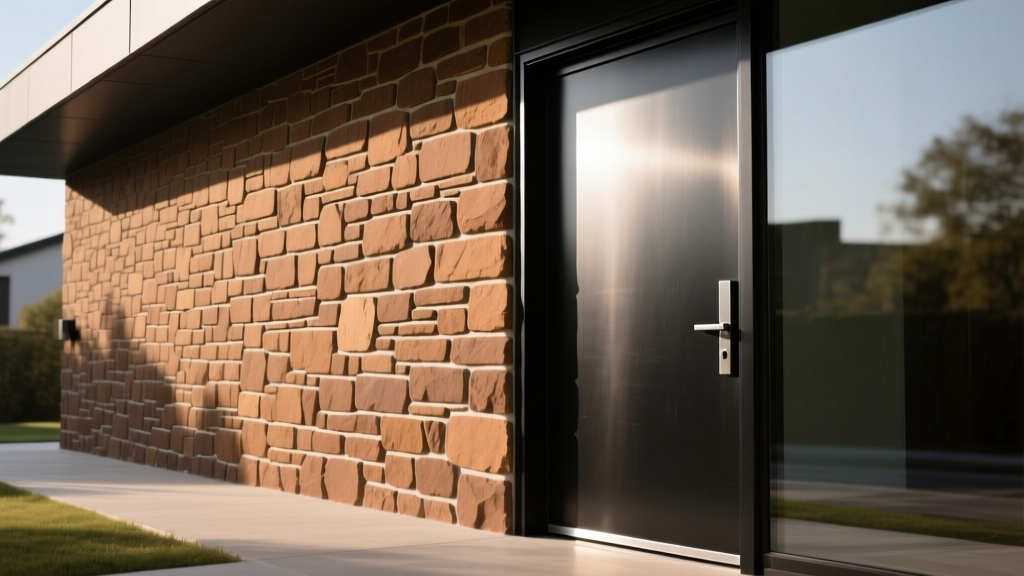
Leading Manufactured Cobblestone Veneer Profiles
If you specify manufactured cobblestone stone veneer for its weight advantages and consistent installation, two product lines dominate the premium architectural market:
Eldorado Stone: Cobblefield
Eldorado Stone's "Cobblefield" profile is widely considered the benchmark for manufactured cobble. It features a mix of rounded, oval, and slightly squared shapes that mimic centuries-old European street pavers.
- Dimensions: Individual stones range from 3" to 8" in width, with a thickness of 1.5" to 2.5".
- Colorways: Available in "Upcountry" (warm earth tones with charcoal accents) and "Sealant" (cool grays and blues).
- Best Application: High-end residential exteriors, wine cellars, and heavy-timber craftsman accents. Visit Eldorado Stone for specific architectural CAD details and weep screed requirements.
Cultured Stone: Cobblestone
Cultured Stone offers a slightly more rustic, irregular cobblestone profile with deeper mortar joints. Their high-density concrete mix yields a product with excellent impact resistance, making it suitable for wainscoting in high-traffic commercial lobbies or mudrooms where natural stone might chip upon impact.
Decision Framework: Which Should You Specify?
Selecting the right cobblestone material hinges on three primary project constraints: structural capacity, budget, and aesthetic authenticity.
- Specify Solid Natural Cobblestone if: You are designing a new-build retaining wall, a structural gate pillar, or a driveway apron where the stone will bear compressive loads or require a continuous poured concrete footing. Veneer cannot be used in load-bearing or horizontal paving applications.
- Specify Natural Cobblestone Veneer if: The client demands 100% geological authenticity, unique color variations that cannot be replicated in concrete, and the budget allows for higher material costs and the skilled masonry labor required to sort and bed irregular natural slices.
- Specify Manufactured Cobblestone Stone Veneer (AMSV) if: You are retrofitting an existing wood-framed structure, working with strict weight-load limits on cantilevered walls, or seeking to minimize labor hours. The flat-backed casting of AMSV allows less specialized masons to achieve a high-quality, structurally sound installation while reducing overall project costs by 25% to 35% compared to natural alternatives.
By understanding the structural thresholds, estimating traps, and specific mortar requirements of cobblestone profiles, you can eliminate job-site surprises and deliver a facade that withstands both structural loads and aesthetic scrutiny.
Written by
David NakamuraDavid Nakamura is a licensed architect (AIA) and construction technology writer focused on sustainable building methods, mass timber engineering, and high-performance building envelopes. He holds a Master of Architecture from the University of Washington and is a certified Passive House Consultant (CPHC). David spent eight years at the Seattle firm Mithun, where he led the design of three LEED Platinum projects, before founding his own practice specializing in net-zero residential design. He serves on the editorial advisory board of GreenBuilder Magazine and has authored peer-reviewed papers on cross-laminated timber (CLT) connections for the Journal of Structural Engineering. In his spare time, David teaches woodworking at Pratt Fine Arts Center and kayaks the Puget Sound.
More from David Nakamura
View all
Construction Cost
Labor Cost to Build a Deck Per Sq Ft: 2026 Installation Guide
Discover the exact labor cost to build a deck per sq ft in 2026. This installation guide breaks down contractor rates, complexity factors, and hidden fees.
Aug 4, 2026

Construction Cost
How Much Does It Cost to Build a 3 Bedroom House? Financing Guide
Learn exactly how much it costs to build a 3 bedroom house and explore 2026 financing options, construction loan types, and budget frameworks for your build.
Aug 4, 2026

Construction Cost
Cost to Build a Tennis Court: 2026 Guide
How much does it cost to build a tennis court in 2026? Breakdowns for asphalt, concrete, and synthetic surfaces plus fencing and lighting.
Jul 30, 2026