Manufactured Stone Veneer Maintenance: When to Search "Manufactured Stone Veneer Near Me"
Master manufactured stone veneer maintenance with our DIY cleaning matrix, and learn when to search "manufactured stone veneer near me" for pro repairs.
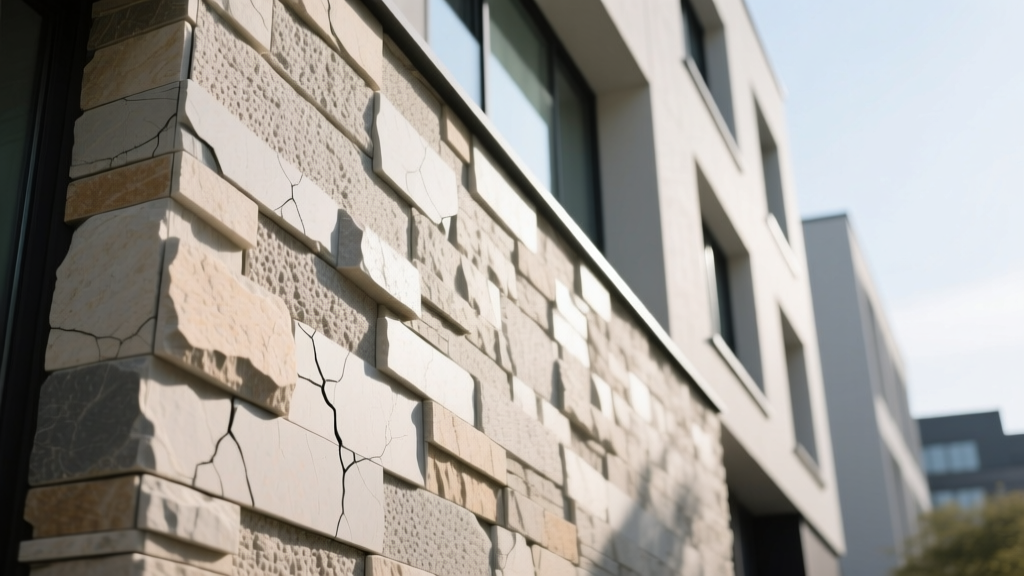
The Science of Manufactured Stone Veneer Porosity and Maintenance
Manufactured stone veneer (MSV) is engineered from Portland cement, lightweight aggregates, and iron oxide pigments to mimic natural stone. While it offers exceptional aesthetic appeal and a fraction of the weight of full-thickness masonry, its cementitious base makes it inherently porous. According to ASTM C1670 standards outlined by the Manufactured Stone Veneer Association (MVMA), MSV can absorb between 8% and 15% of its weight in water if left unsealed or improperly maintained. This porosity dictates your entire maintenance strategy: routine cleaning requires pH-neutral or mildly alkaline solutions, while structural failures demand immediate professional intervention.
Homeowners often mistakenly treat MSV like natural granite or slate, applying harsh acidic cleaners that permanently etch the cement binder and bleach the synthetic pigments. Understanding the chemical limitations of your veneer is the first step in preserving its lifespan, which typically ranges from 20 to 50 years when properly maintained.
Routine DIY Maintenance and Cleaning Matrix
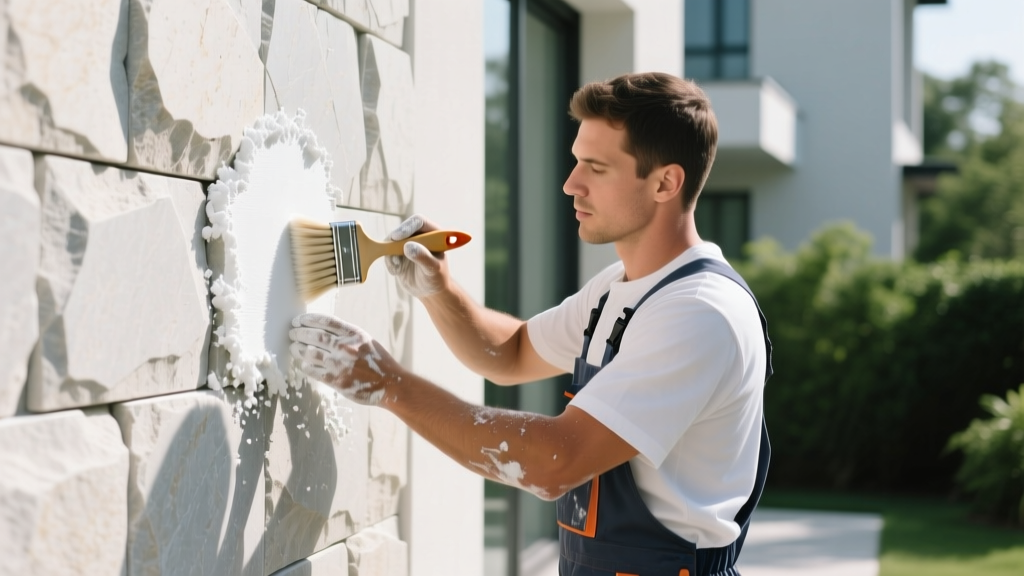
For 90% of routine maintenance tasks, DIY methods are both safe and highly effective. The golden rule for washing MSV is to always pre-wet the wall with clean water before applying any cleaning solution. This prevents the dry, porous stone from rapidly absorbing the cleaning chemicals, which can cause deep-set staining.
| Stain / Issue Type | Recommended Cleaning Agent | Dwell Time | Agitation & Rinse Method |
|---|---|---|---|
| Dirt, Dust, & Mild Algae | Mild dish soap (e.g., Dawn) + warm water | 3–5 minutes | Soft nylon bristle brush; rinse with garden hose |
| Efflorescence (White Salt Deposits) | Dry stiff-bristle brush (non-metallic) or Prosoco Sure Klean® Limestone Cleaner | N/A (Dry) or 5 mins (Wet) | Dry brush first. If wet, agitate gently and low-pressure rinse |
| Hard Water & Mineral Stains | White vinegar diluted 1:4 with water (test in hidden area first) | 2–3 minutes max | Soft sponge; rinse immediately and thoroughly |
| Grease or BBQ Splatter | Trisodium Phosphate (TSP) substitute or heavy-duty degreaser | 5–10 minutes | Stiff nylon brush; hot water rinse |
Pressure Washing Parameters: If you must use a pressure washer, the MVMA strictly advises a maximum of 400 PSI with a 40-degree wide fan tip. Maintain a minimum 12-inch standoff distance from the veneer surface. Exceeding these parameters will blast the cementitious matrix out from around the lightweight aggregates, causing a 'pitted' appearance that cannot be repaired without replacing the panel.
Climate-Specific Degradation: Freeze-Thaw vs. High Humidity
Maintenance frequency and failure modes are heavily dictated by your local climate. In northern regions subject to freeze-thaw cycles, the primary enemy is moisture intrusion behind the veneer. When water penetrates the mortar joints and freezes, it expands by 9%, causing 'spalling' (where the face of the stone pops off) or complete delamination from the weather-resistant barrier (WRB). In these climates, inspecting and repointing mortar joints every 3 to 5 years is mandatory.
Conversely, in high-humidity or coastal environments, biological growth (mold, mildew, and lichen) and efflorescence are the dominant issues. Here, maintenance shifts toward annual biocidal washes and ensuring that weep screeds at the base of the wall remain completely clear of soil and mulch to allow the cavity to drain and breathe.
When DIY Fails: Sourcing "Manufactured Stone Veneer Near Me" for Professional Repairs
While cleaning is a straightforward DIY task, structural issues such as bulging panels, widespread mortar joint failure, or impact damage require professional remediation. This is the exact scenario where typing manufactured stone veneer near me into your search engine becomes a critical strategic move, rather than just a matter of geographic convenience.
The Batch-Matching Dilemma
Manufactured stone veneer is colored using iron oxide pigments mixed into the concrete slurry during the casting process. Because of slight variations in raw material batches, humidity levels at the manufacturing plant, and curing times, no two production batches of MSV are exactly identical in color. If a tree branch damages a section of your Eldorado Stone or Boral Cultured Stone facade, ordering replacement panels online from a national distributor will almost certainly result in a visible color mismatch.
By searching for manufactured stone veneer near me, you connect with regional masonry suppliers and specialized contractors who:
- Maintain Local Inventory: They often stock remnants from regional manufacturing runs that match the specific dye lots used in your geographic market over the last decade.
- Offer Custom Color-Matching: Local masonry artisans can use mineral oxide stains and acid-wash techniques to artificially age and color-match new replacement stones to your existing, sun-faded facade.
- Understand Regional Building Codes: Local professionals are intimately familiar with your municipality's specific requirements for WRB (Weather-Resistant Barrier) installation, weep screed clearances, and lath attachment standards.
Cost Expectations for Professional MSV Remediation
Understanding the financial landscape of MSV repair helps you budget accurately when hiring local contractors. Based on 2026 regional masonry rates, here is what you can expect to pay for professional intervention:
- Mortar Repointing (Tuckpointing): $8.00 – $14.00 per square foot. Required when joints crack and allow moisture behind the veneer.
- Partial Panel Replacement (Includes color-matching): $22.00 – $38.00 per square foot. Includes demolition of damaged area, WRB repair, lath installation, and setting new stone.
- Efflorescence & Deep Biological Cleaning (Professional Grade): $1.50 – $3.50 per square foot. Utilizes commercial-grade, buffered masonry cleaners and soft-wash systems.
- Weep Screed Retrofit: $12.00 – $18.00 per linear foot. Necessary if the original installer buried the weep screed in soil or concrete, trapping moisture in the wall cavity.
Vetting Local MSV Repair Contractors: A Decision Framework
Not all masons are trained in adhered manufactured stone masonry veneer. Traditional bricklayers often apply MSV using standard brick mortar and techniques, which can lead to premature failure. Use this checklist when evaluating contractors found through your local search:
- MVIA/MVMA Certification: Ask if the contractor or their lead mason has completed the Manufactured Stone Veneer Association's Certified Installer program.
- Mortar Specification: Verify they use Type S or Type N mortar specifically formulated for veneer applications, not standard high-strength brick mortar which is too rigid and will crack under thermal expansion.
- WRB Verification: Ensure their repair proposal explicitly includes inspecting and repairing the underlying Grade D paper or house wrap, and installing proper corrosion-resistant lath.
Frequently Asked Questions (FAQ)
Can I apply a clear masonry sealer to my manufactured stone veneer to reduce maintenance?
Generally, no. The MVMA and most major manufacturers (like Cultured Stone and Coronado Stone) strongly advise against applying film-forming or non-breathable sealers. MSV is designed to be a breathable system. Sealing the exterior traps moisture migrating from the interior of the house or from the wall cavity, leading to freeze-thaw spalling and efflorescence buildup behind the sealer. If you must use a water repellent, use only a breathable, silane/siloxane-based penetrating sealer, and test it on a small, inconspicuous area first, as it will alter the stone's sheen and color depth.
Why is my mortar cracking and pulling away from the manufactured stones?
This is typically caused by one of three issues: improper mortar mix (too much Portland cement causing shrinkage), lack of control joints in long, uninterrupted wall spans, or structural settling of the foundation. If the cracking is localized to a single joint, it can be repointed. If you see a continuous stair-step crack spanning multiple feet, consult a structural engineer before searching for a masonry contractor.
How do I safely remove paint that was accidentally sprayed onto my stone veneer?
Do not use aggressive chemical paint strippers or wire wheels, which will destroy the stone's texture. For latex paint, use a localized application of a soy-based, biodegradable paint remover (such as Dumond Smart Strip). Apply it thickly, cover with plastic wrap to slow evaporation, let it dwell for 12-24 hours, and gently scrape with a plastic putty knife. Follow the Brick Industry Association's guidelines on masonry cleaning for safe chemical dwell times and neutralization protocols.
Written by
Elena RodriguezElena Rodriguez is a civil engineer and technical writer specializing in concrete technology, masonry systems, and ASTM/ACI compliance. She earned her B.S. in Civil Engineering from Texas A&M University and spent a decade at a materials testing laboratory, performing over 2,000 concrete compressive strength tests and masonry prism evaluations. Elena is an ACI-certified Field Testing Technician (Grade I) and a member of ASTM Committee C12 on Natural Building Stone. She currently consults on forensic engineering cases involving concrete failures and moisture intrusion. Based in San Antonio, TX, Elena is a proud member of the Society of Women Engineers (SWE) and coaches her daughter's FIRST Robotics team.
More from Elena Rodriguez
View all
Walls & Panels
Cost Analysis: Light Gauge Steel Framing Advantages and Disadvantages
Evaluate light gauge steel framing advantages and disadvantages through a strict cost analysis lens, comparing material, labor, and lifecycle expenses.
Aug 4, 2026

Walls & Panels
Gypsum Board Types: Exact Specifications, Thickness & Dimensions
Compare standard, Type X, and moisture-resistant gypsum board types. Get exact specifications, thicknesses, dimensions, and ASTM standards for your project.
Aug 4, 2026

Fire Resistance
Best Fire-Resistant Outdoor Decking Materials: 2026 Buyer Guide
Discover the best fire-resistant outdoor decking materials for 2026. Compare Class A PVC, aluminum, and hardwood options for WUI compliance and safety.
Aug 4, 2026