Is Stone Veneer Real Stone? The Complete Buyer's Guide
Discover if stone veneer is real stone. Compare natural vs. manufactured stone veneer composition, weight, costs, and installation for your next project.

The Short Answer: Natural vs. Manufactured
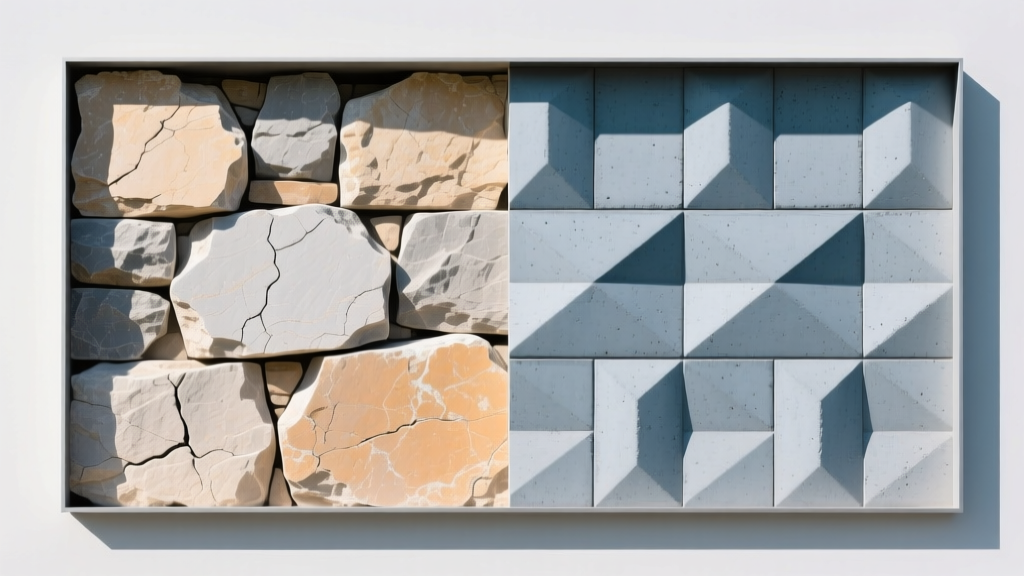
When buyers ask, "Is stone veneer real stone?" the answer depends entirely on the specific product category. "Stone veneer" is not a single material; it is an umbrella term for thin, decorative wall claddings. In the building materials market, veneer is divided into three distinct categories: Natural Stone Veneer (NSV), Manufactured Stone Veneer (MSV), and Polyurethane Faux Stone. Only one of these is actually quarried from the earth.
Natural Stone Veneer is 100% real stone—such as granite, limestone, slate, or fieldstone—that has been mechanically sliced into thin profiles (typically 0.5 to 1.5 inches thick) to reduce weight while retaining the exact geological composition of full-thickness masonry. Manufactured Stone Veneer, conversely, is an architectural concrete product. It contains zero quarried stone, relying instead on Portland cement, lightweight aggregates, and iron oxide pigments poured into molds cast from real stone. Polyurethane faux stone is a high-density foam panel that mimics the texture of stone but is fundamentally a plastic polymer.
Material Composition and Manufacturing Standards
Understanding what is inside your veneer dictates how it will perform, age, and react to moisture. Manufactured Stone Veneer (MSV) is governed by ASTM C1670, which dictates the compressive strength, absorption rates, and freeze-thaw durability of the concrete mix. High-quality MSV uses expanded shale or pumice as a lightweight aggregate, reducing the overall weight while maintaining structural integrity. The color is achieved through iron oxide pigments baked into the concrete matrix, though lower-tier products rely on surface-level paint that chips away over time.
Natural Stone Veneer (NSV) is governed by the geological properties of the specific stone type. For example, limestone must meet ASTM C568 standards, while sandstone follows ASTM C616. Because NSV is a natural product, it features inherent variations in density, porosity, and mineral veining that concrete cannot perfectly replicate. However, this natural porosity means NSV requires careful consideration of sealants and mortar compatibility to prevent moisture entrapment.
Many home centers sell high-density polyurethane panels labeled as "stone veneer." While these weigh less than 2 lbs per square foot and install with construction adhesive, they are highly combustible. They cannot be used as interior cladding directly around wood-burning fireplace fireboxes without a non-combustible cement board backing and proper clearance ratings.
Structural Load and Substrate Requirements
The most critical differentiator for structural engineers and framers is the dead load the veneer imposes on the building envelope. Because natural stone is significantly denser than aerated concrete, the substrate preparation varies wildly between the two materials.
| Material Type | Weight (lbs/sq ft) | Required Substrate | Mortar / Adhesive Bed |
|---|---|---|---|
| Natural Stone Veneer | 13.0 - 15.0+ | CMU, poured concrete, or framed with structural tie-backs | Type N or Type S mortar (0.5" - 1.0" bed) |
| Manufactured Stone Veneer | 8.0 - 12.0 | Wood framing with 2.5 lb galvanized metal lath | Type N mortar (scratch coat + 0.5" setting bed) |
| Polyurethane Faux | 1.0 - 2.5 | OSB, plywood, or drywall | Polyurethane construction adhesive |
For wood-framed residential construction, Manufactured Stone Veneer is often the default choice. According to the Brick Industry Association Technical Notes on Masonry Veneer, when applying masonry veneer to wood stud backing, a drainage cavity and weep holes are highly recommended to prevent moisture from migrating into the wall assembly. While many residential MSV installations use a direct-adhered method (mortar applied directly to metal lath over weather-resistant barrier), this method is highly susceptible to efflorescence and trapped moisture if the wall lacks proper vapor management.
Cost Analysis: Material vs. Installed Pricing
Budgeting for stone veneer requires looking beyond the per-square-foot material cost. The labor intensity of cutting, fitting, and mortaring natural stone drives up the installed price significantly. Below is a breakdown of current market averages for standard residential applications.
- Natural Stone Veneer: Material costs range from $7.00 to $14.00 per square foot. However, because NSV requires heavier substrates, specialized wet saws with diamond blades for cutting, and highly skilled masons to blend natural color variations, installed costs typically land between $22.00 and $38.00 per square foot.
- Manufactured Stone Veneer: Material costs range from $4.50 to $9.00 per square foot. MSV is designed with interlocking edges and flat backs, allowing for faster installation over standard metal lath. Installed costs generally range from $15.00 to $28.00 per square foot.
- Polyurethane Faux Stone: Material costs range from $6.00 to $11.00 per square foot. While the material is more expensive than basic MSV, the elimination of masonry labor, mortar mixing, and lath installation drops the total installed cost to $10.00 to $18.00 per square foot.
Durability, Fade Resistance, and Failure Modes
Every material has specific failure modes that buyers must anticipate based on their climate and application.
Manufactured Stone Veneer (MSV) Edge Cases
The primary failure mode for MSV is impact damage. Because it is a concrete composite, a sharp strike from a lawnmower or a falling branch will chip the surface. Unlike natural stone, which is uniform throughout, chipping MSV reveals the gray or white concrete aggregate core beneath the pigmented surface layer, instantly breaking the visual illusion. Furthermore, if MSV is installed using a mortar mix that is too hard (such as a high-Portland Type S mix) without proper weep holes, moisture becomes trapped. As documented by the National Park Service Preservation Brief on Mortars, using a mortar that is harder and less permeable than the masonry unit forces moisture to evaporate through the stone itself, leading to severe spalling and efflorescence (white salt deposits) on the veneer face.
Natural Stone Veneer (NSV) Edge Cases
Natural stone is uniform throughout; a chip in a limestone veneer simply reveals more limestone. However, NSV is vulnerable to freeze-thaw cycles if the wrong stone type is selected. Porous stones like sandstone or low-density tufa can absorb water and shatter during freezing temperatures if installed below grade or in areas without adequate roof overhangs and capstones to shed water. Buyers in northern climates must specify high-density stones like granite or slate for exterior applications exposed to direct precipitation.
Buyer's Decision Matrix: Which Veneer Should You Choose?
Use this framework to select the correct material for your specific project parameters.
Choose Natural Stone Veneer If:
- You are cladding a commercial building, retaining wall, or permanent masonry structure.
- The project requires a 100+ year lifespan with zero color fading.
- You have the structural budget to support 15+ lbs/sq ft dead loads.
- You desire the unique, unrepeatable geological variations of real quarried rock.
Choose Manufactured Stone Veneer If:
- You are retrofitting a wood-framed residential home or interior fireplace.
- You need a specific, uniform color profile that is difficult to source in natural stone.
- Your budget requires keeping installed masonry labor costs under $30/sq ft.
- The installation area is above grade and protected from heavy mechanical impact.
Ultimately, verifying whether your selected stone veneer is real stone requires checking the product data sheet. If the specification lists Portland cement, expanded shale, and iron oxide pigments, you are purchasing an architectural concrete product. If it lists a specific geological formation and quarry origin, you are investing in genuine natural stone.
Written by
James ThorntonJames Thornton is a construction industry veteran with 25 years of hands-on experience in wood framing, lumber grading, and residential building codes. He started as a framing carpenter in rural Oregon, earned his ICC Residential Building Inspector certification, and eventually became a senior plan reviewer for the City of Portland Bureau of Development Services. James holds a B.S. in Wood Science & Technology from Oregon State University and is a certified lumber grader through the West Coast Lumber Inspection Bureau (WCLIB). He has inspected over 3,000 residential construction sites and authored the city's internal guide on advanced framing techniques (2x6 at 24" O.C.). James lives in Bend, OR, where he builds custom timber-frame cabins and competes in lumberjack sports.
More from James Thornton
View all
Insulation
Best Home Insulation Materials: Complete 2026 Guide
Compare top home insulation materials for 2026. Find R-values, installed costs per square foot, and best uses for fiberglass, spray foam, and mineral wool.
Aug 4, 2026

Sustainable Building
Certify Your Green Building Material for LEED and WELL
Step-by-step guide to certifying a green building material for LEED v5 and WELL v2. Master EPDs, HPDs, and VOC limits for 2026 project specifications.
Aug 4, 2026

Stone & Masonry
Veneer Stacked Stone Panels: Interior Design & Style Showcase
Discover how veneer stacked stone panels transform interiors. Explore modern design profiles, material pairings, and technical installation specs.
Aug 4, 2026