Marble Queen Pothos & Stone Veneer: Biophilic Interior Matching
Discover how to pair Marble Queen Pothos with natural stone veneer for stunning biophilic interiors. Expert scenario matching and installation tips.
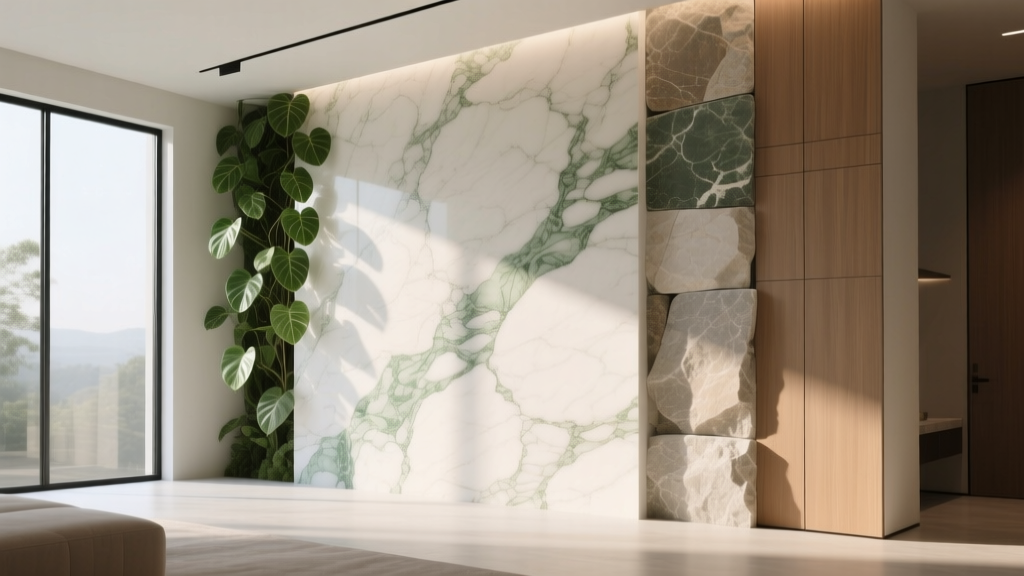
The Biophilic Intersection: Living Foliage and Masonry
Integrating living botanical elements with architectural masonry is a cornerstone of advanced biophilic design. According to the 14 Patterns of Biophilic Design, the 'Material Connection with Nature' pattern emphasizes using natural materials alongside living systems to reduce occupant stress and improve cognitive function. The Marble Queen Pothos (Epipremnum aureum 'Marble Queen') is a premier candidate for interior living walls due to its resilient vining habit and striking variegation. However, pairing this specific cultivar with natural or manufactured stone veneer requires precise scenario matching. The thermal mass, moisture retention, and light-absorption properties of stone directly impact the horticultural viability and structural integrity of the installation.
Scenario Matching: Stone Veneer Selection Matrix
Not all stone profiles are suitable for direct integration with trailing aroids. The Marble Queen Pothos features creamy white and emerald green chimeric variegation. To maximize visual contrast and ensure horticultural success, architects must select stone veneers that complement the foliage without creating hostile microclimates. Below is a decision matrix for matching specific stone veneer types with Marble Queen installations.
| Stone Veneer Type | Texture & Color Profile | Variegation Contrast | Moisture Risk | Recommended Mounting Method |
|---|---|---|---|---|
| Natural Cleft Slate | Dark charcoal, highly textured | Exceptional (High) | Low (Non-porous) | Stand-off wire trellis |
| Manufactured Limestone Stack | Light beige, smooth/cleft mix | Moderate (Low) | High (Porous) | Sealed mortar-joint anchors |
| Honed Marble Panels | White/grey, flat polished | Poor (Blends in) | Very Low | Tension cable system |
| Weathered Fieldstone | Multi-color, rounded/mossy | Good (Organic blend) | Moderate | Stainless steel mesh grid |
For maximum aesthetic impact in 2026 corporate and hospitality interiors, Natural Cleft Slate provides the necessary dark, matte backdrop that allows the Marble Queen's white variegation to visually 'pop'. Conversely, pairing this plant with light-colored limestone or white marble panels washes out the foliage, defeating the primary design intent.
Preserving Variegation Against Light-Absorbing Stone
The most common failure mode in stone-backed living walls is variegation reversion. The Marble Queen Pothos requires bright, indirect light to maintain its chimeric white sectors. Dark stone veneers, particularly slate and dark basalt, have a low Light Reflectance Value (LRV), meaning they absorb Photosynthetically Active Radiation (PAR) rather than bouncing it back into the plant canopy.
The Lighting Specification Protocol
- PPFD Requirements: The Marble Queen requires a minimum of 200 to 300 µmol/m²/s (PPFD) at the canopy level to prevent reversion to solid green.
- Fixture Placement: Install 4000K to 5000K LED track lighting on the ceiling, aimed at a 45-degree angle toward the stone wall. This 'grazing' technique serves a dual purpose: it highlights the three-dimensional texture of the stone veneer while delivering the necessary photon density to the trailing vines.
- Avoidance of Direct Heat: Ensure LED fixtures are rated for low-heat emission. High-heat halogen alternatives will desiccate the aerial roots of the pothos and cause thermal shock to the mortar joints of manufactured stone veneers.
Structural Mounting: Preventing Aerial Root Damage
Pothos are aroids that naturally produce aerial roots to anchor themselves to rough surfaces. If allowed to attach directly to porous stone veneer (such as unsealed limestone or sandstone), these roots will penetrate the microscopic fissures of the masonry. Attempting to prune or remove the plant later will result in catastrophic spalling, tearing the face of the stone veneer off the substrate.
The Stand-Off Trellis Solution
To protect the masonry while providing a climbing structure, utilize a stand-off trellis system. Run 316 marine-grade stainless steel tension cables vertically down the wall. Crucially, the cables must be held exactly 2 inches away from the stone face using standoff brackets equipped with neoprene or clear silicone bumpers. This 2-inch air gap prevents root attachment to the stone, allows for adequate air circulation to prevent mold growth on the masonry, and creates a shadow layer that adds depth to the biophilic installation.
Moisture Management and Efflorescence Prevention
Interior stone veneers, particularly those manufactured with Portland cement bases, are highly susceptible to efflorescence—a white, crusty salt deposit that forms when water migrates through the masonry and evaporates on the surface. Automated drip irrigation systems used for living walls pose a severe efflorescence risk if not properly calibrated.
Irrigation and Sealing Best Practices
- Water Quality: Never use municipal tap water for automated pothos drip systems on stone walls. The high calcium and magnesium content in hard water will leave severe mineral scaling on both the plant leaves and the stone veneer. Specify a reverse osmosis (RO) filtration system or use distilled water for the irrigation reservoir.
- Masonry Sealing: Before planting, apply a penetrating silane/siloxane water repellent to the stone veneer. Products like PROSOCO SureKlean Weather Seal Siloxane PD penetrate deep into the masonry pores to create a hydrophobic barrier without altering the natural color or texture of the stone. This prevents irrigation overspray from migrating into the veneer substrate.
- Drip Line Calibration: Use pressure-compensating drip emitters rated at 0.5 gallons per hour (GPH). Position the drip line at the top of the planting trough, ensuring the water flows directly into the soil medium rather than cascading down the stone face.
Troubleshooting Common Integration Failures
Even with meticulous planning, the intersection of biology and masonry presents unique edge cases. Below are diagnostic solutions for common issues encountered in Marble Queen and stone veneer integrations.
- Symptom: White, powdery residue forming on the mortar joints behind the plant.
Diagnosis: Active efflorescence caused by overspray or high ambient humidity condensing on the stone.
Fix: Clean the area with a specialized masonry efflorescence remover (avoiding acidic cleaners that can etch natural stone). Improve HVAC air circulation across the wall face to reduce localized humidity, and verify the integrity of the siloxane sealer. - Symptom: Plant leaves are turning solid green, losing their white 'Marble Queen' variegation.
Diagnosis: Insufficient PAR levels, exacerbated by the light-absorbing properties of the dark stone veneer.
Fix: Increase the intensity of the grazing LED track lights or move the fixtures closer to the wall to achieve the minimum 200 PPFD threshold. Prune the reverted green stems back to the nearest variegated node to encourage chimeric regrowth, as detailed by the University of Minnesota Extension Pothos Guide. - Symptom: Yellowing leaves and wet, dark stains on the lower stone panels.
Diagnosis: Overwatering combined with poor drainage in the upper planting pockets, causing water to run down the masonry face.
Fix: Reduce irrigation frequency. Ensure the planting trough features a secondary weep-hole drainage mat that captures excess water before it can breach the trough and contact the stone veneer below.
Final Application Considerations
Successfully integrating the Marble Queen Pothos with stone veneer requires treating the installation not as two separate elements, but as a single, interdependent microclimate. By selecting high-contrast, low-porosity stone profiles like natural slate, implementing stand-off mounting hardware, and strictly controlling irrigation water chemistry, designers can achieve a breathtaking, low-maintenance biophilic feature that preserves both the architectural masonry and the botanical integrity of the living wall.