Marble Table Durability: Etching, Staining, and Lifespan Analysis
Analyze marble table durability, comparing calcitic vs. dolomitic stone, etching risks, sealer chemistry, and real-world restoration costs.
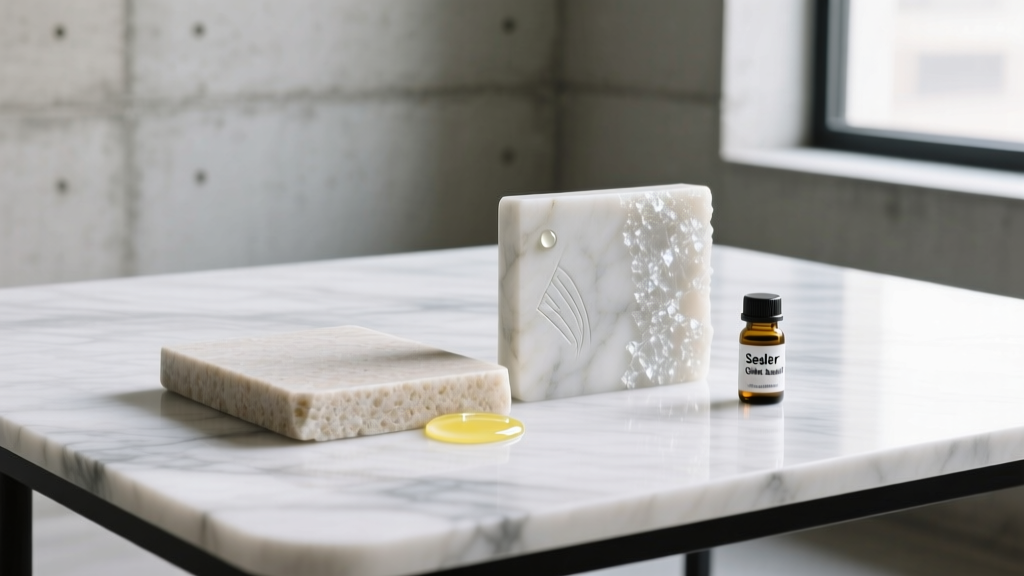
The Mineralogy of Marble: Calcitic vs. Dolomitic
The durability of a marble table is fundamentally dictated by its geological composition, a detail frequently overlooked in furniture showrooms. True marble is metamorphosed limestone, but its exact mineral makeup determines how it will survive a decade of dinner parties. There are two primary classifications you must understand before purchasing:
- Calcitic Marble (e.g., Carrara, Statuario): Composed primarily of calcium carbonate. This stone is highly reactive to acids. A single drop of lemon juice (pH ~2.0) or wine (pH ~3.5) will chemically corrode the surface within seconds, leaving a permanent dull mark known as an etch.
- Dolomitic Marble (e.g., Calacatta, Emperador Dark): Contains a significant concentration of dolomite (calcium magnesium carbonate). According to mineralogical data tracked by the Mindat Mineralogy Database, the presence of magnesium alters the crystal lattice, making dolomitic marble noticeably harder and significantly more resistant to acidic etching than its calcitic counterpart.
If your primary concern is durability and minimizing visible wear in a high-traffic dining area, specifying a dolomitic marble is the single most effective material decision you can make.
The Etching vs. Staining Distinction
Homeowners and designers frequently conflate etching with staining, leading to incorrect maintenance and unnecessary panic. They are distinct chemical and physical phenomena.
- Etching is a chemical burn. Acid dissolves the calcium carbonate, physically removing the polished top layer. It feels rough or depressed to the touch and appears dull under direct light. Sealers cannot prevent etching; they only slow liquid absorption.
- Staining is pore infiltration. A pigmented liquid (like coffee or oil) bypasses the surface and lodges in the microscopic pores of the stone. It looks dark but feels completely smooth. High-quality impregnating sealers will prevent staining.
Surface Finish Durability Matrix
The factory finish applied to your marble table dictates how it ages and what type of wear it will camouflage. Below is a functional comparison of the two most common finishes for tabletop applications.
| Finish Type | Visual Impact of Etching | Stain Resistance | Tactile Feel & Maintenance |
|---|---|---|---|
| Polished | Severe. The mirror-like reflectivity makes even micro-etches highly visible under ambient lighting. | High. The mechanical polishing process closes the microscopic pores on the surface, naturally resisting liquid penetration. | Glass-smooth. Requires frequent dusting to avoid micro-scratches from abrasive particulates. |
| Honed (Matte) | Minimal. The lack of reflectivity effectively camouflages acid etches, allowing the table to develop a uniform patina. | Low. The honing process leaves the stone's pores open, making it highly susceptible to oil and wine stains if unsealed. | Chalky, smooth. Requires aggressive, frequent sealing to compensate for open pores. |
"A polished marble table demands perfection; a honed marble table forgives reality. Choose your finish based on your tolerance for visual imperfection, not just initial aesthetics." — Principles of Stone Conservation
Edge Profile Vulnerabilities
Durability is not limited to the horizontal surface; the perimeter of the table is highly susceptible to mechanical impact. The edge profile you select directly impacts the table's structural lifespan.
Mitered vs. Eased Edges
Modern design heavily favors mitered edges to create the illusion of a massive, 3-inch-thick slab. In reality, a mitered edge is a fragile 45-degree glue joint bonding a thin veneer of stone to the substrate. A sharp impact from a heavy ceramic plate or a metal chair back can easily chip or shatter this joint, requiring complex epoxy resin repairs.
Conversely, an eased edge (slightly rounded corners) or a bullnose edge distributes impact force across a curved surface, drastically reducing the likelihood of chipping. For households with young children or heavy daily use, an eased edge on a solid 2cm or 3cm slab is the most mechanically sound choice.
Sealer Chemistry: Siloxane vs. Fluoropolymer
The Natural Stone Institute emphasizes that sealers do not make stone bulletproof; they buy you time to wipe up spills. However, the chemical class of the sealer determines what it protects against.
- Siloxane/Silane Sealers (Water-Based): These are standard, cost-effective penetrating sealers. They create a hydrophobic barrier that repels water-based liquids (wine, juice, coffee). However, they fail to repel lipids. An olive oil spill will bypass a siloxane sealer and stain the stone.
- Fluoropolymer Sealers (Solvent-Based): These advanced nano-molecular sealers are both hydrophobic and oleophobic (oil-repelling). They are significantly more expensive (often $150+ per quart) but are mandatory for dining tables where butter, cooking oils, and salad dressings are present. Look for products specifying "fluoropolymer" or "oil and water repellent" on the technical data sheet.
Reapplication Timeline: Even premium fluoropolymers degrade under UV exposure and mechanical friction. For a daily-use dining table, expect to strip and reapply penetrating sealers every 18 to 24 months. You can test sealer efficacy by placing three drops of water on the surface; if it darkens the stone within 3 minutes, the sealer has failed.
Lifespan Expectancy and Restoration Economics
A structurally sound marble table will easily outlast its owners, with a physical lifespan exceeding 100 years. However, the aesthetic lifespan—how long it looks pristine—depends entirely on your restoration budget. When etching and micro-scratches accumulate beyond acceptable levels, professional restoration is required.
| Restoration Service | Process Description | Average Cost (per sq. ft.) | Frequency Needed |
|---|---|---|---|
| Deep Cleaning & Sealing | Alkaline stripping of old sealers, pore extraction, and fluoropolymer reapplication. | $1.50 - $2.50 | Every 1-2 Years |
| Honing (Matte Reset) | Diamond abrasive grinding (up to 400 grit) to remove etches and scratches, leaving a matte finish. | $3.00 - $5.00 | Every 5-7 Years |
| Full Polishing | Progressive diamond honing up to 3000 grit, followed by crystallization or oxide buffing for a mirror shine. | $5.00 - $8.50 | Every 7-10 Years |
| Chip/Fissure Epoxy Repair | Color-matched UV-cured resin injection and flush grinding for edge chips or structural fissures. | $150 - $300 (Flat Rate) | As Needed |
The Daily Maintenance Protocol
To maximize the time between expensive professional restorations, implement a strict, chemistry-aware maintenance routine. Abandon generic household cleaners immediately.
- Dust Removal: Use a clean, dry microfiber cloth. Never use a feather duster or dry paper towel, which can drag abrasive silica dust across the surface, causing micro-scratches that dull the polish over time.
- Daily Wiping: Use only a pH-neutral (pH 7.0) stone-specific cleaner. Many "granite cleaners" sold in big-box stores contain degreasing agents (like d-Limonene) that will slowly strip your topical sealers and leave a hazy residue. Potassium oleate-based stone soaps are the safest choice for daily use.
- Spill Mitigation: Blot spills immediately with a paper towel. Do not wipe. Wiping spreads the acidic or pigmented liquid across a larger surface area, increasing the square footage of the potential etch or stain.
- Thermal Protection: While marble is highly heat resistant and will not melt or scorch like quartz or laminate, extreme thermal shock from a cast-iron pan directly off the stove can cause localized fissuring or spalling in stones with pre-existing natural micro-fissures. Always use trivets for items over 250°F (120°C).
By understanding the mineralogy of your specific slab, selecting the appropriate edge profile, and utilizing fluoropolymer sealers, a marble table transitions from a fragile design liability into a resilient, generational heirloom.