Exterior Stone Veneer Wall Comparison: Natural vs Manufactured Stone
Compare natural and manufactured exterior stone veneer wall systems. Explore costs, installation methods, weight limits, and long-term durability.

The Core Dilemma: Natural vs. Manufactured Veneer
Selecting the right cladding for an exterior stone veneer wall requires balancing aesthetic authenticity, structural limitations, and budget constraints. The market is currently dominated by two primary systems: Natural Thin Stone Veneer (NTSV) and Manufactured Stone Veneer (MSV). While both deliver the high-end look of traditional masonry without the massive weight of full-bed stone, their material composition, installation tolerances, and long-term aging characteristics differ significantly.
This comparison review dissects the technical specifications, 2026 pricing realities, and critical moisture management protocols required to ensure your exterior cladding survives decades of freeze-thaw cycles and driving rain.
Quick Decision Matrix
- Choose Natural Thin Veneer if: You require 100% UV-stable pigments, demand authentic geological variations (like Pangaea or ThinStone), and have the budget for higher material costs and specialized masonry cutting.
- Choose Manufactured Veneer if: You need a lighter weight profile (under 10 lbs/sq ft), prefer uniform installation dimensions (like Eldorado Stone Castella profiles), or are working within a tighter material budget.
Material Breakdown: Weight, Thickness, and Structural Limits
The defining advantage of any veneer system over full-thickness masonry is weight. However, the structural framing requirements still dictate which material you can safely deploy on multi-story applications.
Natural Thin Stone Veneer (NTSV)
Natural veneer is quarried and sawn to a thickness of 0.75 to 2 inches. Because it is cut from solid geological formations—such as limestone, granite, slate, or fieldstone—its density remains high.
- Average Weight: 10 to 15 lbs per square foot (psf).
- Thickness Variance: High. Installers must account for varying stone depths when maintaining a flat mortar plane.
- Structural Impact: While lighter than full stone (40+ psf), NTSV still requires robust structural sheathing. Standard 1/2-inch OSB or plywood over 2x6 framing at 16 inches on-center is the minimum baseline for exterior applications.
Manufactured Stone Veneer (MSV)
MSV is cast in polyurethane molds taken from actual natural stone. The mixture typically comprises Portland cement, lightweight aggregates (like pumice or expanded shale), and iron oxide pigments.
- Average Weight: 8 to 12 lbs per square foot (psf).
- Thickness Variance: Low to Moderate. Molds create a consistent back profile, making it easier for less experienced masons to maintain a uniform scratch coat depth.
- Structural Impact: The lighter weight allows for installation on a wider variety of substrates, including properly reinforced metal stud framing with cement board backer, provided the deflection limits (L/600) are met.
Cost Analysis: Material, Labor, and Hidden Expenses
Budgeting for an exterior stone veneer wall requires looking beyond the per-square-foot sticker price of the stone itself. The accessory costs—mortar, lath, weather barriers, and scaffolding—often represent 40% of the total project cost.
| Cost Component | Natural Thin Veneer | Manufactured Veneer | Notes & Variables |
|---|---|---|---|
| Stone Material | $14.00 - $24.00 / sq ft | $7.00 - $12.00 / sq ft | Natural granite/slate sits at the top; basic MSV fieldstone at the bottom. |
| Accessories (Lath, WRB, Screed) | $2.50 - $4.00 / sq ft | $2.50 - $4.00 / sq ft | Identical requirements for both systems. |
| Mortar & Grout | $1.50 - $2.50 / sq ft | $1.50 - $2.50 / sq ft | Dry-stack profiles use less mortar but require more precise stone fitting. |
| Professional Labor | $22.00 - $35.00 / sq ft | $18.00 - $28.00 / sq ft | Natural stone requires more cutting, shaping, and sorting time on-site. |
| Waste Factor | 10% - 15% | 5% - 10% | MSV includes manufactured corner pieces that reduce cutting waste. |
| Total Installed Cost | $40.00 - $65.50 / sq ft | $29.00 - $46.50 / sq ft | Regional labor rates heavily influence final totals. |
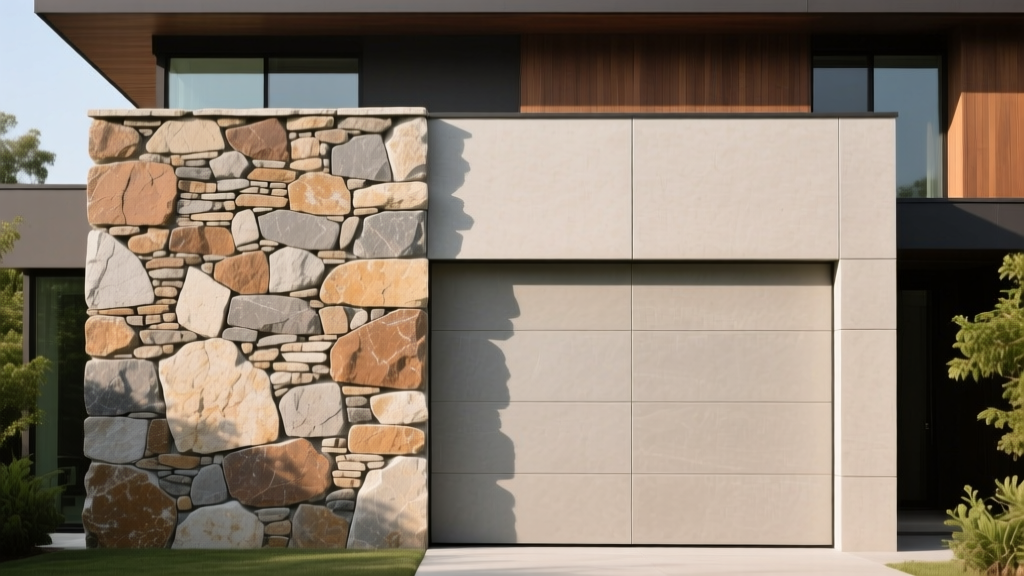
Installation & Moisture Management: The Failure Point
The most common cause of exterior stone veneer wall failure is not structural collapse, but moisture intrusion leading to wood rot, mold, and efflorescence. Both natural and manufactured veneers are considered 'absorptive claddings.' They will absorb water during wind-driven rain events. Therefore, the assembly behind the stone must be designed to drain and dry.
Critical Code Requirement: Never install stone veneer directly against a weather-resistive barrier (WRB) without a drainage space or a mortar net. Trapped moisture against the sheathing is the primary culprit in rot litigation. Refer to the Fine Homebuilding installation guidelines for detailed drainage plane mechanics.
The Mandatory Assembly Sequence
- Weather-Resistive Barrier (WRB): Apply two layers of Grade D building paper or a high-performance fluid-applied membrane over the structural sheathing. The first layer acts as the primary drainage plane; the second protects the first from alkaline degradation caused by wet mortar.
- Weep Screed: Install a corrosion-resistant weep screed at the base of the wall (minimum 4 inches above grade or 2 inches above paving). This provides a physical stop for the mortar and features 1/4-inch weep holes to allow trapped water to exit the wall cavity.
- Metal Lath: Fasten 18-gauge, self-furring diamond mesh lath (meeting ASTM C847) using corrosion-resistant nails or staples driven directly into the wall studs, not just the sheathing. Overlap horizontal seams by 1 inch and vertical seams by 2 inches.
- Scratch Coat: Apply a 1/2-inch thick layer of Type S mortar (ASTM C270) over the lath. Scarify the surface horizontally to provide a mechanical key for the final setting bed. Allow to cure for a minimum of 48 hours.
Mortar Selection and Joint Profiles
The mortar used in an exterior stone veneer wall dictates both the structural bond and the aesthetic shadow lines. Type S mortar is universally recommended for exterior applications due to its high compressive strength (minimum 1,800 psi) and superior flexural bond strength compared to Type N.
When selecting a joint profile, consider the local climate:
- Standard Concave Joint: The most weather-resistant option. The mortar is compressed tightly against the stone edges, sealing the gap and shedding water efficiently.
- Dry-Stack Profile: Stones are placed tightly together with no visible mortar joint. While aesthetically modern, this method requires a flawless, continuous mortar bed behind the stones. Any void in the backing mortar will allow water to channel freely behind the veneer face.
- Raked Joint: Mortar is scraped back to create deep shadows. This exposes the aggregate in the mortar and creates a ledge where water can pool, making it less ideal for regions with heavy freeze-thaw cycles.
Durability, Fading, and Maintenance Realities
How these materials age over 20 to 30 years is where the divergence becomes most apparent.
UV Stability and Color Retention
Natural stone is completely UV stable. The mineral composition that gives granite its speckled gray or sandstone its warm ochre will not fade under direct sunlight. Manufactured stone relies on iron oxide pigments mixed into the concrete slurry. While modern MSV manufacturers use high-quality, UV-resistant synthetic oxides, cheaper imported alternatives can exhibit noticeable chalking and fading after 10 to 15 years of intense southern exposure.
Freeze-Thaw Resistance
Both materials must withstand the expansion of freezing water. Natural stones like slate and dense granite have near-zero water absorption rates. However, porous natural limestones and sandstones can spall (flake apart) if they are not properly sealed or if they are installed in a way that traps water. MSV is engineered to meet ASTM C1670 standards for freeze-thaw durability, but if the concrete mix is too porous or the sealer fails, the faces of the manufactured stones can crack and pop off the scratch coat.
For comprehensive testing standards and technical notes on masonry durability, the International Masonry Institute (IMI) provides extensive documentation on freeze-thaw mechanics in veneer assemblies.
Final Verdict: Which System Wins for Your Project?
There is no universal winner; the correct choice depends entirely on your project's specific constraints.
Specify Natural Thin Stone Veneer When:
- You are building a legacy or luxury custom home where material authenticity is paramount.
- The design features heavy, direct-sun exposure on south or west-facing elevations where UV fading is a concern.
- You are utilizing a dry-stack profile and need the precise, dense edges that only sawn natural stone provides.
Specify Manufactured Stone Veneer When:
- You are executing a commercial retrofit or large-scale residential development where material weight and structural reinforcement costs must be minimized.
- The design requires complex architectural elements, arches, or tight corners where the lightweight, easily cut nature of MSV drastically reduces labor hours.
- Budget constraints cap your cladding allowance at $40 per square foot installed.
Ultimately, the longevity of your exterior stone veneer wall relies 20% on the stone you select and 80% on the rigor of your moisture management assembly. Invest heavily in premium weather barriers, corrosion-resistant lath, and meticulous flashing details, and either material will deliver decades of flawless performance.
Written by
Sarah WhitfieldSarah Whitfield is a chartered quantity surveyor (MRICS) and construction cost analyst with 15 years of experience in material pricing, procurement strategy, and project budgeting. She earned her degree in Construction Management from the University of Reading (UK) and has worked on projects ranging from $2M custom homes to $180M mixed-use developments across North America and Europe. Sarah currently leads cost estimating for BuildMat Insight, maintaining a proprietary database of 4,000+ material price points updated quarterly. She is a frequent contributor to RSMeans cost data panels and has presented at the International Cost Engineering Council (ICEC) congress. Based in Denver, CO, Sarah is an avid trail runner and volunteer mentor for Women in Construction.
More from Sarah Whitfield
View all
Wood & Lumber
What Are the Different Types of Wood? A Builder's Guide
Compare structural softwoods, finish hardwoods, and engineered lumber. Analyze Janka ratings, MOE values, and 2026 pricing for construction.
Aug 4, 2026

Walls & Panels
Steel Framing vs Wood Framing: Corrosion and Moisture Defense
Compare steel framing vs wood framing for moisture resistance. Learn about galvanized coatings, condensation risks, and corrosion protection strategies.
Jul 21, 2026

Stone & Masonry
How to Cut Stone Veneer: Wet Saw vs Grinder Comparison
Compare the best tools for cutting stone veneer. We review wet saws, angle grinders, and chop saws to help you achieve clean, chip-free cuts.
Jul 21, 2026