Riverside Stone Veneer Maintenance: Cleaning & Sealing Guide
Learn how to clean, seal, and maintain riverside stone veneer. Discover the best sealers, cleaning solutions, and efflorescence removal tips.
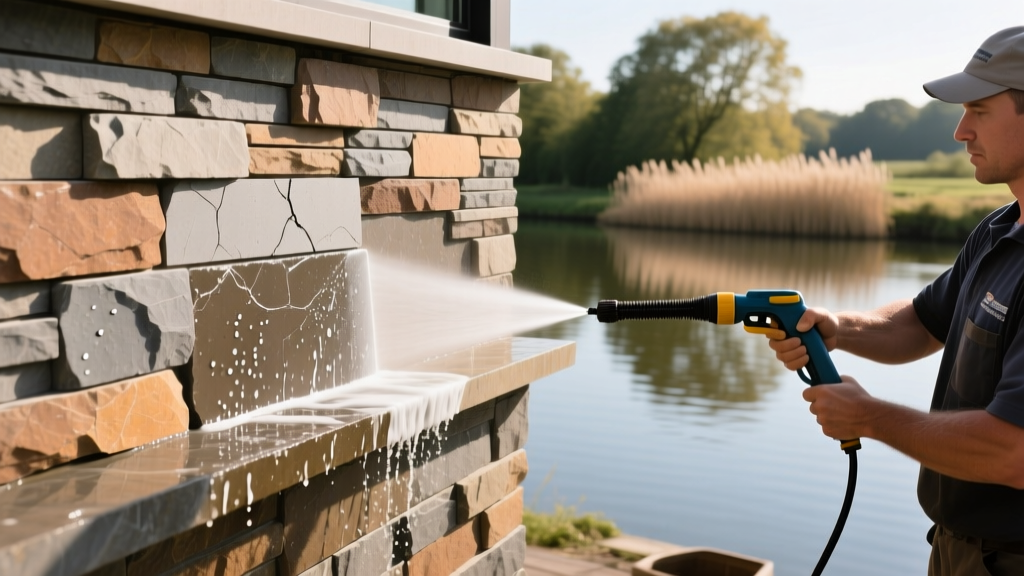
The Unique Maintenance Challenges of Riverside Stone Veneer
Riverside stone veneer—characterized by its rounded, river-rock profiles and varied stone sizes—presents a distinct set of maintenance challenges compared to flat ledgestone or smooth ashlar profiles. The curved surfaces, deep crevices, and heavily textured mortar joints create natural traps for windblown dust, pollen, and organic debris. Furthermore, the deep raking often used in riverside mortar joints to accentuate the rounded stones creates horizontal "shelves" where water can pool, accelerating the growth of algae and the formation of efflorescence.
Whether you are working with natural harvested river rock or manufactured concrete stone veneer designed to mimic it, a proactive maintenance protocol is required to preserve the structural integrity and aesthetic depth of the installation. Neglecting these specific geometric vulnerabilities leads to premature mortar degradation and surface spalling, particularly in freeze-thaw climates.
Never use a high-pressure washer on riverside stone veneer. Pressures exceeding 800 PSI will erode the Portland cement binder in manufactured stones and blow out the mortar joints. If power washing is absolutely necessary for heavy biological growth, use a wide 40-degree fan tip, maintain a minimum distance of 18 inches from the surface, and keep the PSI strictly below 600.
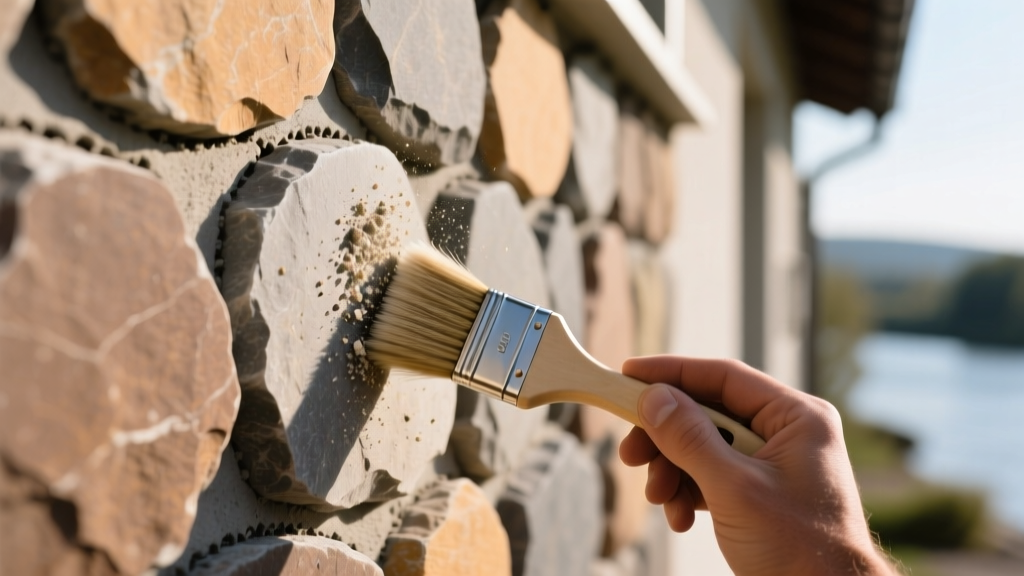
Routine Cleaning: Step-by-Step Protocol
Routine cleaning should be performed bi-annually. The goal is to remove surface contaminants without driving dirt deeper into the porous stone or mortar matrix.
Phase 1: Dry Extraction
Because riverside profiles have deep valleys between the rounded stones, wetting the wall immediately will turn accumulated dust into a thick mud that is nearly impossible to extract from the grout lines.
- Soft-Bristle Brushing: Use a natural or soft nylon bristle brush (never wire or stiff synthetic bristles, which will leave metallic rust stains or scratch manufactured finishes). Brush in a downward, sweeping motion to dislodge debris from the mortar shelves.
- HEPA Vacuuming: For interior fireplace surrounds or heavily soiled exterior valleys, use a shop vacuum with a soft brush attachment to extract the loosened particulate matter.
Phase 2: Pre-Wetting and Chemical Application
Both natural river stone and manufactured veneer are highly porous. If you apply a cleaning solution to a dry wall, the stone will instantly absorb the dirty water, causing deep-set staining.
- Pre-Wet the Surface: Saturate the veneer with clean, cool water from a garden hose. The stone should look uniformly dark before any chemicals are applied.
- Apply pH-Neutral Cleaner: Use a dedicated, pH-neutral masonry cleaner (pH 7.0 to 8.0). Avoid acidic cleaners like muriatic acid or standard household vinegar for routine washing, as acids will etch the cementitious binder in manufactured stones and degrade the mortar joints over time.
- Dwell and Agitate: Allow the cleaner to dwell for 5 to 10 minutes. Do not let it dry on the surface. Agitate the deep mortar joints with a nylon grout brush.
- Bottom-Up Rinsing: Rinse the wall from the bottom up to prevent streaking, ensuring all soap residue is flushed from the deep crevices.
Tackling Efflorescence and Hard Water Stains
Efflorescence—the white, powdery salt deposit that blooms on masonry surfaces—is particularly common on riverside veneer due to the high volume of mortar joints and the moisture-trapping geometry of the rounded stones. According to masonry maintenance guidelines outlined by PROSOCO, treating efflorescence requires a specific chemical and mechanical approach.
| Stain Type | Visual Identifier | Recommended Treatment |
|---|---|---|
| Efflorescence | White, fluffy or powdery crystalline deposits on mortar and stone. | Dry brush aggressively first. If persistent, apply a specialized efflorescence remover (e.g., PROSOCO Sure Klean) diluted strictly per manufacturer specs. |
| Hard Water / Calcium | Crusty, off-white rings or streaks, usually below irrigation heads. | Apply a 50/50 solution of white vinegar and water. Let dwell for 3 minutes, scrub, and rinse thoroughly. |
| Organic / Algae | Green, black, or brown slimy patches in shaded, moisture-trapping joints. | Apply a sodium hypochlorite (bleach) solution diluted 1:10 with water. Rinse heavily to protect surrounding landscaping. |
Sealing Riverside Stone Veneer: Breathability is Key
Sealing is not always mandatory for exterior stone veneer, but for riverside profiles with deep, moisture-catching joints, a high-quality sealer dramatically reduces water infiltration and subsequent freeze-thaw damage. The critical factor in selecting a sealer is vapor permeability. The stone must be able to "breathe" and release internal moisture vapor; otherwise, trapped water will cause the face of the stone to spall (pop off) during freezing temperatures.
Silane/Siloxane vs. Acrylic Sealers
Never use film-forming acrylic or polyurethane sealers on exterior riverside veneer. These create a plastic-like shell that traps moisture inside the masonry system. Instead, opt for penetrating Silane/Siloxane water repellents. As noted in exterior masonry guides by The Family Handyman, penetrating sealers line the pores of the stone and mortar without blocking the exit of water vapor.
- Coverage Rate: Expect 100 to 150 square feet per gallon due to the heavy texture and deep mortar joints of riverside profiles.
- Application Method: Use a low-pressure pump sprayer. Apply in a flooding manner until the surface glistens, then immediately back-roll with a dry foam roller to push the sealer into the deep crevices and eliminate puddles.
- Coats Required: Two coats applied wet-on-wet (the second coat applied within 3-5 minutes of the first, before it fully penetrates).
- Cure Time: Allow 24 to 48 hours of dry weather for the chemical reaction to fully bond within the masonry pores.
Repairing Loose Stones and Deteriorating Mortar Joints
The weight of individual river stones, combined with their rounded geometry, means they have less surface area bonding to the scratch coat compared to flat stones. This makes them more susceptible to popping loose if the mortar fails.
Repointing and Re-Adhering Protocol
- Remove Failed Mortar: Use a cold chisel and mallet to rake out the deteriorated mortar to a depth of at least 3/4 inch. Vacuum the joint completely.
- Mix Type N Mortar: For veneer repairs, use Type N mortar mix (1 part Portland cement, 1 part hydrated lime, 6 parts sand). Type N offers the ideal balance of compressive strength and flexibility, accommodating the thermal expansion and contraction of the rounded stones without cracking.
- Prep the Stone: If a stone has fallen out, clean the back of the stone and the scratch coat with a wire brush. Dampen both surfaces with water.
- Butter and Set: Apply a 1/2-inch layer of fresh mortar to the back of the river stone (buttering). Press the stone firmly into the cavity, twisting slightly to ensure a complete bond. Support the stone with painter's tape until the mortar achieves initial set (usually 45-60 minutes).
- Tool the Joint: Once the mortar is thumbprint-hard, use a convex jointing tool to compress and smooth the mortar, matching the existing profile.
Seasonal Maintenance Checklist
To maximize the lifespan of your riverside stone veneer, adhere to this seasonal maintenance framework:
- Early Spring: Inspect all mortar joints for hairline cracks caused by winter freeze-thaw cycles. Repoint any compromised joints before the spring rains begin. Check for efflorescence blooms and dry-brush them immediately.
- Mid-Summer: Perform the bi-annual wet wash using a pH-neutral cleaner. This is also the optimal time to apply a penetrating Silane/Siloxane sealer, as the masonry is completely dry and ambient temperatures are ideal for curing (between 50°F and 80°F).
- Late Fall: Clear all leaf litter and organic debris from the base of the veneer. Ensure the weep holes at the bottom of the wall assembly are completely unobstructed to allow trapped moisture to escape before freezing temperatures arrive.
- Winter: Never use chemical ice melters (like calcium chloride or rock salt) on walkways immediately adjacent to the stone veneer. Salt-laden slush splashing onto the lower courses of the riverside profile will cause rapid, severe spalling and mortar deterioration.
By respecting the unique geometry of riverside stone veneer and utilizing breathable, masonry-specific chemicals, you can preserve the natural beauty and structural integrity of the installation for decades. For further reading on general veneer care and washing techniques, Bob Vila's masonry maintenance archives provide excellent supplementary visual guides.
Written by
Priya KapoorPriya Kapoor is a real estate market analyst and construction economics researcher with expertise in housing affordability, development feasibility, and infrastructure investment. She holds a Master of Regional Planning from Cornell University and previously worked as a senior analyst at CBRE's Investment Properties group, where she modeled returns for $4B in mixed-use development pipelines. Priya now runs an independent research practice advising developers, municipalities, and REITs on construction cost forecasting and market timing. She publishes the quarterly "BuildMat Market Pulse" report tracking material price indices across 12 commodity categories. Based in Austin, TX, Priya serves on the board of Habitat for Humanity Austin and is a marathon runner.
More from Priya Kapoor
View all
Construction Cost
Cost to Build a 1600 Sq Ft Home in 2026: Full Breakdown
Accurate 2026 cost to build a 1600 sq ft home—material, labor, and regional pricing breakdowns included. Plan your budget with real-time estimates.
Aug 11, 2026

Wood & Lumber
Name the Types of Wood for Pressure Treatment and Preservation
Learn how to name the types of wood best suited for pressure treatment. Compare species treatability, chemical retention levels, and 2026 preservation costs.
Aug 4, 2026

Stone & Masonry
Stone Veneer Suppliers Lindenhurst: 2026 Cost Analysis
Analyze 2026 stone veneer costs in Lindenhurst, NY. Compare local supplier pricing, delivery fees, and Suffolk County installation labor rates.
Aug 4, 2026