Stacked Stone Veneer Over Brick Fireplace Maintenance Guide
Learn expert techniques for cleaning, sealing, and maintaining stacked stone veneer over brick fireplace surrounds to prevent efflorescence and heat damage.

The Unique Vulnerabilities of Veneer Over Brick Substrates
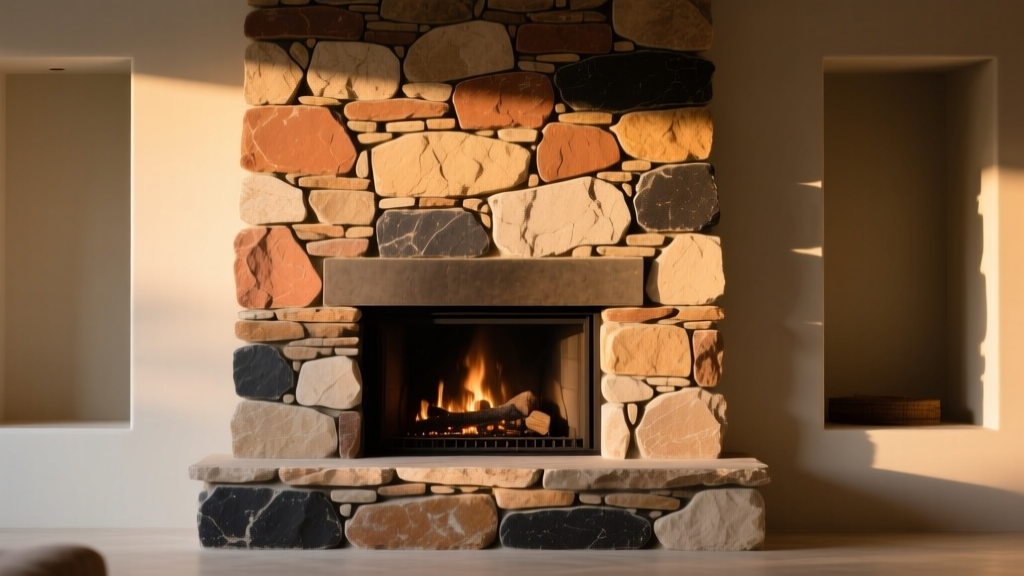
Installing stacked stone veneer over an existing brick fireplace transforms a dated hearth into a modern architectural focal point. However, this specific assembly creates a unique maintenance profile that differs significantly from veneer applied over standard drywall or cement board. The original brick substrate is highly porous and designed to breathe. When you encapsulate it with a scratch coat, mortar, and stone veneer, you alter the thermal and moisture dynamics of the chimney breast.
The primary risk in this assembly is the "moisture sandwich." If the interior room humidity is high, or if the chimney breast extends to the exterior and absorbs wind-driven rain, moisture migrates through the brick. If the stone face is improperly sealed with a film-forming product, that moisture becomes trapped. During winter, when the fireplace is in use, the trapped moisture turns to steam, leading to spalling (the face of the stone popping off) or catastrophic mortar joint failure.
The area immediately surrounding the firebox opening (within 12 inches) experiences extreme thermal cycling. Standard Type N or Type S mortar used in the veneer field is not rated for direct, repeated high-heat exposure. Micro-fractures in these joints are common and require specific refractory repair materials, not standard masonry patch.
Routine Dusting and Debris Removal
Stacked stone features deep, shadowed crevices that act as magnets for household dust, pet dander, and fireplace ash. Routine maintenance must be dry; introducing water to dusty, porous stone creates a mud slurry that embeds deeply into the microscopic pores of the masonry.
- Tool Selection: Use a shop-vacuum with a soft-bristle brush attachment. Never use stiff wire brushes, which will leave behind microscopic iron particles that eventually oxidize and create permanent rust stains on the stone face.
- Crevice Cleaning: For the deep horizontal mortar joints characteristic of stacked stone, use a narrow plastic crevice tool wrapped in a microfiber cloth to pull out compacted dust without scratching the mortar.
- Dry Chemical Sponges: For soot accumulation near the firebox, use a vulcanized rubber dry cleaning sponge (often sold as a "soot sponge"). These sponges lift carbon particles out of the stone pores through friction without the use of moisture or chemicals.
Deep Cleaning Protocols by Stone Material
When dry methods are insufficient, wet cleaning is required. The chemical pH of your cleaning agent must be strictly matched to your specific stone material. Using an acidic cleaner on an alkaline stone will etch the surface, while using a highly alkaline cleaner on manufactured stone can degrade the cementitious binders.
| Stone Material | pH Tolerance | Recommended Cleaning Agent | Agents to Strictly Avoid |
|---|---|---|---|
| Manufactured (Concrete) | 7.0 - 9.0 (Neutral to Mild Alkaline) | PROSOCO SureKlean 600 (diluted 1:10) or mild dish soap. | Muriatic acid, undiluted bleach, vinegar. |
| Natural Slate / Quartzite | 6.5 - 7.5 (Strictly Neutral) | Dedicated neutral stone cleaner (e.g., Miracle Sealants Neutral Cleaner). | Any acidic cleaners, ammonia, abrasive powders. |
| Limestone / Travertine | 7.0 ONLY (Strictly Neutral) | pH 7.0 stone soap; distilled water for light rinsing. | All acids (will instantly etch and dull the cleft). |
The Wet Cleaning Procedure
- Pre-Wet the Substrate: Always saturate the stone and mortar joints with clean, cool water before applying any cleaning solution. If the masonry is dry, it will absorb the cleaning chemical deeply, causing internal staining and efflorescence later.
- Apply and Agitate: Apply the diluted cleaner from the bottom up (to prevent streaking). Agitate gently with a natural-bristle or soft nylon masonry brush.
- Rinse Thoroughly: Rinse from the top down with low-pressure water. High-pressure power washing (>500 PSI) will destroy the mortar joints and strip the colored oxide pigments off manufactured stone.
Tackling Efflorescence and Mineral Staining
Efflorescence is the white, powdery salt deposit that blooms on mortar joints and stone faces. It occurs when water-soluble salts within the brick substrate or mortar are brought to the surface by migrating moisture. According to the Brick Industry Association's Technical Notes, efflorescence is primarily a moisture management issue, not just a cosmetic one.
- Wait for the stone to dry completely. Efflorescence must be removed when dry.
- Use a stiff, dry nylon brush to aggressively scrub the white deposits off the surface.
- Vacuum the loosened powder immediately.
- If the deposit persists (indicating calcium carbonate rather than simple sodium sulfate), apply a specialized efflorescence remover (like PROSOCO SureKlean 2010) strictly following the manufacturer's dwell times.
- Identify and eliminate the moisture source driving the salts to the surface.
Sealing Strategies for High-Heat Environments
Sealing stacked stone on a fireplace requires a fundamental understanding of masonry chemistry. You must use a breathable, penetrating sealer formulated with silane or siloxane resins. These molecules are small enough to penetrate the capillary network of the stone and mortar, where they react with silica to form a hydrophobic barrier deep within the pore structure. Crucially, they leave the pores open to water vapor transmission.
Never use acrylic, urethane, or epoxy "film-forming" sealers on a brick fireplace veneer. These products create a plastic-like shell on the surface. Under the intense, localized heat of a fireplace, film-forming sealers will yellow, blister, and eventually peel. Furthermore, they trap moisture inside the brick substrate, accelerating freeze-thaw damage if the chimney breast is exposed to exterior temperatures.
When to Reseal: The Water Drop Test
Penetrating siloxane sealers typically last 3 to 5 years on interior fireplace surrounds. To determine if your veneer requires resealing, perform the water drop test:
- Splash a few drops of water onto the stone face and the mortar joints in multiple locations.
- Pass: If the water beads up and remains on the surface for at least 3 minutes, the sealer is intact.
- Fail: If the water immediately darkens the stone and absorbs into the substrate, the hydrophobic barrier has degraded, and a fresh coat of siloxane sealer is required.
Troubleshooting Common Fireplace Veneer Issues
Even with meticulous maintenance, the extreme environment of a fireplace can cause specific localized failures. Use this diagnostic matrix to address common problems.
| Symptom | Root Cause | Expert Repair Protocol |
|---|---|---|
| Hairline cracks in mortar joints within 12" of firebox | Thermal shock and expansion/contraction cycling exceeding Type N mortar limits. | Rake out cracked mortar. Fill with a high-temperature, paintable refractory silicone caulk (e.g., Rutland 500°F Silicone) tinted to match the mortar. |
| Brown/tan staining bleeding through stone face | Tannins or rust from the original brick substrate or metal lintel migrating through the scratch coat. | Clean surface. Apply a specialized masonry stain-blocking primer (like PROSOCO SureKlean Stain Stop) before attempting any cosmetic color touch-ups. |
| Loose or hollow-sounding stone veneer pieces | Scratch coat delamination from the original brick due to poor initial mechanical bonding or trapped moisture. | Remove affected stones. Scarify the brick substrate to expose fresh pores. Reapply using a polymer-modified thin-set mortar rated for masonry veneer, ensuring 100% back-buttering. |
Sourcing and Professional Standards
When undertaking deep restoration or selecting chemical treatments for your stacked stone veneer, always consult the technical data sheets (TDS) provided by the manufacturer of your specific stone product. The Masonry Veneer Manufacturers Association (MVMA) provides comprehensive installation and maintenance guidelines that dictate the acceptable chemical parameters for manufactured stone veneer (MSV). Additionally, for historic or highly sensitive natural stone substrates, referencing the National Park Service Preservation Briefs on masonry cleaning ensures that your maintenance protocols do not inadvertently degrade the structural integrity of the underlying brickwork.
Written by
Sarah WhitfieldSarah Whitfield is a chartered quantity surveyor (MRICS) and construction cost analyst with 15 years of experience in material pricing, procurement strategy, and project budgeting. She earned her degree in Construction Management from the University of Reading (UK) and has worked on projects ranging from $2M custom homes to $180M mixed-use developments across North America and Europe. Sarah currently leads cost estimating for BuildMat Insight, maintaining a proprietary database of 4,000+ material price points updated quarterly. She is a frequent contributor to RSMeans cost data panels and has presented at the International Cost Engineering Council (ICEC) congress. Based in Denver, CO, Sarah is an avid trail runner and volunteer mentor for Women in Construction.
More from Sarah Whitfield
View all
Wood & Lumber
What Are the Different Types of Wood? A Builder's Guide
Compare structural softwoods, finish hardwoods, and engineered lumber. Analyze Janka ratings, MOE values, and 2026 pricing for construction.
Aug 4, 2026

Walls & Panels
Steel Framing vs Wood Framing: Corrosion and Moisture Defense
Compare steel framing vs wood framing for moisture resistance. Learn about galvanized coatings, condensation risks, and corrosion protection strategies.
Jul 21, 2026

Stone & Masonry
How to Cut Stone Veneer: Wet Saw vs Grinder Comparison
Compare the best tools for cutting stone veneer. We review wet saws, angle grinders, and chop saws to help you achieve clean, chip-free cuts.
Jul 21, 2026