Fiberon Eco-Friendly Decking Materials: Cost vs Benefit Breakdown
Analyze the true cost vs benefit of Fiberon eco-friendly decking materials. Compare upfront pricing, long-term ROI, maintenance, and environmental impact.
Upfront Material Costs: Breaking Down the Fiberon Tiers
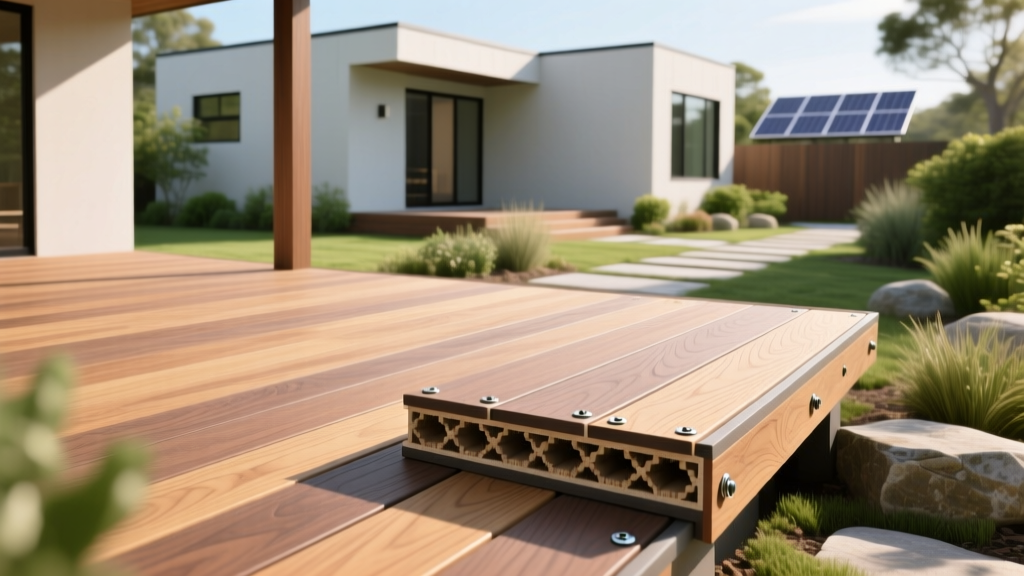
When evaluating Fiberon eco-friendly decking materials, the initial capital expenditure is the most immediate hurdle. Unlike pressure-treated lumber, which benefits from low commodity pricing, composite decking requires advanced manufacturing to bind recycled high-density polyethylene (HDPE) with reclaimed wood fibers. As of early 2026, composite material prices have stabilized following the supply chain volatility of previous years, but they remain a premium investment.
Fiberon segments its product line into three primary tiers, each offering different ratios of recycled content, capstock thickness, and aesthetic realism. According to current decking cost databases like HomeGuide, material costs for composite boards generally range from $6 to $15 per square foot, excluding substructure and labor.
| Product Line | Recycled Content | Material Cost (per sq. ft.) | Best Application |
|---|---|---|---|
| Good Life | ~50% | $6.50 - $8.00 | Budget-conscious retrofits, low-traffic zones |
| Concordia | Up to 94% | $8.50 - $11.00 | High-traffic family homes, primary residences |
| Promenade / Sanctuary | Up to 94% | $11.50 - $14.50 | Luxury builds, commercial spaces, harsh climates |
The financial benefit of choosing a higher tier like Concordia or Promenade lies in the proprietary PermaTech capstock. This fully encapsulated polymer shell provides superior resistance to UV fading and moisture intrusion compared to the uncapped or partially capped Good Life line, directly extending the functional lifespan of the deck and protecting your initial investment.
The Maintenance Dividend: 25-Year Cost Projection
The primary financial argument for Fiberon composite decking is the elimination of recurring maintenance costs. Pressure-treated pine and cedar require annual cleaning and biennial sealing or staining to prevent rot, splintering, and UV degradation. Fiberon requires only occasional washing with soap and water.
To understand the true cost vs benefit, we must project the 15-year total cost of ownership (TCO) for a standard 300-square-foot deck:
15-Year TCO Comparison (300 sq. ft. Deck)
- Pressure-Treated Wood: Initial build ($5,500) + 5 stain/seal cycles at $800 each ($4,000) + 1 mid-life board replacement ($600) = $10,100
- Fiberon Concordia: Initial build ($9,200) + 15 years of basic cleaning supplies ($250) = $9,450
Environmental Impact and LEED Certification Benefits
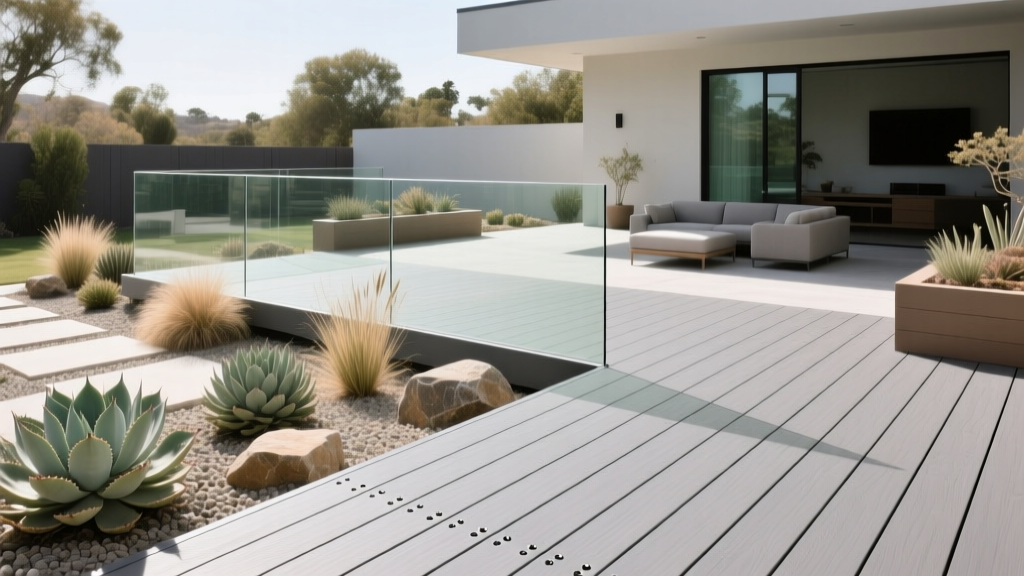
The "eco-friendly" designation of Fiberon materials is not merely a marketing term; it is rooted in verifiable waste diversion metrics. Fiberon manufacturing facilities divert millions of pounds of plastic and wood waste from landfills annually. The Promenade and Concordia lines utilize up to 94% recycled materials, specifically targeting post-consumer polyethylene film (like grocery bags and product overwrap) and industrial wood scraps.
This is highly significant when contextualized with broader recycling data. According to the Environmental Protection Agency (EPA), the recycling rate for plastic films and bags historically hovers around 10% to 15%. By integrating this difficult-to-recycle waste stream into high-durability building materials, Fiberon provides a permanent sequestration solution for plastics that would otherwise degrade in landfills or enter waterways.
LEED v4.1 Contributions
For commercial builders or residential projects pursuing green certification, specifying Fiberon eco-friendly decking materials can contribute to specific LEED v4.1 credits:
- Building Product Disclosure and Optimization (BPDO) - Sourcing of Raw Materials: Credits are awarded for using products with verified recycled content. Fiberon's high post-consumer and pre-consumer recycled percentages directly support this credit.
- Environmental Product Declarations (EPDs): Fiberon provides industry-wide and product-specific EPDs, which quantify the life-cycle environmental impact of the decking, satisfying the transparency requirements of modern green building frameworks.
Hidden Costs and Installation Edge Cases
A common pitfall in composite deck budgeting is underestimating the auxiliary materials required for a proper installation. Fiberon boards behave differently than dimensional lumber, necessitating specific hardware and substructure preparations.
- Hidden Fastener Systems: To maintain the clean aesthetic and avoid surface screws that can trap moisture, most builders use hidden fasteners like the Fiberon Phantom system. Budget an additional $1.75 to $2.50 per square foot for these clips and stainless steel screws.
- Substructure Protection: While the composite boards will not rot, the pressure-treated wooden joists beneath them still can. Because composite decking traps more heat and moisture against the joists than wood does, applying a butyl-based joist tape (e.g., Trex Protect or DeckWise WiseWrap) is critical. This adds roughly $0.80 per linear foot to the project but prevents catastrophic substructure failure in year 15.
- Thermal Expansion Gapping: Fiberon boards expand and contract with temperature fluctuations. Installers must strictly adhere to the manufacturer's gapping charts based on the ambient temperature at the time of installation. Failure to leave the required 1/8-inch to 3/16-inch end-to-end gaps will result in board buckling during peak summer heat, voiding the warranty.
- Picture Framing and Fascia: Covering the exposed edges of the deck requires composite fascia boards or picture-framing techniques. Fascia boards are sold separately and require specialized weather-blocking tape at the top edge to prevent water from wicking behind the board and rotting the rim joist.
Decision Framework: Is Fiberon Right for Your Project?
Determining whether the benefits of Fiberon eco-friendly decking materials outweigh the costs depends on your specific project parameters, climate, and long-term plans. Use the following matrix to guide your specification:
| Project Scenario | Recommendation | Rationale |
|---|---|---|
| Short-term flip or rental property (selling in <5 years) | Good Life Tier or Premium Wood | Recouping the premium cost of Concordia/Promenade is unlikely before the sale. Good Life offers the composite look at a lower entry price. |
| Forever home in high-humidity or coastal environment | Promenade / Sanctuary Tier | Maximum resistance to salt air, moisture intrusion, and mold. The solid PVC-like composition of Promenade offers the highest durability in harsh climates. |
| Commercial hospitality or high-traffic public space | Concordia with Heavy-Duty Substructure | Balances high recycled content (LEED benefits) with the extreme scratch and stain resistance required for commercial foot traffic and outdoor dining. |
Ultimately, the transition to Fiberon eco-friendly decking materials is a shift from operational expenditure (continuous maintenance) to capital expenditure (upfront quality). When factoring in the 25-year limited fade and stain warranties, the diversion of post-consumer plastics from landfills, and the elimination of toxic chemical sealants, the long-term benefits decisively outweigh the initial premium for any owner planning to hold the property for more than a decade.
Written by
Marcus ChenMarcus Chen is a licensed structural engineer (PE) and building materials analyst with over 12 years of experience across residential, commercial, and industrial construction. He holds a Master of Science in Civil Engineering from UC Berkeley and spent six years at Thornton Tomasetti before transitioning to independent consulting and technical writing. Marcus specializes in material selection for seismic-prone regions, concrete reinforcement strategies, and lifecycle cost analysis. His work has been cited by the American Concrete Institute (ACI) and the Structural Engineers Association of California (SEAOC). When he is not on a job site or at his desk, you will find him hiking the Sierra Nevada or restoring a 1920s craftsman bungalow in Oakland, CA.
More from Marcus Chen
View all
Construction Cost
How Much Did the Eiffel Tower Cost to Build?
How much did the Eiffel Tower cost to build in 1889? We adjust for inflation and compare its budget to modern skyscraper construction.
Aug 4, 2026

Fire Resistance
What Is a Fire Resistant Material? Testing & Certification Guide
Discover what is a fire resistant material through ASTM and UL testing. Learn how fire ratings, certifications, and assemblies work in construction.
Aug 4, 2026

Construction Cost
How Much Did the Burj Khalifa Cost to Build?
How much did the Burj Khalifa cost to build? We break down the $1.5B project and extract 5 money-saving strategies for your next build.
Jul 30, 2026