2026 Green Building Materials Market: Selection Criteria
Learn the strict selection criteria for evaluating the 2026 green building materials market, from EPD analysis to supply chain carbon and circularity.
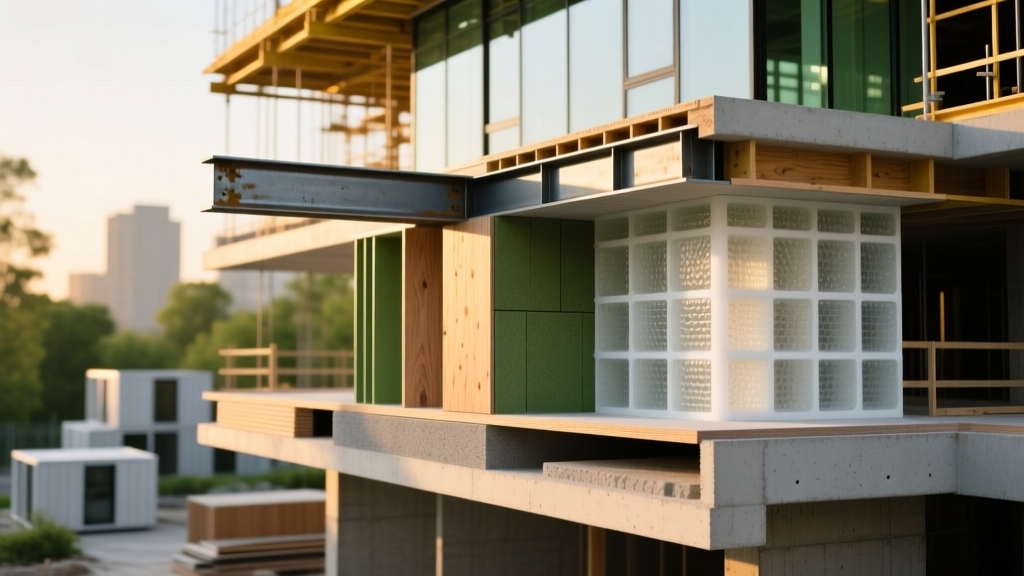
The Illusion of Choice in the Green Building Materials Market
The global green building materials market is projected to exceed $650 billion by 2027, driven by stringent building codes and corporate ESG mandates. However, this rapid expansion has diluted the meaning of "sustainable." For procurement teams, architects, and facility managers, navigating this market requires moving beyond glossy marketing brochures and applying rigorous, quantifiable selection criteria. Greenwashing remains prevalent, with manufacturers frequently highlighting a single recycled component while obscuring high embodied carbon or toxic off-gassing. To specify materials that genuinely reduce environmental impact, you must evaluate products across four non-negotiable vectors: Life Cycle Assessment (LCA) transparency, material health, supply chain proximity, and end-of-life circularity.
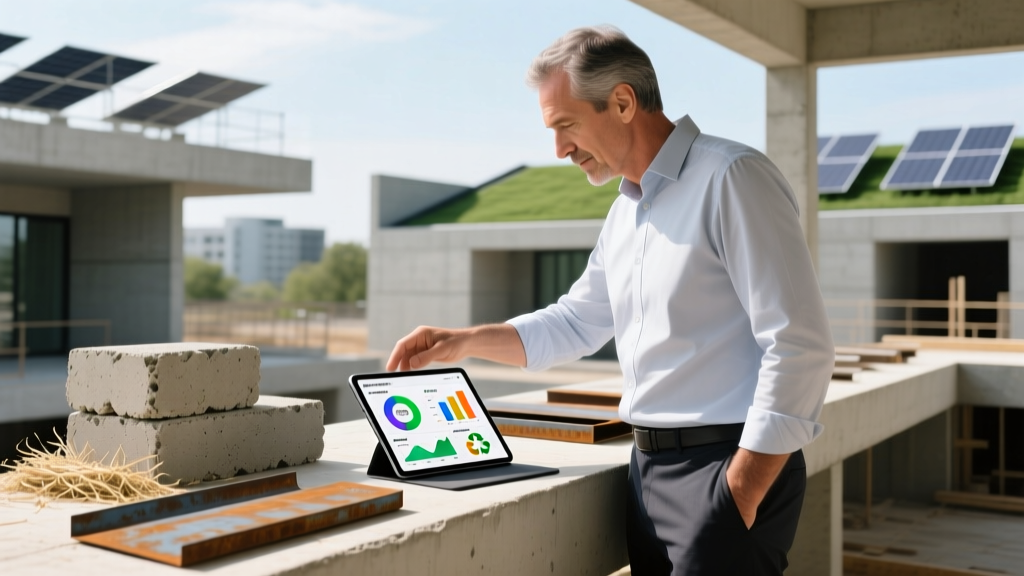
Criterion 1: Mandating Type III EPDs (ISO 14025)
The foundation of any material selection in the modern green building materials market is the Environmental Product Declaration (EPD). However, not all EPDs are created equal. You must specifically require Type III EPDs, which are third-party verified and conform to ISO 14025 and ISO 21930 (or EN 15804 in Europe). Type I (eco-labels) and Type II (self-declared) labels lack the standardized LCA methodology required for accurate benchmarking.
Decoding the GWP Metric
When reviewing a Type III EPD, the most critical metric is the Global Warming Potential (GWP), expressed in kg CO2e per functional unit. Do not accept manufacturer averages; demand product-specific EPDs. For example, standard Portland cement carries a GWP of approximately 900 kg CO2e per metric ton. By specifying Limestone Calcined Clay Cement (LC3) or high-volume fly-ash blends, you can target a GWP threshold of <400 kg CO2e per ton. If a vendor cannot provide a product-specific EPD detailing Modules A1-A3 (production) and Module C (end-of-life), exclude them from your bid list.
Criterion 2: Material Health and HPD Transparency
Environmental sustainability is inextricably linked to human health. The green building materials market is saturated with products claiming "low VOC" status, which only addresses short-term indoor air quality and ignores long-term toxicological impacts. To evaluate material health, require Health Product Declarations (HPDs) conforming to the HPD Open Standard v2.3 or newer.
Many manufacturers use the "proprietary ingredient" exemption to hide hazardous chemicals like phthalates, halogenated flame retardants, or per- and polyfluoroalkyl substances (PFAS). When reviewing an HPD, check the "Inventory" section. If the disclosed threshold is above 1,000 ppm (0.1%) or relies heavily on proprietary blind spots, reject the product. Instead, prioritize products certified by the International Living Future Institute's Declare program, specifically those achieving "Red List Free" status.
Criterion 3: Supply Chain Radius and Transport Emissions
A material with a low manufacturing carbon footprint can easily become a high-carbon liability if shipped across the globe. The LEED v4.1 framework incentivizes sourcing materials within a 100-mile radius (with a multiplier) or a 500-mile absolute limit. When evaluating the green building materials market, you must calculate the transport emissions based on the mode of freight, not just the distance.
| Transport Mode | Carbon Intensity (g CO2e / tonne-km) | Typical Material Application |
|---|---|---|
| Heavy Rail / Barge | 20 - 35 | Bulk aggregates, structural steel, dimensional lumber |
| Heavy Truck (Diesel) | 90 - 120 | Regional distribution, drywall, glass, final-mile delivery |
| Air Freight | 450 - 600 | Emergency specialized hardware, lightweight electronics |
Always request the manufacturer's primary production facility location, not just the address of their regional distribution warehouse. A product stored in a local warehouse but manufactured overseas does not qualify for regional sourcing credits and carries a massive hidden transport carbon penalty.
Criterion 4: Circularity and Biogenic Carbon Realities
The ultimate test of a sustainable material is its end-of-life pathway. "Biodegradable" is a largely meaningless term in construction, as most building waste ends up in anaerobic landfills where biodegradation produces methane—a greenhouse gas 28 times more potent than CO2. Instead, specify materials with verified take-back programs, such as Interface's ReEntry program for carpet tiles or Armstrong's On&On ceiling recycling initiative.
The Biogenic Carbon Accounting Trap
When specifying mass timber, bamboo, or hempcrete, manufacturers will highlight biogenic carbon sequestration (Module A1). However, under ISO 21930, you must also account for Module C (end-of-life). If the timber is assumed to be landfilled at the end of the building's 60-year lifespan, the sequestered carbon is re-released. To claim true carbon negativity, you must pair biogenic materials with a documented deconstruction and reuse plan (Module D), ensuring the wood is repurposed or safely combusted for energy recovery rather than landfilled.
The 2026 Specifier's Decision Matrix
Use the following matrix to standardize your procurement RFPs. Require vendors to submit documentation proving they meet the "Minimum Vetting Standard" to be considered, and award contract preference to those achieving the "Gold Standard."
| Evaluation Criteria | Minimum Vetting Standard | Gold Standard Spec |
|---|---|---|
| Embodied Carbon | Product-specific Type III EPD (ISO 14025) | GWP 20% below industry baseline via EC3 database |
| Material Health | HPD v2.3 with 99% ingredient disclosure | Declare "Red List Free" or Cradle to Cradle v4 Gold |
| Supply Chain | Manufacturing within 500-mile project radius | 100% renewable energy used in manufacturing facility |
| Circularity | Minimum 25% post-consumer recycled content | Legally binding manufacturer take-back program |
Executing the Strategy
Evaluating the green building materials market requires shifting from passive acceptance of eco-labels to active, data-driven auditing. By integrating EPD analysis, strict HPD toxicity thresholds, localized supply chain mapping, and circular end-of-life guarantees into your procurement workflow, you insulate your project from greenwashing. For further guidance on integrating these metrics into your certification strategy, review the U.S. Green Building Council's LEED v4.1 framework and consult the EPA's Sustainable Marketplace guidelines for public procurement standards. Specify the data, not the marketing.
Written by
Elena RodriguezElena Rodriguez is a civil engineer and technical writer specializing in concrete technology, masonry systems, and ASTM/ACI compliance. She earned her B.S. in Civil Engineering from Texas A&M University and spent a decade at a materials testing laboratory, performing over 2,000 concrete compressive strength tests and masonry prism evaluations. Elena is an ACI-certified Field Testing Technician (Grade I) and a member of ASTM Committee C12 on Natural Building Stone. She currently consults on forensic engineering cases involving concrete failures and moisture intrusion. Based in San Antonio, TX, Elena is a proud member of the Society of Women Engineers (SWE) and coaches her daughter's FIRST Robotics team.
More from Elena Rodriguez
View all
Walls & Panels
Cost Analysis: Light Gauge Steel Framing Advantages and Disadvantages
Evaluate light gauge steel framing advantages and disadvantages through a strict cost analysis lens, comparing material, labor, and lifecycle expenses.
Aug 4, 2026

Walls & Panels
Gypsum Board Types: Exact Specifications, Thickness & Dimensions
Compare standard, Type X, and moisture-resistant gypsum board types. Get exact specifications, thicknesses, dimensions, and ASTM standards for your project.
Aug 4, 2026

Fire Resistance
Best Fire-Resistant Outdoor Decking Materials: 2026 Buyer Guide
Discover the best fire-resistant outdoor decking materials for 2026. Compare Class A PVC, aluminum, and hardwood options for WUI compliance and safety.
Aug 4, 2026