Evaluating Nichiha Siding Warranties: 2026 Fiber Cement Comparison
We evaluate the building materials company Nichiha on siding with warranty terms, comparing fiber cement durability and coverage against top rivals.

The Core Promise: Decoding the 50-Year Warranty
When architects and builders evaluate the building materials company Nichiha on siding with warranty considerations in mind, the headline number is almost always the 50-year limited product warranty. As of 2026, the fiber cement market has shifted heavily toward large-format architectural panels and ultra-realistic wood profiles, making long-term durability claims more critical than ever. However, a 50-year warranty is only as valuable as the exclusions buried in its fine print.
Nichiha’s standard 50-year limited warranty covers manufacturing defects, delamination, and excessive deterioration. Crucially, it is a non-prorated product warranty for the first 50 years, meaning if a panel fails due to a factory defect in year 40, Nichiha will replace the material at 100% of the current cost. However, the labor warranty is strictly limited to year one. If an installation error or premature failure occurs in year three, the homeowner is entirely responsible for the cost of scaffolding, removal, and reinstallation.
Warranty Transferability Clause
Unlike some competitors that restrict warranty transfers, Nichiha allows the 50-year warranty to be transferred one time to a subsequent homeowner within the first 10 years of installation. This requires submitting a formal transfer request and a copy of the original installation invoice within 30 days of the property sale. Failure to file this paperwork voids the warranty for the second owner.
Nichiha vs. The Industry: 2026 Comparison Matrix
To truly understand Nichiha's market position, we must compare their warranty structure and physical product specifications against the two other dominant fiber cement manufacturers in North America: James Hardie and Allura. The table below highlights the critical differences in thickness, warranty length, and structural coverage.
| Feature / Brand | Nichiha (Illuminate / Vintage) | James Hardie (Artisan / Prime) | Allura (Architectural / Lap) |
|---|---|---|---|
| Product Warranty | 50-Year Non-Prorated | 30-Year Non-Prorated | 50-Year Non-Prorated |
| Labor Coverage | 1 Year | 1 Year (up to 2x material cost) | 1 Year |
| Max Panel Thickness | 16mm (approx. 5/8") | 5/8" (Artisan series) | 5/16" (Standard) |
| Finish Warranty | 15-Year (Premium Finishes) | 15-Year (ColorPlus) | 15-Year (Prefinished) |
| Wind Resistance Rating | Up to 130 mph (HVHZ approved) | Up to 150 mph | Up to 130 mph |
Deep Dive: Nichiha Product Lines and Specific Coverage
Nichiha segments its residential and light-commercial offerings into distinct lines, each with unique physical properties that dictate how the warranty applies in real-world scenarios.
Illuminate Series (Large Format Architectural Panels)
The Illuminate series represents Nichiha’s push into the modern architectural market. These panels are a massive 16mm thick and come in dimensions up to 16" x 120". Because of their weight and size, they utilize a specialized concealed clip and fastener system rather than face-nailing. Warranty Caveat: The 50-year warranty is immediately voided if the contractor uses standard face-nailing or fails to use the exact Nichiha-specified stainless steel clips. Furthermore, the 15-year finish warranty requires that any field cuts be sealed with the manufacturer-approved touch-up paint within 24 hours of cutting to prevent moisture wicking into the exposed fiber matrix.
Vintage Wood & Sierra Premium (Cedar Shake Profiles)
Designed to replicate the deep shadow lines of natural cedar, these 5/16" thick panels are highly popular in traditional and craftsman-style builds. The primary warranty risk here involves moisture management behind the textured surface. According to building science experts at Green Building Advisor, fiber cement with deep wood-grain embossing can trap capillary moisture if installed without a proper rainscreen gap. Nichiha’s warranty explicitly excludes damage caused by 'lack of adequate ventilation or drainage behind the cladding.' In high-humidity coastal zones, installing Vintage Wood directly over flat housewrap without a 3/8" furring strip rainscreen is a guaranteed path to a denied warranty claim.
Real-World Failure Modes: What the Warranty Will Not Cover
Manufacturers design warranties to cover their failures, not the installer's. When evaluating Nichiha, you must understand the most common installation errors that trigger warranty denials:
- Improper Ground Clearance: Nichiha mandates a minimum 6-inch clearance from the finished grade to the bottom edge of the siding. In regions with heavy snow accumulation or mulch buildup, inspectors frequently find siding wicking ground moisture, leading to bottom-edge spalling. This is universally classified as an installation/environmental error, not a product defect.
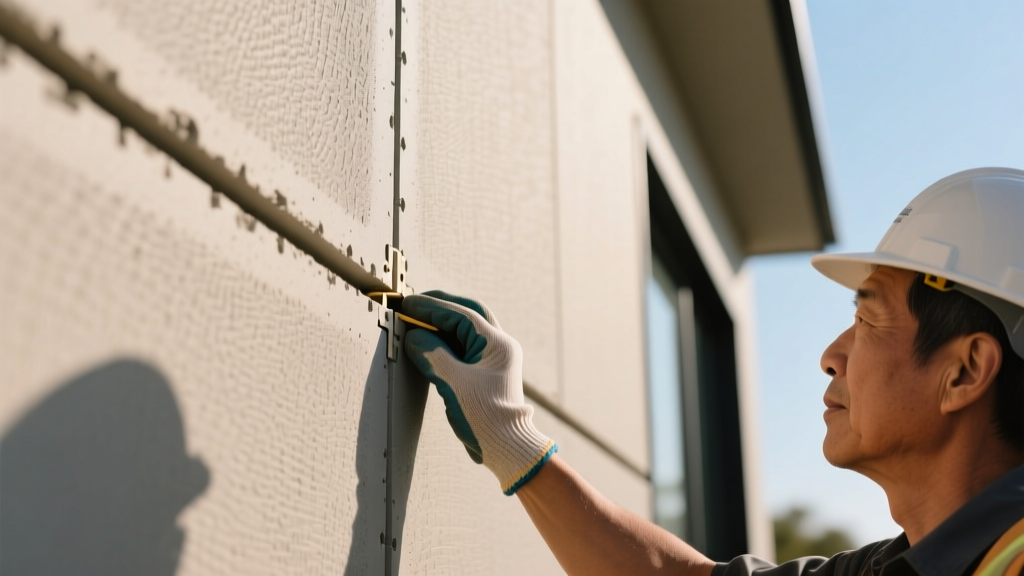
- Missing Z-Flashing at Horizontal Joints: For vertical panel installations, Nichiha requires specific Z-flashing with a minimum 1-inch upper overlap. Relying solely on exterior-grade caulk at horizontal seams will void the warranty, as caulk has a functional lifespan of 7-10 years, far short of the 50-year product guarantee.
- Over-Driving Fasteners: Pneumatic nail guns set to high PSI often drive the nail head below the surface of the fiber cement, fracturing the dense silica matrix around the dimple. If a panel cracks originating from an over-driven fastener point, the claim will be denied. Fasteners must sit perfectly flush.
- Incompatible Sealants: Using polyurethane or silicone sealants that are not explicitly listed in the Nichiha compatibility chart can cause chemical degradation of the factory primer, voiding the 15-year finish warranty.
"The most common reason fiber cement warranty claims are rejected isn't because the product failed, but because the contractor treated it like wood. Fiber cement requires strict adherence to expansion gaps and flashing details. A 1/8-inch gap at butt joints isn't a suggestion; it's a mathematical requirement for thermal expansion."
— Senior Building Envelope Consultant, BuildingGreen
The Decision Framework: Should You Specify Nichiha?
Choosing between Nichiha, James Hardie, and Allura requires matching the product's physical attributes and warranty structure to your specific project parameters. Use this framework to make your final specification:
Specify Nichiha When:
- You are designing a modern or commercial facade requiring thick (16mm), large-format architectural panels with deep shadow lines.
- The project is in a severe hail zone where the 16mm thickness of the Illuminate series provides superior impact resistance compared to standard 5/16" lap siding.
- You require a 50-year non-prorated product warranty to satisfy long-term commercial holding periods or high-end residential HOA requirements.
Specify Competitors When:
- James Hardie: You need the absolute widest availability of pre-finished colors (ColorPlus) and local contractor familiarity, or you are building in a High-Velocity Hurricane Zone (HVHZ) requiring 150 mph wind ratings.
- Allura: You are working on a budget-conscious residential tract build where standard 5/16" lap siding is sufficient, and you want a 50-year warranty at a lower per-square-foot material cost than Nichiha's premium lines.
Final Action Steps for Builders and Homeowners
If you proceed with Nichiha, protect your 50-year investment by executing these three steps before the scaffolding comes down:
- Photograph the Envelope: Take date-stamped photos of all Z-flashing, rainscreen gaps, and fastener placement before the final coat of sealant is applied. This is your primary evidence if a warranty dispute arises in year 15.
- Register the Warranty Immediately: Do not rely on the general contractor to register the product. The property owner should submit the warranty registration directly via the manufacturer portal within 30 days of the certificate of occupancy.
- Archive the Batch Numbers: Record the lot and batch numbers printed on the back of the leftover panels. If a specific panel fails due to a silica-mix anomaly a decade from now, the manufacturer will require these numbers to trace the production run and honor the claim.
Written by
Priya KapoorPriya Kapoor is a real estate market analyst and construction economics researcher with expertise in housing affordability, development feasibility, and infrastructure investment. She holds a Master of Regional Planning from Cornell University and previously worked as a senior analyst at CBRE's Investment Properties group, where she modeled returns for $4B in mixed-use development pipelines. Priya now runs an independent research practice advising developers, municipalities, and REITs on construction cost forecasting and market timing. She publishes the quarterly "BuildMat Market Pulse" report tracking material price indices across 12 commodity categories. Based in Austin, TX, Priya serves on the board of Habitat for Humanity Austin and is a marathon runner.
More from Priya Kapoor
View all
Construction Cost
Cost to Build a 1600 Sq Ft Home in 2026: Full Breakdown
Accurate 2026 cost to build a 1600 sq ft home—material, labor, and regional pricing breakdowns included. Plan your budget with real-time estimates.
Aug 11, 2026

Wood & Lumber
Name the Types of Wood for Pressure Treatment and Preservation
Learn how to name the types of wood best suited for pressure treatment. Compare species treatability, chemical retention levels, and 2026 preservation costs.
Aug 4, 2026

Stone & Masonry
Stone Veneer Suppliers Lindenhurst: 2026 Cost Analysis
Analyze 2026 stone veneer costs in Lindenhurst, NY. Compare local supplier pricing, delivery fees, and Suffolk County installation labor rates.
Aug 4, 2026