2026 House Siding Material Cost Breakdown & Pricing Guide
Compare 2026 house siding material costs per square foot. Detailed pricing breakdown for vinyl, fiber cement, stucco, wood, and metal cladding.
The 2026 National Siding Cost Baseline
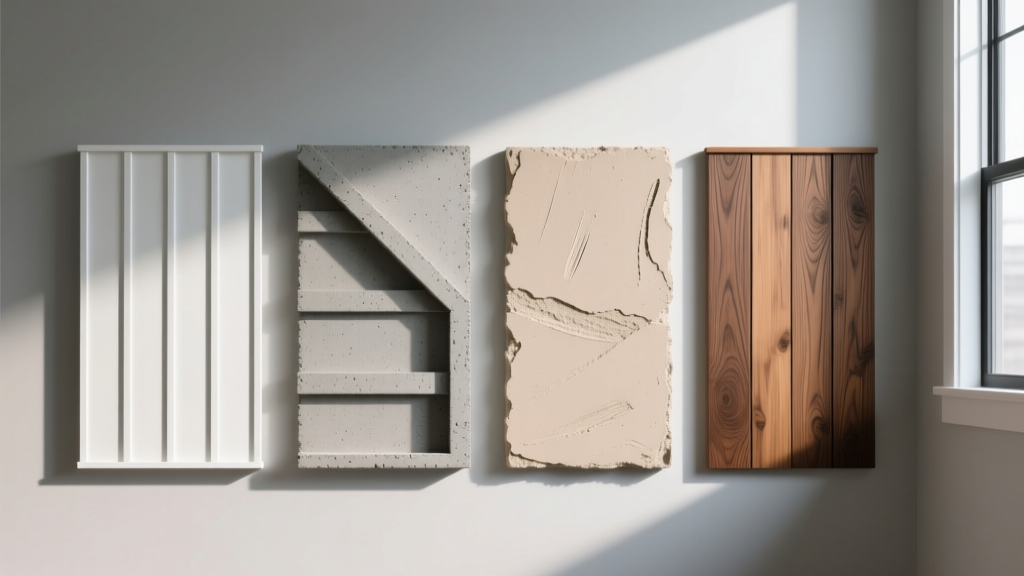
Budgeting for exterior cladding requires moving beyond generic per-square-foot averages. In 2026, the national average for a complete house siding material installation sits between $10,500 and $24,000 for a standard 2,000-square-foot exterior envelope. However, this aggregate figure obscures the massive variance between material classes, local labor jurisdictions, and site-specific architectural complexities. A builder-grade vinyl install on a simple ranch-style home may cost $4.50 per square foot installed, while a multi-gable Victorian wrapped in pre-finished fiber cement can easily exceed $16.00 per square foot.
To build an accurate budget, you must decouple material acquisition costs from specialized labor, site preparation, and code-mandated weather barriers. Below is a forensic breakdown of what you will actually pay for the most common house siding material options this year.
Comprehensive House Siding Material Cost Matrix
The following matrix reflects Q1 2026 national averages for a standard two-story, 2,000 sq. ft. home with moderate architectural complexity (15-20 outside corners, standard window trim). Costs include the siding panels, standard fasteners, and basic installation labor, but exclude tear-off of existing materials.
| Siding Material | Material Cost (Per Sq. Ft.) | Labor Cost (Per Sq. Ft.) | Total Installed (Per Sq. Ft.) | Expected Lifespan |
|---|---|---|---|---|
| Standard Vinyl (Hollow-back) | $2.50 - $4.50 | $2.50 - $4.00 | $5.00 - $8.50 | 25 - 40 Years |
| Insulated Vinyl | $4.50 - $7.50 | $3.50 - $5.50 | $8.00 - $13.00 | 30 - 50 Years |
| Engineered Wood (e.g., LP SmartSide) | $3.50 - $6.00 | $4.00 - $6.50 | $7.50 - $12.50 | 30 - 50 Years |
| Fiber Cement (Primed) | $3.50 - $5.50 | $5.50 - $8.50 | $9.00 - $14.00 | 50+ Years |
| Fiber Cement (Factory Finished) | $5.50 - $8.50 | $5.00 - $7.50 | $10.50 - $16.00 | 50+ Years |
| Traditional 3-Coat Stucco | $4.00 - $6.00 | $7.00 - $10.00 | $11.00 - $16.00 | 50 - 80 Years |
| Standing Seam Metal | $8.00 - $14.00 | $6.00 - $10.00 | $14.00 - $24.00 | 40 - 70 Years |
Material-Specific Pricing & Edge Cases
Vinyl & Insulated Vinyl Siding
Standard hollow-back vinyl remains the most economical house siding material on the market. However, pricing scales dramatically based on profile thickness and aesthetic replication. A standard 0.040-inch thick Dutch Lap profile will sit at the bottom of the cost bracket. Upgrading to premium architectural shingles or deep-profile cedar replicas (such as certified products from the Vinyl Siding Institute) pushes material costs past $6.00 per square foot.
The Insulated Siding Premium: Adding a contoured EPS foam backing increases material costs by $1.50 to $3.00 per square foot. While this adds upfront expense, the U.S. Department of Energy notes that insulated siding can reduce thermal bridging and improve whole-wall R-values by up to R-5.0, which may qualify homeowners for specific regional energy efficiency tax rebates in 2026.
Fiber Cement (James Hardie & Alternatives)
Fiber cement is the undisputed leader in the mid-to-high-end residential market due to its fire resistance and dimensional stability. The primary cost variable here is the finish. Purchasing primed boards (like James Hardie's standard lap) and paying a local crew to paint them on-site adds $2.50 to $4.00 per square foot in labor and paint materials. Opting for factory-applied finishes (e.g., James Hardie ColorPlus Technology) adds roughly $1.50 per square foot to the material cost but entirely eliminates on-site painting, resulting in a net savings of 15-20% on total project labor.
Edge Case - OSHA Silica Compliance: Cutting fiber cement generates respirable crystalline silica. In 2026, strict OSHA enforcement requires contractors to use HEPA-filtered dust extraction systems or wet-cutting methods. If your contractor is not factoring in the equipment and time required for silica mitigation, they are either violating federal safety codes or cutting corners on your health.
Engineered Wood (LP SmartSide)
Engineered wood bridges the gap between the cost of vinyl and the weight of fiber cement. Products treated with zinc borate (to resist termite and fungal degradation) offer exceptional durability at a lighter weight, which speeds up installation and lowers labor costs. The ExpertFinish pre-painted lines eliminate the need for field painting, though the material cost is roughly 20% higher than standard primed engineered wood.
The "Hidden" Surcharges Contractors Don't Quote Upfront
A per-square-foot siding quote is virtually useless if it ignores the accessory and prep costs. Ensure your contract explicitly addresses the following line items:
- Existing Material Tear-Off & Disposal: Expect to pay $1.00 to $2.50 per square foot to strip old wood or asbestos-containing siding. Asbestos abatement requires specialized licensing and can add $4,000+ to a project.
- Weather Barrier Upgrades: Standard DuPont Tyvek house wrap costs roughly $0.60 per square foot installed. Upgrading to a fluid-applied barrier or a structural integrated panel (like Huber ZIP System) adds $1.25 to $2.00 per square foot but drastically reduces air infiltration and water intrusion risks.
- Trim Coil & Flashing: Wrapping fascia, soffits, and window casings with custom-bent aluminum trim coil is labor-intensive. Budget an additional $8.00 to $14.00 per linear foot for premium trim work.
- Scaffolding & Multi-Story Multipliers: Homes exceeding two stories or featuring steep roof pitches require specialized scaffolding or boom lifts, adding a flat fee of $1,500 to $4,500 to the total project.
Regional Labor Multipliers & Waste Factors
Understanding the Waste Factor
Material manufacturers sell siding in "squares" (100 square feet). A standard box of vinyl or fiber cement lap covers exactly two squares. Estimators apply a waste factor to account for cuts, off-cuts, and damaged boards.
- Simple Geometry (Ranch, Box): 10% waste factor.
- Moderate Complexity (Standard 2-Story, 2 Gables): 12-15% waste factor.
- High Complexity (Victorian, Multiple Dormers, Steep Rakes): 18-22% waste factor.
Pro Tip: Always negotiate that the contractor absorbs the cost of waste exceeding the agreed-upon percentage in the contract. You should only pay for the net measurable square footage of the home's exterior envelope.
ROI and Long-Term Value Synthesis
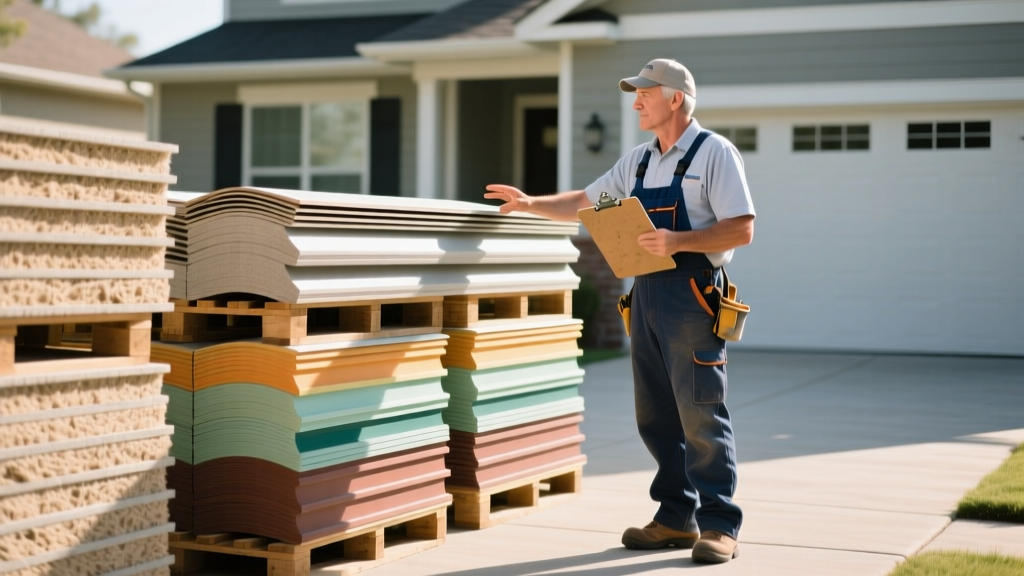
When evaluating the house siding material cost breakdown, initial outlay must be weighed against longevity and resale value. Fiber cement consistently yields one of the highest returns on investment in exterior remodeling, frequently recouping 80% to 88% of its installed cost at resale, according to historical remodeling industry data. While insulated vinyl offers immediate energy savings and a lower initial price point, it lacks the premium aesthetic and impact resistance that appraisers and high-end buyers associate with fiber cement or natural wood profiles.
"The cheapest siding material is rarely the most cost-effective over a 30-year mortgage. A $6,000 premium for factory-finished fiber cement over hollow-back vinyl eliminates three exterior repaint cycles, saving the homeowner upwards of $15,000 in deferred maintenance while simultaneously boosting the property's appraised curb appeal."
Estimating Your Specific Project
To generate a precise budget for your home, measure the total exterior square footage (length x height of each wall) and add 15% for waste. Multiply that net figure by the "Total Installed" rate in the matrix above. Finally, add a fixed contingency of $2,500 for tear-off, house wrap, and trim coil. By demanding line-item transparency on weather barriers, silica compliance, and trim accessories, you will avoid the change-order traps that inflate final invoices by 20% or more.
Written by
Priya KapoorPriya Kapoor is a real estate market analyst and construction economics researcher with expertise in housing affordability, development feasibility, and infrastructure investment. She holds a Master of Regional Planning from Cornell University and previously worked as a senior analyst at CBRE's Investment Properties group, where she modeled returns for $4B in mixed-use development pipelines. Priya now runs an independent research practice advising developers, municipalities, and REITs on construction cost forecasting and market timing. She publishes the quarterly "BuildMat Market Pulse" report tracking material price indices across 12 commodity categories. Based in Austin, TX, Priya serves on the board of Habitat for Humanity Austin and is a marathon runner.
More from Priya Kapoor
View all
Construction Cost
Cost to Build a 1600 Sq Ft Home in 2026: Full Breakdown
Accurate 2026 cost to build a 1600 sq ft home—material, labor, and regional pricing breakdowns included. Plan your budget with real-time estimates.
Aug 11, 2026

Wood & Lumber
Name the Types of Wood for Pressure Treatment and Preservation
Learn how to name the types of wood best suited for pressure treatment. Compare species treatability, chemical retention levels, and 2026 preservation costs.
Aug 4, 2026

Stone & Masonry
Stone Veneer Suppliers Lindenhurst: 2026 Cost Analysis
Analyze 2026 stone veneer costs in Lindenhurst, NY. Compare local supplier pricing, delivery fees, and Suffolk County installation labor rates.
Aug 4, 2026