Siding Material Near Me: Regional Cost & Sourcing Guide
Discover the best siding material near you. Compare regional availability, freight costs, and top brands for fiber cement, vinyl, and wood.

The "Near Me" Dilemma: Why Local Sourcing Dictates Your Siding Choice
When contractors and homeowners search for siding material near me, they are rarely just looking for convenience; they are navigating a complex web of regional logistics, freight surcharges, and localized building codes. Exterior cladding is uniquely vulnerable to supply chain friction. A square of fiber cement siding weighs approximately 300 pounds, meaning sourcing it from a distributor more than 150 miles away can add $400 to $600 in LTL (Less-Than-Truckload) freight fees to a standard 2,000-square-foot order.
As of 2026, the most successful exterior renovations do not default to national big-box retailers. Instead, they leverage regional lumberyards and specialized cladding distributors to minimize lead times and breakage. This guide breaks down the realities of local siding sourcing, comparing material availability, hidden logistical costs, and regional performance requirements.
Regional Siding Material Availability Matrix
The dominant siding material in your immediate area is heavily influenced by local climate demands, regional manufacturing plants, and historical architectural styles. The matrix below outlines what you will typically find at local distributors based on your geographic region.
| Region | Dominant Local Materials | Top Regional Brands Stocked | Primary Climate Driver |
|---|---|---|---|
| Pacific Northwest | Cedar, Fiber Cement, Engineered Wood | James Hardie (HZ10), LP SmartSide, Clear Cedar | High moisture, fungal resistance |
| Northeast / Mid-Atlantic | Fiber Cement, Insulated Vinyl | HardiePlank, CertainTeed CedarBoards, Diamond Kote | Freeze-thaw cycles, impact resistance |
| Southeast / Gulf Coast | Vinyl, Stucco, Fiber Cement | Mastic, James Hardie (HZ5), Traditional 3-Coat Stucco | Hurricane wind loads, high UV, humidity |
| Midwest / Plains | Engineered Wood, Steel, Vinyl | LP SmartSide, Edco Steel, Alside | Hail impact, extreme temperature swings |
| Southwest / Desert | Stucco, Adobe, Fiber Cement | LaHabra Stucco, Allura, Boral | UV degradation, thermal expansion |
Comparing the Big Four: Local Supply Chain Realities
Not all siding materials are created equal when it comes to local distribution. Understanding the physical and logistical properties of the "Big Four" materials will dictate how you source them locally.
1. Fiber Cement (James Hardie, Allura, Nichiha)
Fiber cement is the premium standard for durability, but it is a logistical nightmare if not sourced locally. Because it is composed of Portland cement, sand, and cellulose fibers, it is exceptionally heavy. Sourcing rule: Never order fiber cement from a distributor outside a 100-mile radius unless they are shipping full truckloads (FTL). For smaller jobs, find a local dealer with existing stock to avoid exorbitant LTL freight fees and high transit breakage rates (typically 5% to 8% for long-haul shipments).
2. Engineered Wood (LP SmartSide, Westlake Royal)
Engineered wood offers the aesthetic of cedar with enhanced moisture resistance. According to the USDA Forest Products Laboratory, modern engineered wood substrates utilize zinc borate treatments that provide exceptional resistance to fungal decay and termites. It is significantly lighter than fiber cement (roughly 150 lbs per square), making it much easier for local lumberyards to deliver on standard flatbed trucks without specialized heavy-duty unloading equipment.
3. Vinyl Siding (CertainTeed, Mastic, Alside)
Vinyl remains the most widely available siding material in North America. The Vinyl Siding Institute notes that its lightweight nature and interlocking design make it highly resilient during transit. You can find vinyl siding at almost any local building supply store. However, beware of big-box retailers stocking only entry-level, uninsulated, single-hem profiles. For premium insulated vinyl (like CedarBoards D6), you will likely need to visit a specialized local siding distributor.
4. Traditional Stucco and EIFS
Stucco is not shipped in pallets; it is mixed locally. Sourcing stucco "near me" means finding a reputable masonry supply yard that stocks high-quality Portland cement, hydrated lime, and properly graded silica sand. For EIFS (Exterior Insulation and Finish Systems), you must locate an authorized local dealer for brands like Sto Corp or Dryvit, as these proprietary systems require certified applicators and specific, factory-matched base coats.
When ordering pre-finished siding (like LP SmartSide ExpertFinish or James Hardie ColorPlus), local suppliers often require minimum order quantities (MOQs) to ship on pallets. Ordering custom colors usually requires a minimum of 10 to 15 squares per color. If your local dealer has to break a pallet to fulfill a small repair order, expect a 20% to 30% "broken pallet" surcharge.
Pro Sourcing Framework: Lumberyards vs. Big Box Retailers
Where you buy your siding material locally is just as important as what you buy. Use this decision framework to choose the right supplier for your project scope.
Local Pro Lumberyards & Specialized Siding Distributors
- Best For: Full exterior replacements, premium pre-finished products, custom trim packages, and heavy materials (fiber cement).
- Pros: Dedicated delivery fleets with boom trucks for precise placement; access to commercial-grade SKUs; on-staff estimators who can calculate exact waste factors; ability to hold materials in their yard until your framing is ready.
- Cons: Higher baseline material costs (5% to 10% more than big box); often require a commercial account or contractor license for the best tier pricing.
National Big Box Retailers (Home Depot, Lowe's)
- Best For: Small repairs, shed cladding, garage accents, and entry-level uninsulated vinyl.
- Pros: Immediate walk-in availability for standard white/cream vinyl; easy returns for unopened boxes; consumer financing options.
- Cons: Delivery is often outsourced to third-party carriers who drop pallets at the end of the driveway; limited color and profile selections; high risk of batch-dye lot mismatches if you need to return for more material mid-project.
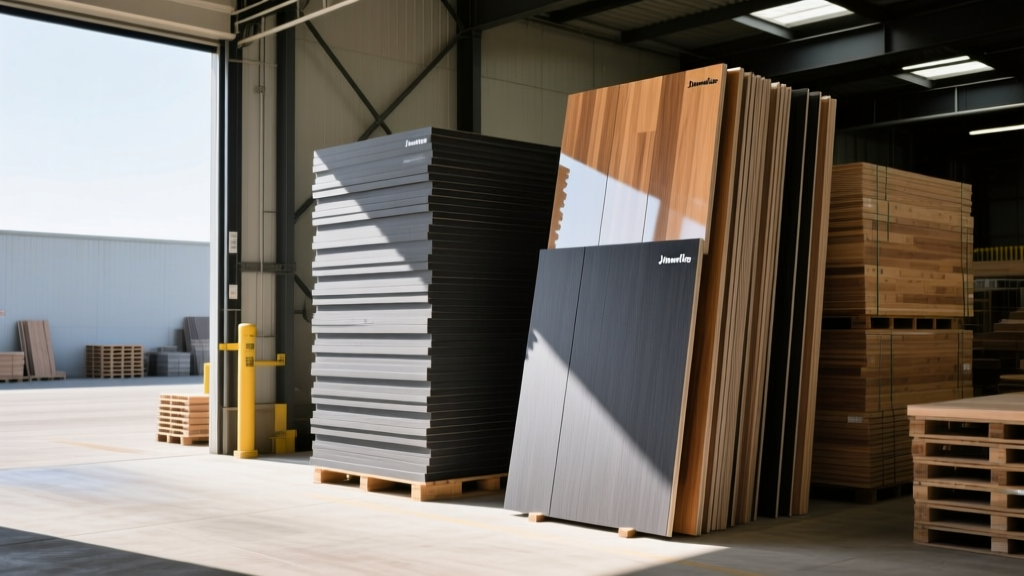
Hidden Costs of Sourcing Siding Material Locally
When calculating the cost of siding material near you, the sticker price per square foot is only the beginning. Factor in these localized hidden costs to prevent budget overruns:
- Fuel and Environmental Surcharges: As of 2026, regional delivery fleets routinely apply a 7% to 12% fuel surcharge to the base delivery fee. If your site is in a remote or heavily congested urban zone, expect an additional "difficulty of delivery" fee.
- Crane or Boom Truck Fees: Fiber cement and masonry veneers weigh over 2,500 lbs per pallet. If your local supplier cannot use a standard forklift to unload the truck, they will dispatch a boom truck, which costs an additional $150 to $250 per drop.
- Local Waste Factor Adjustments: The EPA highlights that construction and demolition materials account for massive landfill volumes. To minimize waste and avoid re-ordering fees, order a 10% overage for standard lap siding, and a 15% overage for board-and-batten or complex geometric walls with multiple window cutouts.
- Dye-Lot Matching Penalties: If you run short on pre-finished siding and your local dealer has to order a new batch from the manufacturer, the new dye lot may not perfectly match the installed boards, forcing you to replace entire elevations.
Expert Sourcing Checklist for Contractors and Homeowners
Before finalizing your local siding order, run through this procurement checklist to ensure logistical success:
- Verify Local Wind Load Codes: Check your municipal building department for specific nailing patterns and shear wall requirements, especially in coastal or high-wind zones.
- Confirm Dye Lot Continuity: Instruct your local supplier to pull all pre-finished siding from the same manufacturing run. Write "Must be single dye lot" on the purchase order.
- Audit the Delivery Path: Walk the delivery route. Ensure a 40-foot flatbed truck can access the drop zone without damaging irrigation, septic tanks, or low-hanging utility wires.
- Secure the Material: Siding must be stored flat, elevated at least 4 inches off the ground on dunnage, and covered with a breathable tarp. Never store fiber cement directly on soil, as it will wick moisture and warp before installation.
- Coordinate Off-Loading Labor: Clarify who is responsible for moving the pallets from the drop zone to the staging area. Most delivery drivers will only drop the pallet; they will not carry it to the backyard.
Frequently Asked Questions
Can I buy James Hardie siding directly from the manufacturer?
No. James Hardie operates exclusively through a network of authorized local distributors and dealers. You must use their online dealer locator to find a certified supplier near you who can provide warranty-backed, properly stored material.
Is it cheaper to buy siding online and have it shipped?
Almost never. The dimensional weight and fragility of siding materials make parcel shipping (FedEx/UPS) impossible, and LTL freight shipping for pallets will easily cost $500 to $1,200, erasing any marginal online discount. Sourcing locally is always more cost-effective.
How do I find local suppliers for reclaimed or salvaged wood siding?
Search for local "architectural salvage yards" or "reclaimed timber dealers." Be prepared to pay a premium for the de-nailing, kiln-drying, and milling processes required to make reclaimed wood viable for exterior cladding.
Written by
James ThorntonJames Thornton is a construction industry veteran with 25 years of hands-on experience in wood framing, lumber grading, and residential building codes. He started as a framing carpenter in rural Oregon, earned his ICC Residential Building Inspector certification, and eventually became a senior plan reviewer for the City of Portland Bureau of Development Services. James holds a B.S. in Wood Science & Technology from Oregon State University and is a certified lumber grader through the West Coast Lumber Inspection Bureau (WCLIB). He has inspected over 3,000 residential construction sites and authored the city's internal guide on advanced framing techniques (2x6 at 24" O.C.). James lives in Bend, OR, where he builds custom timber-frame cabins and competes in lumberjack sports.
More from James Thornton
View all
Insulation
Best Home Insulation Materials: Complete 2026 Guide
Compare top home insulation materials for 2026. Find R-values, installed costs per square foot, and best uses for fiberglass, spray foam, and mineral wool.
Aug 4, 2026

Sustainable Building
Certify Your Green Building Material for LEED and WELL
Step-by-step guide to certifying a green building material for LEED v5 and WELL v2. Master EPDs, HPDs, and VOC limits for 2026 project specifications.
Aug 4, 2026

Stone & Masonry
Veneer Stacked Stone Panels: Interior Design & Style Showcase
Discover how veneer stacked stone panels transform interiors. Explore modern design profiles, material pairings, and technical installation specs.
Aug 4, 2026