Stucco Installation: Quikrete vs LaHabra vs Merlex Product Lines
Compare Quikrete, LaHabra, and Merlex stucco installation systems. Deep dive into cementitious vs. acrylic product lines, costs, and application specs.
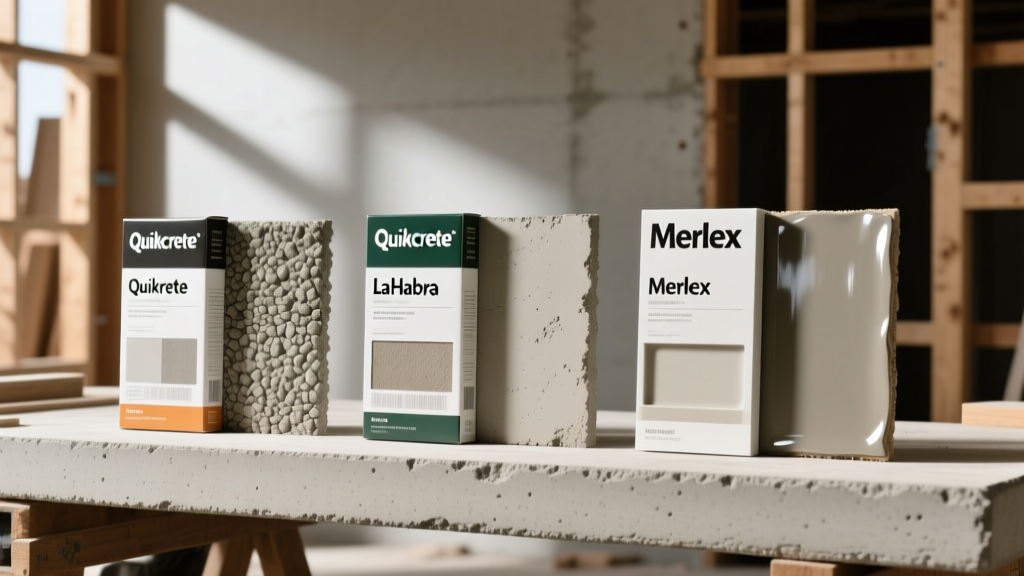
System Architecture: Cementitious vs. Acrylic Polymers
Stucco installation is not a monolithic process; the chemical composition of the chosen product line dictates substrate preparation, lath requirements, and curing protocols. When evaluating brands, contractors must first distinguish between Portland cement-based systems and 100% acrylic polymer finishes. According to the Stucco Manufacturers Association (SMA), traditional cementitious stucco relies on a chemical hydration process requiring strict moisture management, whereas acrylic systems cure through evaporation and coalescence, demanding entirely different environmental conditions.
Understanding these foundational differences is critical before selecting a specific brand. A failure to match the base coat chemistry with the appropriate finish coat is the leading cause of delamination and moisture entrapment in modern exterior cladding.
Quikrete: The Accessible Cementitious Baseline
Quikrete dominates the big-box retail and light commercial space with its straightforward, ASTM C926-compliant Portland cement blends. Their system is traditionally split into a two-coat or three-coat application, relying on Quikrete #1139 Stucco Base Coat and #1138 Stucco Finish Coat.
Installation Nuances and Specifications
- Yield and Coverage: An 80 lb bag of #1139 Base Coat yields approximately 0.55 square feet at a 1/2-inch thickness. For a standard 2,000 sq ft exterior, you will need roughly 145 bags just for a single 1/2-inch base layer.
- Water Ratios: Quikrete requires strict water control—typically 3.5 to 4.5 quarts per 80 lb bag. Over-watering to improve workability severely weakens the compressive strength and increases the risk of plastic shrinkage cracking.
- Open Time: At 70°F, the working time is roughly 90 minutes. In high-heat environments, Quikrete's lack of proprietary retarders means installers must mix smaller batches or use cold mixing water to extend pot life.
LaHabra: Pro-TeK and Allegro Systems for One-Coat Efficiency
LaHabra bridges the gap between traditional durability and modern labor efficiency. Their flagship product for stucco installation is the LaHabra Pro-TeK One Coat Stucco. Designed to reduce the traditional three-coat system down to a single 3/8-inch to 1/2-inch application, Pro-TeK is heavily favored in residential new-builds where schedule compression is critical.
Fiber Integration and Lath Requirements
Pro-TeK integrates alkali-resistant fiberglass fibers directly into the dry mix, eliminating the need for field-mixed fibers and ensuring uniform tensile strength. However, this structural integrity relies entirely on proper lath installation. Per InterNACHI stucco inspection guidelines, one-coat systems must be applied over minimum 17-gauge self-furring galvanized wire lath, fastened at 6-inch intervals into framing members.
Finishing the LaHabra System
For the finish layer, LaHabra offers the Allegro II cementitious finish. Unlike Quikrete's standard finishes, Allegro II contains polymers that improve adhesion and flexibility. It is applied at a nominal 1/8-inch thickness. Installers must fog-cure the Pro-TeK base coat for a minimum of 48 hours before applying Allegro II to prevent alkali efflorescence from migrating into the finish layer.
Merlex: High-End Acrylics and Specialty Base Coats
Merlex caters to the premium architectural market, specializing in high-performance acrylic finishes and advanced base coats. Their Merlex Arlington (100% acrylic finish) and Niagara (polymer-modified base coat) represent a shift away from pure Portland cement toward synthetic cladding systems.
Acrylic Application Protocols
Installing Merlex Arlington requires a fundamentally different approach than cementitious stucco. Acrylics do not hide imperfections; they highlight them. The substrate (whether a brown coat or EPS foam board) must be perfectly flat.
- Priming: If applying Arlington over a highly porous cementitious base, a Merlex acrylic primer must be rolled on to equalize suction and prevent flash-drying.
- Trowel Technique: Arlington is applied using a stainless steel trowel at a razor-thin 1/16-inch thickness. The aggregate size in the bucket dictates the final texture; a 20-grain size requires a specific circular trowel motion to lay the aggregate flat and avoid "burn marks" (dark streaks caused by over-troweling).
- Environmental Limits: Acrylic coalescence fails if the ambient or surface temperature drops below 40°F or exceeds 100°F. Direct sunlight on dark-colored acrylics during installation will cause the material to skin over before it can be properly textured.
Brand Comparison Matrix: Installation Variables
The following table synthesizes the critical installation data for these three dominant product lines, reflecting current material costs and technical specifications.
| Brand / Product | System Type | Application Thickness | Approx. Material Cost (2026) | Cure / Dry Time |
|---|---|---|---|---|
| Quikrete #1139 Base | Portland Cement | 1/2" per coat | $9.50 / 80 lb bag | 24-48 hrs (moist cure 7 days) |
| LaHabra Pro-TeK One Coat | Fiber-Reinforced Cement | 3/8" to 1/2" | $16.00 / 80 lb bag | 24 hrs (moist cure 48 hrs) |
| Merlex Niagara Base | Polymer-Modified Cement | 3/8" | $22.00 / 80 lb bag | 24 hrs (no wet cure needed) |
| Merlex Arlington Finish | 100% Acrylic Polymer | 1/16" | $55.00 / 5-gal pail | 24-48 hrs (evaporation) |
Troubleshooting Brand-Specific Installation Failures
Even with premium materials, stucco installation is highly susceptible to environmental and procedural errors. The USDA Forest Products Laboratory notes that moisture management remains the primary determinant of stucco longevity. Below are specific failure modes associated with these brand lines and their technical remedies.
Efflorescence in Quikrete Systems
The Symptom: White, powdery salt deposits appearing on the surface of Quikrete #1138 finish coats within weeks of installation.
The Cause: Quikrete's high-alkali Portland cement reacts with moisture migrating through the wall assembly. If the weather-resistant barrier (WRB) is compromised, or if the stucco was applied directly to masonry without a capillary break, water carries soluble salts to the surface.
The Fix: Do not use acid washes on fresh stucco, as this introduces more chlorides. Dry-brush the efflorescence, apply a silane/siloxane penetrating sealer to the substrate, and ensure weep screeds at the base of the wall are clear of soil and debris to allow drainage.
Delamination in Merlex Acrylics
The Symptom: The Merlex Arlington acrylic finish hollow-sounds when tapped and begins to peel away from the base coat in sheets.
The Cause: Acrylic finishes require a chemically clean, dust-free substrate. If the base coat was sanded, or if wind-blown dust settled on the primer before the acrylic was troweled, the polymer chains cannot mechanically lock into the pores of the base.
The Fix: Scrape all delaminated material. Vacuum the exposed base coat, wipe with a damp sponge, re-prime, and re-apply the Arlington finish. Never apply acrylics on windy days without temporary netting.
Map Cracking in LaHabra One-Coat
The Symptom: A web-like pattern of shallow cracks (resembling alligator skin) across the LaHabra Pro-TeK surface.
The Cause: Rapid surface evaporation during the initial set. This occurs when installers fail to fog-cure the product in low-humidity or high-wind environments, causing the surface to shrink faster than the underlying matrix.
The Fix: For future installations, implement a strict fog-curing regimen: mist the wall with a fine water spray twice daily for 48 hours post-application. For existing map cracks, apply a high-elastomeric acrylic coating (minimum 20 mils dry film thickness) to bridge the micro-fissures and restore the weather envelope.