Best Siding Materials for Homes: 2026 Cost and Climate Guide
Compare the best siding materials for homes in 2026. Explore costs, durability, climate suitability, and top brands like James Hardie and CertainTeed.

The 2026 Siding Landscape: Beyond Basic Vinyl
Selecting the right siding materials for homes requires balancing upfront costs, long-term durability, and regional climate demands. In 2026, the residential exterior market has shifted heavily toward engineered composites, insulated systems, and fire-resistant claddings. Homeowners are moving away from standard hollow-back vinyl toward materials that offer structural rigidity, improved thermal envelopes, and authentic architectural textures. This guide breaks down the exact specifications, installed costs, and failure modes of the top siding categories to help you make a data-driven decision.
Material Matrix: Cost, Lifespan, and R-Value
Before evaluating specific brands, it is critical to understand the baseline performance metrics of each material category. The following matrix reflects 2026 national average installed costs, including tear-off of one existing layer, standard house wrap, and labor.
| Material Category | Installed Cost (per sq. ft.) | Expected Lifespan | Inherent R-Value | Maintenance Level |
|---|---|---|---|---|
| Fiber Cement | $8.50 - $14.00 | 50+ years | R-0.15 (Uninsulated) | Low (Repaint every 15 yrs) |
| Engineered Wood | $6.50 - $11.00 | 30 - 50 years | R-0.40 | Low (Factory finish lasts 10-15 yrs) |
| Insulated Vinyl | $7.00 - $12.00 | 30 - 40 years | R-2.0 to R-3.5 | Very Low (Wash occasionally) |
| Steel / Metal | $10.00 - $18.00 | 40 - 60 years | R-0.60 | Low (Check for scratches/rust) |
| Traditional Stucco | $9.00 - $15.00 | 50 - 80 years | R-0.20 | Moderate (Repair cracks) |
Fiber Cement: The Heavyweight Champion
Fiber cement remains the premium standard for residential exteriors, primarily dominated by James Hardie. The material is composed of Portland cement, sand, and cellulose fibers, making it impervious to rot, termites, and UV degradation. For high-end projects, the James Hardie Artisan® Collection offers deep shadow lines and thick profiles (up to 5/8 inch) that mimic real cedar clapboard.
Cutting fiber cement on-site generates crystalline silica dust, an OSHA-regulated respiratory hazard. Contractors must use specialized fiber cement shears or attach a HEPA dust-collection system to their saws. Furthermore, installers must use hot-dipped galvanized or stainless steel nails. Using standard electro-galvanized nails will result in rust bleeding through the paint within three years, voiding the manufacturer's warranty.
Top 2026 Product Picks
- James Hardie HardiePlank HZ10: Formulated specifically for high-humidity and high-wind zones (coastal and southern US). Features a drip edge to prevent water wicking.
- NichihA VintageWood: A premium fiber cement option with a deeply embossed wood grain texture, ideal for historical restorations where real wood is prohibited by fire codes.
Engineered Wood: The Budget-Friendly Alternative
Engineered wood siding bridges the gap between the aesthetic warmth of natural timber and the durability of composites. LP SmartSide leads this category, utilizing a proprietary SmartGuard® process that treats wood strands with zinc borate to resist fungal decay and termite infestation. The boards are then bound with exterior-grade resins and compressed for high impact resistance.
Unlike fiber cement, engineered wood can be cut with standard carpentry tools without generating hazardous dust. However, it requires strict adherence to framing specifications. Thinner lap profiles require wall studs spaced at 16 inches on-center (o.c.), whereas thicker structural panels can span 24 inches o.c. All cut edges must be sealed in the field with a high-quality exterior primer to prevent moisture intrusion.
Insulated Vinyl: Upgrading the Standard
Standard hollow-back vinyl is the cheapest option on the market, but it suffers from a hollow acoustic profile and poor impact resistance in freezing temperatures. Insulated vinyl siding, such as CertainTeed CedarBoards® D6, features a contoured EPS (expanded polystyrene) foam backing permanently laminated to the panel.
Vinyl expands and contracts significantly with temperature fluctuations. A 12-foot panel can expand up to 5/8 of an inch between winter and summer. Installers must leave a precise 1/4-inch gap at all overlaps and trim pockets. Nails must be driven in the center of the nailing hem, leaving a 1/32-inch gap between the nail head and the vinyl to allow the panel to slide laterally. Pinning the panels tight will guarantee buckling and warping.
According to the U.S. Department of Energy, while insulated siding adds an R-value of roughly R-2.0 to R-3.5, its primary energy benefit comes from reducing thermal bridging across the wooden wall studs, creating a more continuous exterior insulation envelope.
Metal and Steel Siding: Modern Durability
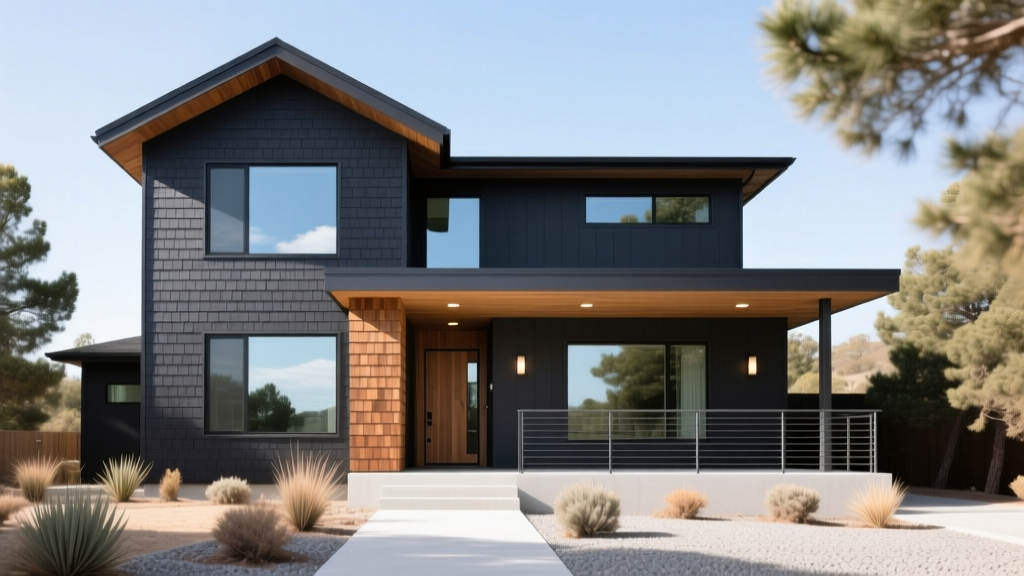
Metal siding has transcended agricultural buildings and is now a staple in modern and mid-century architectural designs. 26-gauge and 24-gauge steel panels, often finished with a PVDF (Kynar 500) coating, offer exceptional fade resistance and a Class A fire rating. Brands like Bridger Steel offer exposed-fastener corrugated profiles and concealed-fastener standing seam panels for residential use.
The primary failure mode for steel siding is "oil canning"—a visual stress buckling that causes flat areas of the metal to appear wavy. To mitigate this, specify panels with striations, stiffening ribs, or a low-gloss matte finish, which diffuses light and hides minor imperfections.
Climate-Specific Decision Framework
Do not select siding based solely on aesthetics; your regional climate dictates the material's lifespan. Use this framework to narrow your choices:
- Wildland-Urban Interface (WUI) / Wildfire Zones: You must use non-combustible materials. Fiber cement, steel, and traditional 3-coat stucco are mandatory. The National Fire Protection Association (NFPA) strictly advises against vinyl (which melts and exposes the sheathing) and wood in these zones.
- Coastal and Salt-Spray Environments: Avoid bare or standard painted steel, as salt accelerates corrosion. Fiber cement (specifically James Hardie's HZ10 line) and marine-grade aluminum are optimal. If using engineered wood, ensure all six sides are factory-primed.
- High-Wind and Hurricane Corridors: Focus on the fastening schedule. Fiber cement and engineered wood perform exceptionally well when blind-nailed directly into studs. Vinyl siding is highly vulnerable to tearing under sustained winds exceeding 90 mph.
Hidden Costs: What Contractors Don't Quote Upfront
When soliciting bids for siding materials for homes, the base price per square foot rarely tells the whole story. Ensure your contractor's scope of work explicitly addresses the following line items to avoid mid-project change orders:
1. Tear-Off and Disposal
Removing existing wood shake or asbestos-containing siding requires specialized disposal protocols. Standard tear-off adds $1.00 to $2.50 per square foot, but hazardous material abatement can triple this cost.
2. House Wrap and Weather-Resistive Barriers (WRB)
Never install new siding directly over bare OSB or plywood sheathing. A high-performance WRB like Tyvek HomeWrap or a fluid-applied membrane (like Prosoco R-Guard) is mandatory. Budget an additional $0.75 to $1.50 per square foot for premium house wrap and taped seams.
3. Soffit, Fascia, and Trim
Siding contractors often quote the "field" (the main walls) but exclude the trim. Upgrading builder-grade aluminum fascia to color-matched fiber cement trim (like James Hardie Artisan Trim) adds significant architectural depth but can increase the total project cost by 15% to 20% due to the high labor required for mitered corners and intricate detailing.
Frequently Asked Questions
Can I install new siding over my existing brick or stucco?
Yes, but it requires building out the wall plane. You must install pressure-treated furring strips or a continuous layer of rigid foam insulation over the masonry, followed by a weather-resistive barrier, to create a flat, nail-able substrate. This adds $3.00 to $5.00 per square foot to the labor and material costs.
Does dark-colored siding fade faster or cause warping?
Historically, dark vinyl siding absorbed excess heat, causing severe warping and premature fading. In 2026, premium vinyl manufacturers use advanced infrared-reflective pigments (like CertainTeed's PermaColor technology) that allow dark colors like charcoal and navy to perform safely. However, for engineered wood and fiber cement, dark colors still absorb more UV radiation, meaning the factory-applied acrylic finish may require repainting 3 to 5 years sooner than lighter, reflective colors.
What is the difference between blind-nailing and face-nailing?
Blind-nailing involves driving the fastener into the top nailing hem of the lap board, which is then covered by the overlapping board above it. This hides the nails and provides a cleaner aesthetic. Face-nailing drives the nail through the visible face of the board near the bottom edge. While face-nailing offers slightly higher wind-uplift resistance, it requires every nail head to be color-matched and sealed, increasing labor time and visual clutter.
Written by
Priya KapoorPriya Kapoor is a real estate market analyst and construction economics researcher with expertise in housing affordability, development feasibility, and infrastructure investment. She holds a Master of Regional Planning from Cornell University and previously worked as a senior analyst at CBRE's Investment Properties group, where she modeled returns for $4B in mixed-use development pipelines. Priya now runs an independent research practice advising developers, municipalities, and REITs on construction cost forecasting and market timing. She publishes the quarterly "BuildMat Market Pulse" report tracking material price indices across 12 commodity categories. Based in Austin, TX, Priya serves on the board of Habitat for Humanity Austin and is a marathon runner.
More from Priya Kapoor
View all
Construction Cost
Cost to Build a 1600 Sq Ft Home in 2026: Full Breakdown
Accurate 2026 cost to build a 1600 sq ft home—material, labor, and regional pricing breakdowns included. Plan your budget with real-time estimates.
Aug 11, 2026

Wood & Lumber
Name the Types of Wood for Pressure Treatment and Preservation
Learn how to name the types of wood best suited for pressure treatment. Compare species treatability, chemical retention levels, and 2026 preservation costs.
Aug 4, 2026

Stone & Masonry
Stone Veneer Suppliers Lindenhurst: 2026 Cost Analysis
Analyze 2026 stone veneer costs in Lindenhurst, NY. Compare local supplier pricing, delivery fees, and Suffolk County installation labor rates.
Aug 4, 2026