Best Siding Material for Extreme Weather Resistance
Discover the best siding material for extreme weather. We analyze fiber cement, metal, and engineered wood against wind, rain, and UV degradation.

The Physics of Siding Failure in Harsh Climates
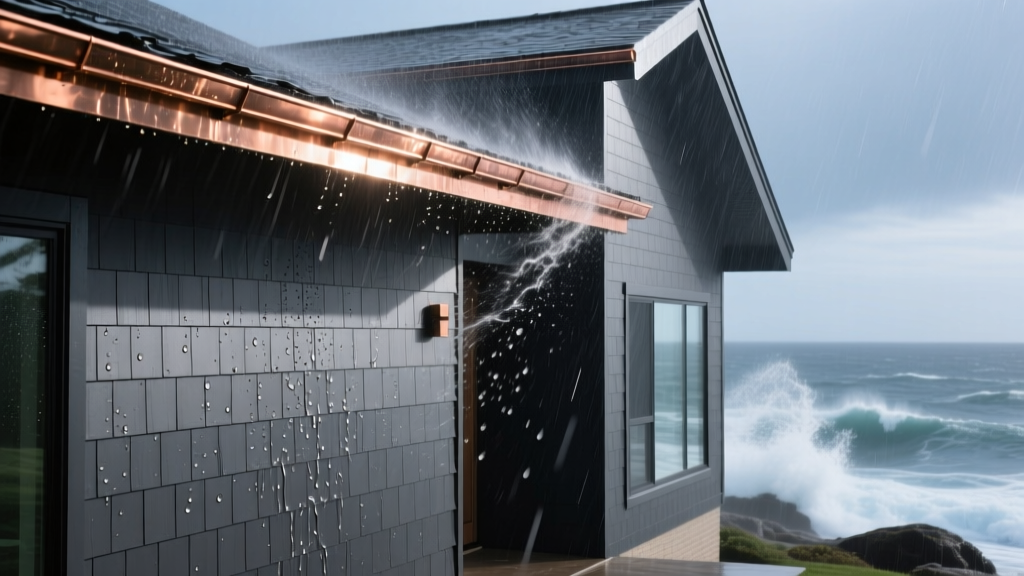
Siding failure in extreme climates is rarely a product defect; it is a physics mismatch. When evaluating the best siding material for severe weather, you must account for three primary destructive forces: wind-driven rain (WDR), thermal cycling, and wind uplift. According to NIST Wind Engineering Research, a 70 mph wind gust exerts roughly 12.5 pounds per square foot (psf) of positive pressure on a windward wall, while simultaneously creating negative suction pressure on the leeward and side walls. If the siding material lacks the tensile strength or fastener pull-through resistance to handle these opposing forces, catastrophic tear-out occurs.
Thermal cycling compounds this mechanical stress. Materials with high coefficients of thermal expansion (CTE) will physically grow and shrink with daily temperature swings. Over a decade of extreme freeze-thaw cycles, this microscopic movement fatigues fastener holes, breaks paint bonds, and opens capillary pathways for moisture intrusion. Selecting a material requires matching its physical properties to the specific meteorological threats of your microclimate.
Climate Zone Decision Matrix
There is no single universal champion. The optimal choice depends entirely on your dominant weather threat. Use this decision matrix to identify the correct material category for your region.
| Climate Threat | Primary Region | Best Siding Material | Critical Performance Metric |
|---|---|---|---|
| Hurricane / High Wind | Gulf Coast, Southeast | 24-Gauge Standing Seam Metal | Miami-Dade NOA Wind Uplift (180+ mph) |
| Heavy Rain / Freeze-Thaw | Pacific Northwest, Northeast | Fiber Cement with Rainscreen | ASTM C1186 Water Absorption (<25%) |
| Hail / Severe Impact | Midwest, Great Plains | Engineered Wood (Strandboard) | UL 2218 Class 4 Impact Resistance |
| Extreme UV / Arid Heat | Southwest, Desert | Acrylic Stucco or Metal | ASTM G154 UV Degradation Resistance |
Material Failure Mode Analysis
To understand why certain materials outperform others, we must examine their specific failure modes under extreme stress.
Fiber Cement: The Moisture Management Caveat
Fiber cement (such as the James Hardie Artisan series) is widely considered the best siding material for mixed-humid and marine climates due to its rot-proof composition and Class A fire rating. However, its Achilles heel is capillary water absorption. Unsealed fiber cement can absorb up to 25% of its weight in water. In freeze-thaw climates, trapped water expands by 9% upon freezing, causing micro-spalling and edge delamination.
- The Fix: Factory-applied acrylic finishes (like Hardie's ColorPlus Technology) reduce absorption, but field-cut edges must be sealed with 100% silicone or polyurethane caulk.
- Fastening Spec: Use hot-dipped galvanized or stainless steel ring-shank nails (ASTM A1554). Blind-nailing requires a minimum 1.25-inch penetration into structural sheathing and studs.
Standing Seam Metal: The Wind and Fire Champion
For coastal hurricane zones and WUI (Wildland-Urban Interface) fire zones, 24-gauge Galvalume steel standing seam panels are unmatched. The concealed clip system allows the panels to slide laterally during thermal expansion without compromising the weather seal. Galvalume (an aluminum-zinc alloy coating, AZ50) provides sacrificial cathodic protection against salt-spray corrosion.
Expert Insight: Avoid exposed-fastener corrugated metal in high-wind zones. The neoprene washers on exposed screws degrade under UV exposure within 10 to 15 years, creating thousands of micro-leaks that wind-driven rain will exploit.
Engineered Wood: The Impact Resistor
In 'Hail Alley' (Texas through the Dakotas), fiber cement can shatter upon high-velocity impact, and vinyl will puncture. Engineered wood, specifically LP SmartSide, utilizes a zinc-borate-treated strandboard substrate that yields under impact rather than fracturing. It carries a UL 2218 Class 4 impact rating, meaning it survives a 2-inch steel ball dropped from 20 feet without cracking. The proprietary SmartGuard process coats every wood fiber in wax and resin, providing a moisture barrier that outperforms traditional plywood siding.
Vinyl Siding: The Budget Caveat
Polyvinyl chloride (PVC) siding is highly resistant to moisture and salt, making it viable for coastal areas on a budget. However, its CTE is approximately 3.3 x 10^-5 in/in/°F. A standard 12-foot vinyl panel will expand and contract by more than 5/8 of an inch over a 100°F temperature swing. In extreme cold (below 20°F), unplasticized PVC becomes highly brittle; a stray baseball or hail stone that would bounce off vinyl in July will shatter it in January. If using vinyl in extreme climates, specify insulated, foam-backed panels (like CertainTeed CedarBoards) which increase rigidity and wind-load resistance up to 160 mph.
2026 Cost vs. Harsh Climate Lifespan Breakdown
Initial material cost is a poor metric for extreme weather zones. The true cost includes replacement frequency and storm-damage repairs. Below is the 2026 installed cost analysis factoring in structural prep and specialized flashing required for severe weather ratings.
| Material Profile | Installed Cost (per sq. ft.) | Expected Harsh-Climate Lifespan | 10-Year Maintenance Cost |
|---|---|---|---|
| 24-Gauge Standing Seam Metal | $11.50 - $16.00 | 50+ Years | $0.00 (No painting required) |
| Fiber Cement Lap (Pre-finished) | $8.50 - $12.00 | 30 - 40 Years | $1.50 (Caulk and touch-up) |
| Engineered Wood Lap | $7.50 - $10.50 | 25 - 35 Years | $2.00 (Repaint cycle at yr 10) |
| Insulated Vinyl Siding | $6.00 - $9.00 | 20 - 25 Years | $0.50 (Power washing) |
The Rainscreen Imperative: Why Installation Voids Ratings
According to the DOE Building America Solution Center, the most critical component of weather-resistant siding is not the siding itself, but the drainage plane behind it. In regions receiving more than 40 inches of annual rainfall, direct-applied siding traps moisture against the weather-resistive barrier (WRB), leading to sheathing rot and mold.
Warning: The Direct-Apply Trap
Installing fiber cement or engineered wood directly over Tyvek or asphalt felt without a drainage gap voids most manufacturer warranties in high-precipitation zones. You must install a 3/8-inch to 1/2-inch ventilated rainscreen (using furring strips or a drainage mat like Keene DriWall). This capillary break allows hydrostatic pressure to equalize, preventing wind-driven rain from being sucked through the joints.
Flashing and Kick-Out Failures
The FEMA Building Science Publications consistently identify missing kick-out flashings at roof-to-wall intersections as the number one cause of catastrophic siding failure. When water cascades off a roofline and hits a wall without a kick-out diverter, it channels thousands of gallons of water directly behind the siding profile. Ensure all J-channels feature weep holes punched every 12 inches, and that bottom-edge flashings extend at least 1 inch past the siding face to promote drip-edge shedding.
Final Verdict: Matching Material to Microclimate
Identifying the best siding material requires abandoning one-size-fits-all marketing and focusing on localized failure physics. If you are building in a Category 3+ hurricane corridor, invest the premium in 24-gauge concealed-fastener metal. If you are in the Pacific Northwest, mandate a ventilated rainscreen behind pre-sealed fiber cement. For the Midwest hail belt, engineered wood provides the highest impact-yield threshold. Specify the exact ASTM standards in your construction contracts, require third-party envelope inspections during the flashing phase, and your exterior cladding will survive the most punishing weather events of the decade.
Written by
Sarah WhitfieldSarah Whitfield is a chartered quantity surveyor (MRICS) and construction cost analyst with 15 years of experience in material pricing, procurement strategy, and project budgeting. She earned her degree in Construction Management from the University of Reading (UK) and has worked on projects ranging from $2M custom homes to $180M mixed-use developments across North America and Europe. Sarah currently leads cost estimating for BuildMat Insight, maintaining a proprietary database of 4,000+ material price points updated quarterly. She is a frequent contributor to RSMeans cost data panels and has presented at the International Cost Engineering Council (ICEC) congress. Based in Denver, CO, Sarah is an avid trail runner and volunteer mentor for Women in Construction.
More from Sarah Whitfield
View all
Wood & Lumber
What Are the Different Types of Wood? A Builder's Guide
Compare structural softwoods, finish hardwoods, and engineered lumber. Analyze Janka ratings, MOE values, and 2026 pricing for construction.
Aug 4, 2026

Walls & Panels
Steel Framing vs Wood Framing: Corrosion and Moisture Defense
Compare steel framing vs wood framing for moisture resistance. Learn about galvanized coatings, condensation risks, and corrosion protection strategies.
Jul 21, 2026

Stone & Masonry
How to Cut Stone Veneer: Wet Saw vs Grinder Comparison
Compare the best tools for cutting stone veneer. We review wet saws, angle grinders, and chop saws to help you achieve clean, chip-free cuts.
Jul 21, 2026