Drywall Screw Deep-Dive: Grabber vs Simpson Strong-Tie Lines
Compare top drywall screw brands including Grabber, Simpson Strong-Tie, and Senco. Explore SKUs, collated systems, and failure modes for gypsum board.
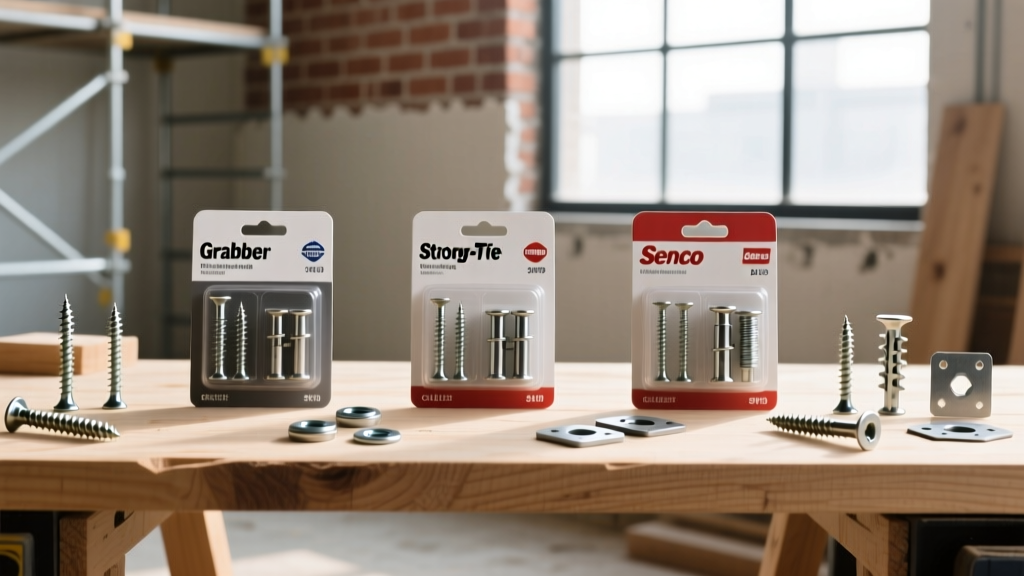
The Anatomy of a Premium Drywall Screw
When hanging gypsum board, the fastener is the single most critical structural link between the panel and the framing. While big-box stores bin generic imports alongside premium fasteners, professional contractors know that a substandard drywall screw can lead to popped heads, fractured shanks, and costly callbacks. According to the Gypsum Association GA-216 guidelines, fasteners must meet strict penetration and head-recessing criteria to maintain the fire and structural ratings of the assembly.
A true commercial-grade drywall screw relies on three engineered features:
- The Bugle Head: Unlike flat heads that cut paper or pan heads that protrude, the bugle head features a radiused underside that smoothly displaces the gypsum core and paper face without tearing it, creating a perfect dimple for joint compound.
- Thread Pitch (W-Type vs. S-Type): W-Type (coarse thread, typically 15 TPI) is designed for wood framing, aggressively biting into softwood. S-Type (fine thread, typically 23 TPI) is engineered for light-gauge steel studs (up to 20-gauge), preventing the screw from stripping the thin metal.
- Phosphate Coating: A grey or black zinc-phosphate finish provides mild corrosion resistance and, more importantly, reduces driving friction, preventing the driver bit from camming out and shredding the Phillips #2 recess.
Brand Deep-Dive: Grabber Construction Products
Grabber is arguably the most recognized name in commercial drywall fastening. Their product lines are segmented by application, with two distinct series dominating the market.
The Rock-On Series
The Rock-On line is Grabber’s workhorse. The most common SKU, the #6 x 1-1/4" W-Type (SKU: 36200), is the industry standard for attaching 1/2-inch standard and Type X gypsum board to wood framing. Priced at approximately $8.50 to $9.50 per 1-pound box (roughly 350 screws), it offers a reliable diamond point and a precisely machined bugle head that consistently breaks the paper face without tearing it.
The G-Force Series
For commercial steel-stud framing, the G-Force line introduces a patented serrated thread design. Standard S-Type fine-thread screws often struggle to pierce 20-gauge or 18-gauge steel without pre-drilling or excessive downward pressure. The G-Force serrations act like a miniature drill bit, cutting through heavy-gauge steel and reducing driver wear. For high-production commercial jobs, this reduces installation time by up to 15% per board.
Brand Deep-Dive: Simpson Strong-Tie
While Simpson Strong-Tie is globally renowned for structural connectors, their drywall fastener catalog is highly engineered, particularly for automated collated systems.
DSW and DSV Bulk Lines
Simpson categorizes their bulk screws simply: DSW (Drywall Screw to Wood) and DSV (Drywall Screw to Steel). The DSV line features a modified S-thread with a sharper, longer diamond point designed to prevent 'walking' on curved steel studs. Simpson’s phosphate coating is notably thicker than generic imports, which significantly extends the life of the driver bit in high-volume auto-feed tools.
Quik Drive Collated Systems
Simpson’s real advantage lies in their Quik Drive auto-feed collated screws. Packaged in plastic strips rather than paper or mesh tape, Simpson’s collated drywall screws eliminate the 'tape jam' issues common in humid environments. The plastic strips shatter cleanly upon driving, leaving zero residue on the screw head that could interfere with the adhesion of setting-type joint compounds.
Brand Deep-Dive: Senco DuraSpin
Senco’s DuraSpin line is the direct competitor to Simpson’s Quik Drive. Senco focuses heavily on the ergonomics of the collated screw gun. Their DuraSpin collated drywall screws use a unique paper-tape binding that is biodegradable and produces less plastic dust on the job site. However, the paper tape can absorb ambient moisture in unconditioned buildings, occasionally causing feed-track misalignments in high-humidity summer months.
Comparative Matrix: SKU Breakdown & Cost Analysis
| Brand / Line | Target Framing | Thread Type | Collated Option | Est. Cost / 1,000 |
|---|---|---|---|---|
| Grabber Rock-On | Wood | W-Type (Coarse) | Mesh Tape | $24 - $28 |
| Grabber G-Force | Heavy Steel (20-16ga) | Serrated Fine | None (Bulk) | $32 - $38 |
| Simpson DSV | Light Steel (25-20ga) | S-Type (Fine) | Plastic Strip | $29 - $34 |
| Senco DuraSpin | Wood / Light Steel | W or S Type | Paper Tape | $26 - $31 |
Edge Cases and Fastener Failure Modes
Understanding why screws fail separates professional hangers from amateurs. Here are the three most common failure modes encountered with inferior drywall screws, and how premium brands mitigate them:
1. Hydrogen Embrittlement (The Snapped Head)
High-carbon steel is required for drywall screws to achieve the necessary hardness. During the acid pickling process prior to phosphate coating, hydrogen atoms can diffuse into the steel lattice. If the manufacturer skips or shortens the mandatory 400°F bake-out cycle, the trapped hydrogen causes severe brittleness. When the installer drives the screw into a dense knot or thick steel, the head snaps off cleanly, leaving the shank embedded in the stud. Premium brands like Grabber Construction Products enforce strict thermal bake cycles to eliminate this defect.
2. Paper Tear-Out (The Frayed Dimple)
If the bugle head’s radius is machined too sharply, it acts like a cookie cutter, severing the paper face of the gypsum board rather than displacing it. This destroys the structural integrity of the fastener hold, as the gypsum core alone cannot grip the screw head. Simpson and Grabber use multi-stage cold-heading dies to ensure a smooth, radiused transition that pushes the paper fibers down into the dimple.
3. Rust Bleed-Through
Standard phosphate coatings are not waterproof. In high-humidity environments or when applied to Moisture-Resistant (MR) green/purple board, standard black phosphate screws will eventually oxidize, causing yellow or brown stains to bleed through the primer and paint. For MR board installations, contractors must specify ceramic-coated or galvanized drywall screws, which cost roughly 40% more but prevent catastrophic finish failures.
Pro Framework: Matching Fasteners to Specialty Gypsum Boards
Not all gypsum boards accept standard fasteners equally. Use this decision framework to select the correct screw profile:
- Standard & Type X (Fire-Rated): Standard #6 bugle head, W-Type for wood, S-Type for steel. Ensure the screw penetrates the framing by a minimum of 5/8-inch for wood and 3/8-inch for steel, per ASTM C1002 specifications.
- Moisture-Resistant (MR) / Mold-Resistant: Must use ceramic-coated or hot-dipped galvanized screws. The coating thickness must be sufficient to survive the driving torque without scraping off and exposing the base steel.
- Glass Mat Gypsum (e.g., Securock, DensArmor): The fiberglass mat is highly abrasive and tough. Standard diamond points can fray the mat edges. Specify screws with an extra-sharp 'needle point' and a slightly wider bugle head to clamp the thick mat securely without tearing the fiberglass weave.
"The cost of a drywall screw is measured in fractions of a cent, but the cost of a popped head or a rust stain is measured in hours of remediation labor. Never let a general contractor value-engineer your fastener schedule." — Senior Foreman, Commercial Drywall Division.
Final Verdict for 2026 Procurement
For high-volume residential production, Senco DuraSpin collated systems offer the best balance of speed and cost. For commercial steel-stud partitions, Grabber G-Force remains unmatched for heavy-gauge penetration, while Simpson Strong-Tie DSV with Quik Drive plastic strips provides the most reliable automated feeding in humid, unconditioned job sites. Always verify that the selected SKU carries a current ICC-ES evaluation report or meets ASTM C1002 standards before signing off on a submittal package.