Self Drilling Drywall Anchors: Durability and Lifespan Analysis
Analyze the lifespan and durability of self drilling drywall anchors. Learn load degradation, failure modes, and best practices for long-term holds.
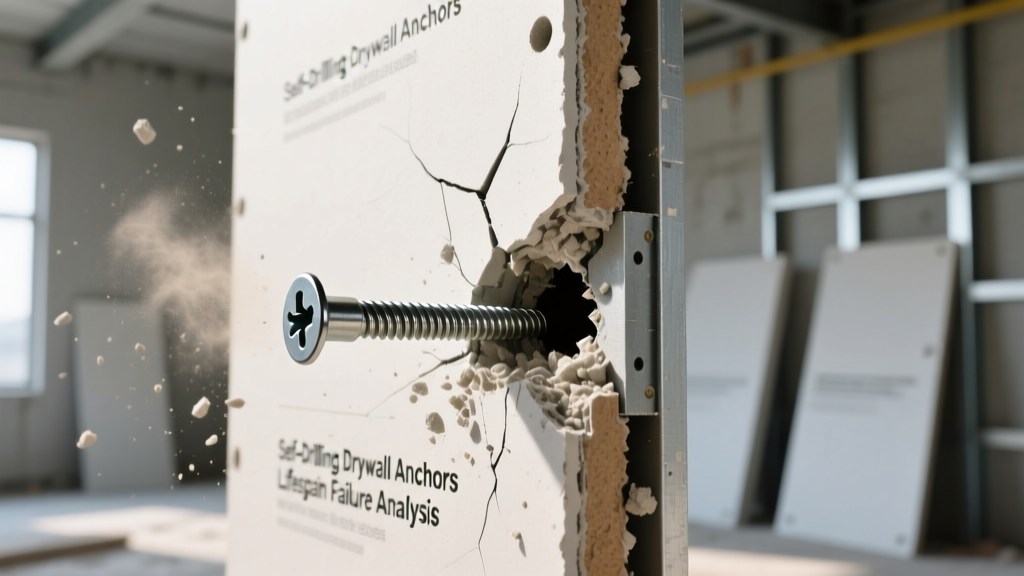
The Mechanics of Anchor Degradation in Gypsum Substrates
Self drilling drywall anchors represent a massive leap in convenience for light-to-medium duty fastening, eliminating the need for pre-drilling and specialized setting tools. However, their long-term durability is fundamentally constrained by the substrate they inhabit. Standard gypsum board consists of a calcium sulfate dihydrate core encased in heavy paper or fiberglass mats. While the core possesses respectable compressive strength, its tensile and shear strengths are inherently low.
When a self-drilling anchor is driven into the wall, its sharp point and aggressive external threads displace and compress the gypsum core, effectively cutting a mating thread pattern. Initially, this creates a tight, high-friction mechanical lock. Over time, however, the brittle nature of the gypsum core subjects this lock to microscopic degradation. Vibrations from foot traffic, door closures, and structural settling introduce dynamic shear forces that gradually pulverize the gypsum threads immediately adjacent to the anchor's outer ridges. Understanding this substrate-anchor interaction is critical for predicting the lifespan of the installation.
Material Lifespan Matrix: Zinc Alloy vs. Engineered Polymer
The longevity of self drilling drywall anchors is heavily dictated by their material composition. The two dominant materials in the market are die-cast zinc alloy and high-density engineered polymers (typically polystyrene or nylon blends). Each material interacts with the gypsum core differently under sustained loads.
| Anchor Type | Material | Max Pull-Out (1/2 in. Board) | Recommended Sustained Load | Expected Lifespan Under Sustained Load | Primary Failure Mode |
|---|---|---|---|---|---|
| Standard Threaded | Zinc Alloy | 100 lbs | 25 lbs | 15+ Years | Core pulverization / Strip-out |
| Twist-N-Lock Style | Polystyrene | 50 lbs | 12 lbs | 10-15 Years | Polymer creep / Thread deformation |
| Heavy Duty Toggle | Steel / Polymer | 250+ lbs | 60 lbs | 20+ Years | Back-paper tear-out |
Zinc alloy anchors offer superior rigidity. Because the metal does not deform under stress, the primary point of failure in a zinc anchor installation is almost always the gypsum core itself, not the anchor. Conversely, polymer anchors are susceptible to 'creep'—a slow, permanent deformation of the plastic under continuous mechanical stress. If a heavy mirror is hung on a polymer anchor, the plastic threads may slowly stretch and deform over a decade, eventually allowing the screw to back out even if the gypsum core remains intact.
The 25% Sustained Load Rule for Permanent Installations
A critical error in both residential and commercial construction is sizing anchors based on their ultimate pull-out strength rather than their sustained load capacity. Industry testing protocols, including those evaluated by the ICC Evaluation Service (ICC-ES), mandate strict safety factors for fasteners in brittle substrates.
For any permanent, static installation (e.g., shelving, heavy mirrors, cabinetry), the total weight of the object must not exceed 25% of the anchor's published ultimate pull-out strength. If a zinc anchor is rated for 100 lbs in 1/2-inch drywall, the maximum permanent hanging weight should be 25 lbs. This margin accounts for long-term gypsum creep, humidity fluctuations, and minor dynamic shocks.
Calculating Dynamic vs. Static Stress
Static loads (a stationary picture frame) apply constant, predictable stress. Dynamic loads (a wall-mounted television on an articulating arm, or a shelf where items are frequently placed and removed) introduce leverage and shock. An articulating TV mount extended 18 inches from the wall can multiply the static weight of the TV by a factor of three or four at the anchor point due to leverage. In these dynamic scenarios, self-drilling threaded anchors are generally inappropriate; toggle-style anchors that distribute the load across the back of the drywall panel are required to prevent catastrophic tear-out.
Environmental Stressors That Accelerate Failure
The lifespan of self drilling drywall anchors is inextricably linked to the environmental conditions of the room. Gypsum is a hygroscopic material, meaning it naturally absorbs and releases moisture from the surrounding air.
- Humidity Cycling: In environments with high humidity fluctuations (e.g., bathrooms, kitchens, or unconditioned garages), the gypsum core expands and contracts. This microscopic movement gradually widens the thread channels cut by the anchor, reducing friction and pull-out resistance over time.
- Thermal Expansion: Metal zinc anchors and the steel screws driven into them have different coefficients of thermal expansion than the surrounding gypsum and wood/metal framing. Over years of heating and cooling cycles, this differential expansion can cause the screw to slowly 'walk' backward out of the anchor.
- Moisture-Resistant (MR) and Glass-Mat Boards: Modern moisture-resistant boards (often faced with green or purple paper) and high-density glass-mat panels (like DensArmor) feature denser, chemically treated cores. According to installation guidelines from the Gypsum Association, these denser panels offer higher initial pull-out strengths. However, the increased density requires significantly higher driving torque. Attempting to drive a standard zinc self-drilling anchor into high-density glass-mat board without adequate torque often results in the anchor's internal threads stripping before the external threads fully penetrate the core.
Diagnostic Guide: Recognizing Impending Anchor Failure
Catastrophic failure of a drywall anchor is rarely instantaneous. The substrate typically provides visual and auditory warnings weeks or months before the anchor pulls free. Identifying these symptoms allows for proactive remediation.
'Halo cracking'—a series of faint, concentric circular fractures in the paint or joint compound radiating outward from the anchor head—is the most reliable indicator of core compression failure. It signifies that the gypsum immediately behind the anchor is crushing under the load.
Other critical warning signs include:
- Auditory Squeaking: A faint squeak or clicking sound when weight is applied to the mounted object indicates that the screw threads are slipping against the internal threads of the anchor.
- Visible Backing Out: If the head of the screw sits visibly further from the anchor flange than it did during installation, the internal threads have degraded.
- Flange Rotation: If the outer flange of the self-drilling anchor spins freely when the screw is tightened, the external threads have completely stripped the gypsum core.
Installation Protocols to Maximize Decade-Long Durability
The longevity of self drilling drywall anchors is heavily influenced by the installation technique. Improper installation can instantly reduce the lifespan of the anchor from 15 years to less than a year. Follow these protocols to ensure maximum core engagement and structural integrity, referencing best practices outlined by major manufacturers like USG Corporation for panel preservation.
- Avoid Over-Torqueing the Flange: Drive the anchor until the flange is perfectly flush with the drywall surface. Driving the flange below the surface breaks the paper face of the gypsum board, instantly destroying the tensile membrane that helps distribute the load. A broken paper face reduces pull-out strength by up to 40%.
- Match the Screw Gauge Precisely: Self-drilling anchors are engineered for specific screw diameters (typically #8 or #10). Using a screw that is too small will fail to engage the internal threads, while using a screw that is too large will expand the anchor excessively, causing the external threads to fracture the gypsum core.
- Never Re-Use a Hole: If an anchor is removed or installed crookedly and backed out, the gypsum threads are permanently destroyed. Do not attempt to install a larger anchor in the same hole; move at least two inches away or switch to a toggle bolt that relies on the back of the drywall for support.
- Clear the Dust Channel: As the anchor cuts into the drywall, gypsum dust is forced up into the hollow core of the anchor. Before driving the final screw, blow out or vacuum the center of the anchor. Compacted gypsum dust inside the anchor prevents the screw from seating fully, creating a false sense of tightness that will loosen under load.
By respecting the mechanical limitations of the gypsum core, adhering to the 25% sustained load rule, and utilizing precise installation techniques, self drilling drywall anchors can provide reliable, decade-long performance for a wide array of interior architectural applications.