When to Use E-Z Ancor Stud Solver Self-Drilling Drywall Anchors
Discover when to use E-Z Ancor Stud Solver self-drilling drywall anchors. Compare load capacities, wall scenarios, and installation protocols.
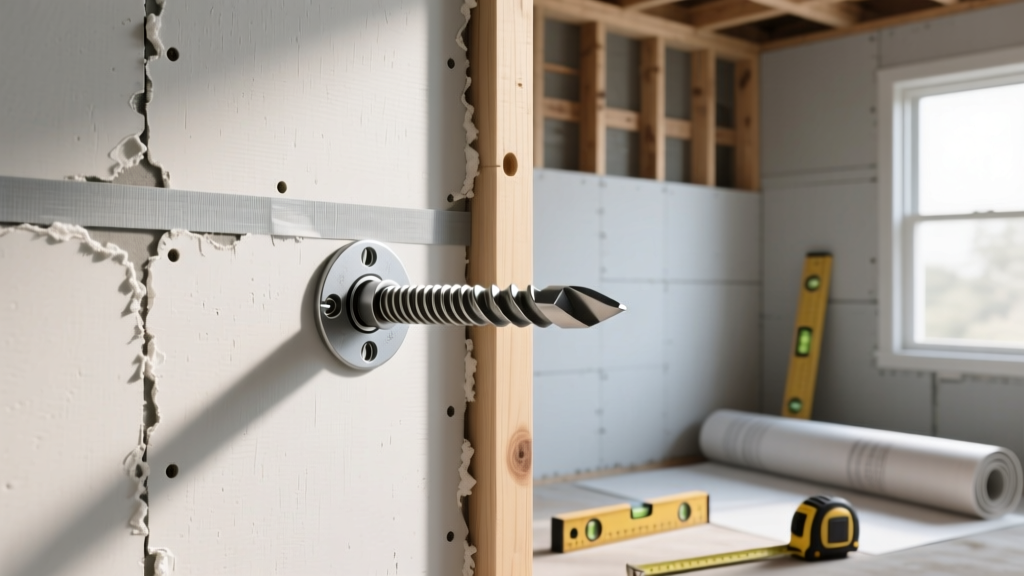
The Engineering Problem: Why Standard Drywall Anchors Fail
Mounting heavy fixtures to gypsum board presents a persistent challenge for contractors and DIYers: the hidden stud variable. When installing standard zinc or plastic drywall anchors, the installer rarely knows exactly what lies behind the 1/2-inch or 5/8-inch gypsum panel. If a standard self-drilling zinc anchor unexpectedly encounters a wood stud, the aggressive, wide-pitch threads designed exclusively for soft gypsum suddenly bind against dense wood fibers. The resulting torque spike exceeds the shear strength of the zinc alloy head, causing the anchor to snap off flush with the wall surface. This leaves a ruined installation point, a damaged wall, and a compromised mounting scenario.
The E-Z Ancor Stud Solver self-drilling drywall anchor was engineered specifically to eliminate this failure mode. By utilizing a patented dual-thread geometry and a specialized drill point, the Stud Solver transitions seamlessly from cutting through gypsum board to tapping into dimensional lumber without structural failure. However, it is not a universal replacement for all hollow-wall anchors. Understanding its specific application-fit is critical for maximizing withdrawal resistance and avoiding catastrophic pull-out.
Dual-Thread Geometry and Metallurgical Limits
Unlike standard ribbed plastic toggles or hollow-wall straps, the Stud Solver relies on rigid material engagement. The anchor body is cast from high-grade zinc alloy, but the thread profile shifts along its shaft. The leading features a sharp, self-drilling point with narrow, wood-cutting threads. As the anchor transitions into the main body, the threads widen to the aggressive pitch required to grip the crumbly matrix of gypsum board.
The Stud Solver is strictly designed for wood framing (typically SPF - Spruce-Pine-Fir dimensional lumber). If the anchor point strikes a 20-gauge or 25-gauge steel stud, the zinc alloy will strip, gall, or snap. The drill point cannot penetrate cold-formed steel, and the torque required will destroy the anchor head. Always verify framing material if you are working in commercial construction or modern multi-family residential builds where metal studs are standard.
Scenario Matching Matrix: When to Deploy the Stud Solver
Selecting the correct anchor requires matching the fixture weight, wall thickness, and underlying framing probability. Use the following decision matrix to determine if the Stud Solver is the optimal hardware choice for your specific application.
| Installation Scenario | Fixture Weight | Underlying Framing | Is Stud Solver Optimal? | Technical Rationale |
|---|---|---|---|---|
| Heavy Shelving (Floating) | 50 - 100+ lbs | Unknown / Mixed | Yes | Provides maximum withdrawal resistance if it hits a stud, while maintaining a 50 lb safety margin in pure gypsum. |
| Large Wall Mirrors | 40 - 80 lbs | Wood Studs (16" OC) | Yes | Eliminates the risk of snapping anchors when targeting stud centers for primary load-bearing points. |
| Lightweight Art / Pictures | Under 20 lbs | None (Hollow Wall) | No | Overkill for the application. Standard picture hooks or small ribbed plastic anchors are faster and cheaper. |
| Grab Bars / ADA Handrails | 250+ lbs (Dynamic) | Wood Blocking | No | Dynamic loads require direct structural fastening (e.g., #10 or #12 wood screws directly into blocking), not zinc anchors. |
| Cabinetry (Upper Wall) | 100+ lbs per linear ft | Metal Studs | No | Zinc will fail on metal. Requires toggle bolts (Snaptoggles) or direct self-drilling metal screws (Tek screws). |
Gypsum Board Variables: 1/2-Inch vs. 5/8-Inch Type X
The thickness and density of the gypsum board directly impact the anchor's holding power in hollow-wall scenarios. Standard residential interior walls typically utilize 1/2-inch regular gypsum board. In this medium, the Stud Solver's wide threads compress the gypsum core, creating a friction lock capable of supporting approximately 50 pounds of shear load.
However, commercial buildings, garages, and multi-family separation walls frequently mandate 5/8-inch Type X fire-rated gypsum board. Type X board contains glass fibers and a denser gypsum core to achieve a 1-hour fire rating. While this denser core slightly increases the hollow-wall pull-out strength of the anchor, it also increases driving resistance. When installing into 5/8-inch Type X, ensure your drill's clutch is set to prevent over-torqueing the anchor head before the flange sits flush against the paper face.
Installation Protocol and Torque Specifications
Proper installation ensures the load is distributed across the gypsum face rather than concentrated on the paper layer, which can tear under stress.
- Tool Selection: Use a cordless drill/driver with an adjustable torque clutch. Set the clutch to a medium-low setting (typically 5-8 on a standard 20V driver).
- Bit Matching: Insert a #2 Phillips or appropriate square-drive bit into the anchor's recess. Ensure a tight fit to prevent cam-out, which will strip the zinc drive head.
- Driving the Anchor: Apply firm, steady forward pressure. Drive the anchor until the cutting threads bite into the drywall.
- The Stud Transition: If the drill point hits a wood stud, you will feel a distinct change in resistance. Do not stop driving. The specialized tip will begin cutting into the wood. Continue driving until the anchor flange is flush with the drywall surface.
- Flange Seating: Stop driving the exact moment the flange contacts the wall. Over-driving will crush the gypsum paper and compromise the 50-lb hollow-wall rating. The drywall should not dimple inward.
- Screw Insertion: Drive the provided #8 or #10 sheet metal/wood screw through your fixture and into the anchor. If the anchor is seated in a wood stud, the screw will bypass the zinc threads and bite directly into the lumber, achieving structural withdrawal resistance.
Load Capacities and Withdrawal Resistance Data
Understanding the exact load limits prevents catastrophic wall failures. The following data reflects standard testing parameters for the Stud Solver line:
- Hollow Wall Shear Strength (1/2" Gypsum): ~50 lbs per anchor.
- Hollow Wall Pull-Out (1/2" Gypsum): ~40 lbs per anchor.
- Wood Stud Engagement Shear: Dictated by the #10 steel screw (typically exceeds 150 lbs).
- Wood Stud Engagement Pull-Out: Dictated by the #10 steel screw thread depth in the lumber (typically exceeds 120 lbs).
- Fixture Thickness Limit: The anchor's internal thread depth limits the screw length. Ensure your fixture thickness plus the screw penetration does not exceed the anchor's internal cavity, or the screw will bottom out and strip the zinc threads.
Common Failure Modes and Troubleshooting
The 'Spinning' Anchor
If the anchor spins freely in the wall without advancing, the gypsum core has been stripped out, usually due to using an undersized anchor for a previously enlarged hole, or aggressively wobbling the drill during installation. Fix: Do not attempt to pack the hole with spackle or toothpicks. Move the installation point 2 inches up or down to engage fresh, uncompromised gypsum core.
Flange Separation
If the anchor head snaps off during installation, it is almost always due to hitting a metal stud, hitting a dense knot in a wood stud without sufficient forward pressure, or using a worn driver bit that cam-out and stripped the recess. Fix: Extract the broken zinc shaft using needle-nose pliers or a left-handed drill bit, and switch to a heavy-duty toggle bolt (such as a 1/4-inch Snaptoggle) for that specific mounting point.
Paper Face Tearing
If the drywall paper tears around the flange, the anchor has been over-driven, crushing the gypsum core behind the paper. This reduces the shear capacity by up to 40%. Fix: Remove the anchor, patch the wall, and relocate. To prevent this, always rely on the drill's torque clutch to stop driving when resistance peaks.