Mold Resistant Gypsum Board Cost Analysis & ROI (2026)
Analyze mold resistant gypsum board costs for 2026. Compare material prices, installation labor, and long-term ROI against standard drywall in moist areas.

The True Cost of Mold Resistant Gypsum Board in 2026
Specifying mold resistant gypsum board requires balancing a 40% to 120% upfront material premium against the severe financial risk of moisture damage. In 2026, the national average for localized bathroom mold remediation ranges from $1,800 to $4,500, according to the Environmental Protection Agency (EPA). For contractors and property developers, understanding the exact cost delta between standard drywall and mold-resistant alternatives is critical for accurate bidding and long-term asset protection.
This analysis breaks down material costs, installation labor variables, and the hidden expenses that often erode the ROI of moisture-management strategies in high-humidity zones.
Key 2026 Cost Metrics at a Glance
- Standard 1/2-inch Drywall: $0.45 - $0.60 per sq. ft.
- Treated Paper MR Board: $0.75 - $0.95 per sq. ft.
- Fiberglass Mat MR Board: $1.15 - $1.45 per sq. ft.
- Average Remediation Avoidance ROI: 300%+ in wet-zone renovations
Material Cost Breakdown: Standard vs. Mold Resistant
Not all mold resistant gypsum board is manufactured equally. The market is divided into two primary technologies: treated paper-faced panels and fiberglass-mat-faced panels. Both must meet the Gypsum Association standards for moisture resistance, but their material costs and performance ceilings differ significantly.
| Product Category | Brand Example | Core Tech | Material Cost / Sq. Ft. | ASTM D3273 Score |
|---|---|---|---|---|
| Standard White Board | USG Sheetrock UltraLight | Standard Gypsum / Paper | $0.52 | N/A (Fails quickly) |
| Treated Paper MR | USG Mold Tough | Treated Core / Green Paper | $0.85 | 10 (No growth) |
| Fiberglass Mat MR | GP DensArmor Plus | Treated Core / Glass Mat | $1.30 | 10 (No growth) |
| 5/8-inch Type X MR | CertainTeed M2Tech Firecode | Fire-Rated / Treated Paper | $1.15 | 10 (No growth) |
Installation Labor and Hidden Cost Factors
The material premium is only half of the cost equation. Installation labor for mold resistant gypsum board can increase by 15% to 25% compared to standard drywall, driven by specific finishing requirements.
The Fiberglass Mat Finishing Penalty
Fiberglass-mat panels like Georgia-Pacific DensArmor Plus eliminate the organic paper food source that mold feeds on. However, the textured glass mat surface requires specialized finishing techniques. Standard all-purpose joint compound often struggles to bond properly to the mat, and the extended drying times of premixed compounds in humid environments can paradoxically trap moisture against the panel.
Labor Adjustment: Finishers must use setting-type joint compounds (e.g., USG StructoLite or Durabond) for the taping and first coats. This chemical-setting mud requires precise mixing and has a strict 45-to-90-minute working window, increasing labor time and material waste. Expect finishing labor to rise from $1.50 per sq. ft. (standard) to $1.85 per sq. ft. (fiberglass mat).
Fastener and Tape Specifications
Using standard phosphate-coated drywall screws in high-moisture zones is a critical failure point. Phosphate coatings degrade in humid conditions, leading to rust-bleed that mimics mold staining and compromises the gypsum core. Specifications must mandate hot-dipped galvanized or epoxy-coated screws (e.g., Grip-Rite Galvanized). Furthermore, standard paper drywall tape introduces organic cellulose into the joint. Installers must use alkali-resistant fiberglass mesh tape (e.g., FibaTape Mold-X10), adding roughly $0.08 per linear foot to the tape budget.
Total Project Cost Comparison Matrix
To contextualize the data, below is a cost model for a standard 500 sq. ft. residential bathroom renovation (walls and ceiling), comparing standard drywall against treated paper and fiberglass mat alternatives.
| Cost Component | Standard Drywall | Treated Paper MR | Fiberglass Mat MR |
|---|---|---|---|
| Panel Material (500 sq. ft.) | $260 | $425 | $650 |
| Tape & Fasteners | $45 | $75 | $95 |
| Joint Compound | $60 | $60 | $110 (Setting-type) |
| Finishing Labor | $750 | $750 | $925 |
| Total Installed Cost | $1,115 | $1,310 | $1,780 |
| Cost Delta vs Standard | - | +$195 (+17%) | +$665 (+59%) |
Calculating the ROI: Remediation vs. Prevention
When evaluating the $195 to $665 upfront premium, project managers must weigh it against the statistical probability and cost of moisture intrusion. According to industry remediation data, replacing mold-compromised standard drywall in a 500 sq. ft. bathroom involves demolition, hazardous material disposal, antimicrobial treatments, and reconstruction. The average localized remediation invoice in 2026 sits at $3,200.
If the probability of a plumbing leak, condensation failure, or HVAC humidity spike causing mold growth in a standard drywall bathroom over a 10-year hold period is conservatively estimated at 15%, the risk-adjusted cost of standard drywall is $480 ($3,200 x 0.15). Therefore, the $195 premium for treated paper MR board yields an immediate positive expected value, while the fiberglass mat option acts as a high-value insurance policy for luxury builds and long-term rental portfolios.
Procurement and Specification Framework
Do not default to the most expensive option for every wall. Use this decision framework to allocate budget efficiently across different moisture zones:
Zone-Based Specification Guide
- Zone 1: Direct Wet (Shower Pans, Tub Surrounds)
Action: Do NOT use mold resistant gypsum. Specify cementitious backer board (e.g., USG Durock) or foam-core tile backer (e.g., Schluter Kerdi-Board) paired with a liquid-applied waterproofing membrane like RedGard. - Zone 2: High Humidity & Splash (Shower Ceilings, Vanity Walls)
Action: Specify Fiberglass Mat MR Board (GP DensArmor Plus). The lack of organic paper facing prevents surface mold even if condensation drips from the shower ceiling repeatedly. - Zone 3: Ambient Moisture (Bathroom Perimeter, Laundry Rooms)
Action: Specify Treated Paper MR Board (USG Mold Tough). Provides adequate core protection against ambient humidity spikes and minor plumbing condensation at a lower cost and easier finish.
Common Installation Mistakes That Void the Investment
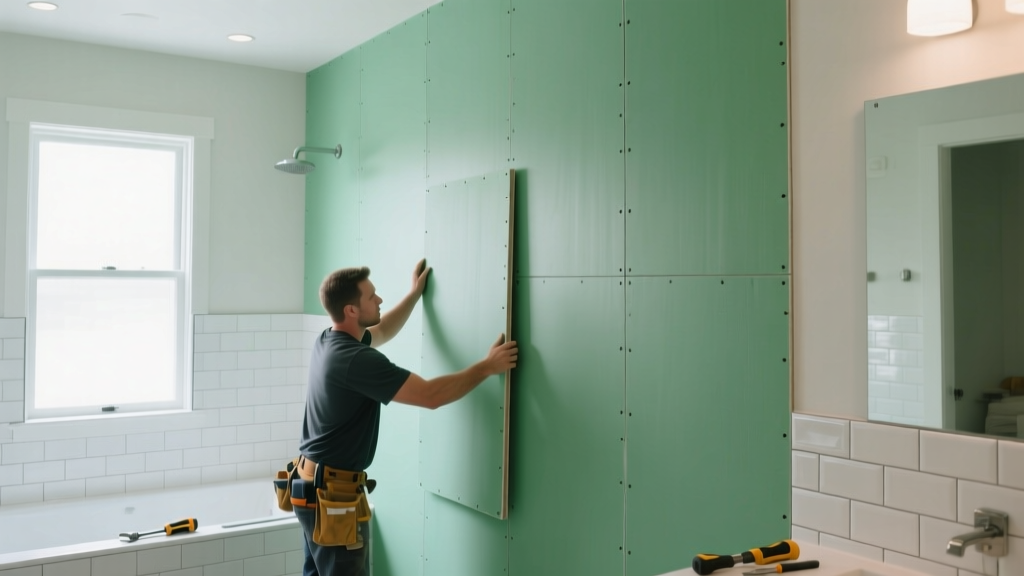
Purchasing premium mold resistant gypsum board is useless if the installation introduces vulnerabilities. Avoid these three field errors:
- Using Standard Primer: Mold resistant panels must be sealed with a vapor-permeable, acrylic-based drywall primer. Standard PVA primers can trap residual construction moisture inside the wall cavity, creating a microclimate behind the drywall where mold can grow on the wood framing.
- Bottom-Edge Wicking: Gypsum cores are highly susceptible to capillary action. If a bathroom experiences a minor floor flood, standard or MR gypsum will wick water upward. Installers must maintain a strict 1/2-inch gap between the bottom of the drywall and the finished floor, covering the gap with baseboard trim. Never let the panel rest directly on the subfloor.
- Mixing Panel Types in Wet Zones: Taping a joint between standard drywall and mold resistant drywall in a high-moisture zone creates a localized failure point. The organic paper on the standard board will harbor spores that can easily migrate across the joint compound to the treated board.
Regional Pricing Variations and Code Requirements
Material costs for mold resistant gypsum board fluctuate based on regional demand and local building codes. In high-humidity coastal markets like South Florida and the Pacific Northwest, contractors should anticipate a 10% to 15% markup on MR panels due to supply chain prioritization and strict local enforcement of moisture-management codes. For example, the Florida Building Code mandates specific moisture-resistant materials in high-humidity occupancies, which drives up baseline contractor pricing in these regions. Conversely, in arid climates like the Southwest, MR board may require special ordering, leading to higher freight surcharges and extended lead times that can disrupt critical path schedules.
Written by
James ThorntonJames Thornton is a construction industry veteran with 25 years of hands-on experience in wood framing, lumber grading, and residential building codes. He started as a framing carpenter in rural Oregon, earned his ICC Residential Building Inspector certification, and eventually became a senior plan reviewer for the City of Portland Bureau of Development Services. James holds a B.S. in Wood Science & Technology from Oregon State University and is a certified lumber grader through the West Coast Lumber Inspection Bureau (WCLIB). He has inspected over 3,000 residential construction sites and authored the city's internal guide on advanced framing techniques (2x6 at 24" O.C.). James lives in Bend, OR, where he builds custom timber-frame cabins and competes in lumberjack sports.
More from James Thornton
View all
Insulation
Best Home Insulation Materials: Complete 2026 Guide
Compare top home insulation materials for 2026. Find R-values, installed costs per square foot, and best uses for fiberglass, spray foam, and mineral wool.
Aug 4, 2026

Sustainable Building
Certify Your Green Building Material for LEED and WELL
Step-by-step guide to certifying a green building material for LEED v5 and WELL v2. Master EPDs, HPDs, and VOC limits for 2026 project specifications.
Aug 4, 2026

Stone & Masonry
Veneer Stacked Stone Panels: Interior Design & Style Showcase
Discover how veneer stacked stone panels transform interiors. Explore modern design profiles, material pairings, and technical installation specs.
Aug 4, 2026