Fiberglass Gypsum Board Cost Analysis & Pricing Guide 2026
Comprehensive 2026 cost analysis for fiberglass gypsum board. Compare material, labor, and accessory pricing for interior, exterior, and roof applications.

The Financial Reality of Glass-Mat Gypsum Panels
Fiberglass gypsum board replaces the traditional paper facing found on standard drywall with woven or non-woven fiberglass mats. This structural shift eliminates the organic food source for mold, provides superior dimensional stability when exposed to moisture, and creates a highly durable substrate for exterior and high-humidity applications. However, this performance upgrade commands a significant premium. In 2026, with raw material costs for glass fibers stabilizing but manufacturing energy expenses remaining elevated, estimating the true cost of these panels requires looking far beyond the per-sheet price tag.
According to the Gypsum Association, glass-mat panels are categorized distinctly from standard water-resistant (green board) panels. While a standard 1/2-inch moisture-resistant paper-faced board might cost $0.45 to $0.60 per square foot, fiberglass-faced alternatives routinely cost 60% to 120% more. This analysis breaks down the exact material, labor, and accessory costs required to budget accurately for fiberglass gypsum board systems in commercial and high-end residential projects.
2026 Executive Cost Summary
- Average Material Cost (Interior 1/2"): $0.80 - $1.15 per sq. ft.
- Average Material Cost (Exterior 5/8"): $1.05 - $1.45 per sq. ft.
- Labor Premium: 18% - 22% higher than standard drywall installation.
- Required Accessory Adder: $0.15 - $0.25 per sq. ft. for specialized tape and setting compounds.
Material Pricing Matrix by Application
Fiberglass gypsum board is not a monolithic product. Manufacturers engineer specific core densities and mat weaves for distinct applications. Pricing fluctuates based on thickness, core type (standard vs. fire-rated Type X), and facing treatment.
| Application Category | Typical Thickness | 2026 Price Range (Per Sq. Ft.) | Leading Product Examples |
|---|---|---|---|
| Interior Mold/Moisture | 1/2" Standard / Type X | $0.80 - $1.15 | USG Fiberock Aqua-Tough, Gold Bond XP |
| Exterior Sheathing | 1/2" / 5/8" Type X | $1.05 - $1.45 | GP DensGlass, Securock EXOAir |
| Roof Cover Board | 1/4" / 1/2" High Density | $1.20 - $1.75 | GP DensDeck, USG Securock Roof Board |
| Shaft Liner / Area Separation | 1" / 2" Type X | $1.60 - $2.30 | GP DensGlass Shaftliner |
The Hidden Labor and Accessory Multipliers
The most frequent budgeting error contractors make with fiberglass gypsum board is treating it like standard drywall during the estimating phase. The installation ecosystem for glass-mat panels requires specialized accessories and altered labor practices.
Labor Slowdowns and PPE Requirements
Cutting fiberglass-faced panels generates airborne glass particulates. Unlike scoring and snapping paper-faced drywall, cutting the dense fiberglass mat requires heavy-duty utility knives, specialized scoring tools, or routers equipped with HEPA dust extraction. According to safety guidelines referenced by USG Corporation and Georgia-Pacific Building Products, installers must wear long sleeves, gloves, and N95 or P100 respirators. This mandatory PPE, combined with the physical resistance of the mat during cutting and the need for meticulous cleanup, typically results in an 18% to 22% labor time premium over standard drywall hanging.
Required Accessory Upgrades
You cannot use standard paper tape and all-purpose pre-mixed joint compound on interior fiberglass gypsum board. The alkaline nature of the glass fibers and the non-porous surface of the mat will cause standard compounds to shrink, crack, and delaminate.
- Tape: Must use alkali-resistant fiberglass mesh tape (e.g., FibaTape). Cost adder: ~$0.06 per sq. ft.
- First and Second Coats: Must use setting-type (chemically curing) joint compounds like Durabond 45 or 90. Pre-mixed drying-type compounds are only acceptable for the final skim coat. Cost adder: ~$0.08 per sq. ft.
- Fasteners: Exterior applications require corrosion-resistant screws with a wide bugle head to prevent pull-through, as glass mat has lower shear strength than heavy paper. Cost adder: ~$0.05 per sq. ft.
Lifecycle ROI: When Does the Premium Pay Off?
Paying $1.20 per square foot for interior panels instead of $0.50 for standard drywall is difficult to justify without a clear return on investment. Use this decision framework to determine if fiberglass gypsum board is financially viable for your specific zone.
Mandatory Applications (High ROI)
- Commercial pool enclosures and spa areas.
- Exterior continuous insulation (ci) outboard sheathing.
- Commercial kitchen walls behind tile.
- Unclosed shaft walls and elevator hoistways.
Poor ROI Applications (Overkill)
- Standard residential bedroom and living area walls.
- Residential bathroom ceilings (standard green board or cement board suffices).
- Temporary construction hoarding.
- Interior partition walls in climate-controlled, low-humidity office spaces.
Installation Edge Cases That Destroy Budgets
Even experienced commercial drywall contractors encounter unexpected costs when managing glass-mat panels. Anticipating these edge cases prevents change orders and material waste.
Critical Warning: UV and Weather Exposure Limits
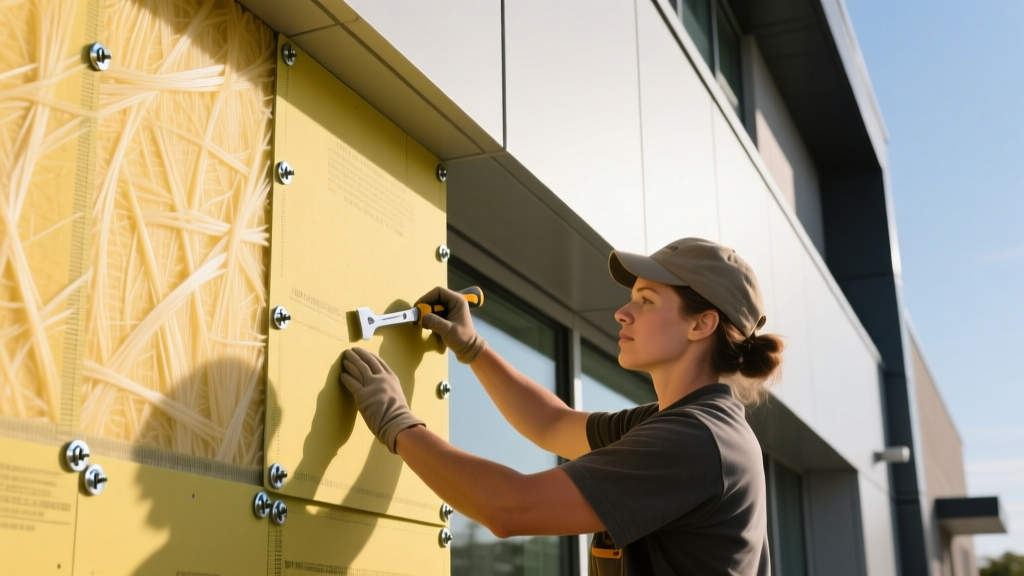
Exterior fiberglass gypsum sheathing (like DensGlass) is not a standalone weather-resistant barrier (WRB). While it resists moisture better than paper, prolonged UV exposure degrades the acrylic coatings on the glass mat. Most manufacturers warranty the product for only 6 months of outdoor exposure. If your project faces weather delays pushing the sheathing exposure beyond 6 months, you must budget for a secondary protective coating or face the cost of tearing off and replacing delaminated panels.
Fastener Pull-Through and Torque Control
The fiberglass mat does not have the same tensile tear strength as multi-layered paper facing. If drywall screw guns are not calibrated with precise torque control, the screw head will easily punch through the mat, creating a 'dimple' that compromises the structural hold and requires extensive patching with setting compound. Budget for an extra 10% in fasteners to account for blowouts, and ensure crews use screws specifically rated for glass-mat sheathing (typically featuring a self-drilling point and a wider, flatter bugle head).
Managing the Cutting Dust
Routing or sawing fiberglass gypsum board creates fine, highly irritating dust. In occupied commercial renovations (such as upgrading a hospital wing or a school locker room), you cannot simply sweep this dust. You must budget for negative air machines with HEPA filtration and specialized dust-containment shrouds for your routers. Failing to contain the dust will result in immediate work stoppages by facility managers and potential HVAC contamination cleanup costs.
Frequently Asked Budgeting Questions
Can I use standard drywall screws for interior fiberglass boards?
For interior, climate-controlled applications, standard phosphate-coated drywall screws are generally acceptable. However, in any area with fluctuating humidity (like a commercial laundry room or indoor pool perimeter), you must upgrade to ceramic-coated or stainless-steel screws to prevent rust bleeding through the joint compound.
Does fiberglass gypsum board act as a vapor barrier?
No. The fiberglass mat is vapor-permeable. If your building envelope design requires a Class I or Class II vapor retarder on the interior side of the wall assembly, you will still need to install a separate polyethylene sheeting or a vapor-retarding primer over the finished glass-mat board.
How does the weight compare to standard drywall?
Fiberglass-faced panels, particularly high-density roof cover boards and exterior sheathing, are approximately 10% to 15% heavier than standard drywall of the same thickness. This impacts labor ergonomics and may require mechanical lifts for ceiling installations, slightly increasing equipment rental costs.
Written by
David NakamuraDavid Nakamura is a licensed architect (AIA) and construction technology writer focused on sustainable building methods, mass timber engineering, and high-performance building envelopes. He holds a Master of Architecture from the University of Washington and is a certified Passive House Consultant (CPHC). David spent eight years at the Seattle firm Mithun, where he led the design of three LEED Platinum projects, before founding his own practice specializing in net-zero residential design. He serves on the editorial advisory board of GreenBuilder Magazine and has authored peer-reviewed papers on cross-laminated timber (CLT) connections for the Journal of Structural Engineering. In his spare time, David teaches woodworking at Pratt Fine Arts Center and kayaks the Puget Sound.
More from David Nakamura
View all
Construction Cost
Labor Cost to Build a Deck Per Sq Ft: 2026 Installation Guide
Discover the exact labor cost to build a deck per sq ft in 2026. This installation guide breaks down contractor rates, complexity factors, and hidden fees.
Aug 4, 2026

Construction Cost
How Much Does It Cost to Build a 3 Bedroom House? Financing Guide
Learn exactly how much it costs to build a 3 bedroom house and explore 2026 financing options, construction loan types, and budget frameworks for your build.
Aug 4, 2026

Construction Cost
Cost to Build a Tennis Court: 2026 Guide
How much does it cost to build a tennis court in 2026? Breakdowns for asphalt, concrete, and synthetic surfaces plus fencing and lighting.
Jul 30, 2026