High Density Gypsum Board Maintenance & Cleaning Guide
Expert playbook for cleaning and maintaining high density gypsum board. Learn approved solvents, stain removal matrices, and impact repair protocols.
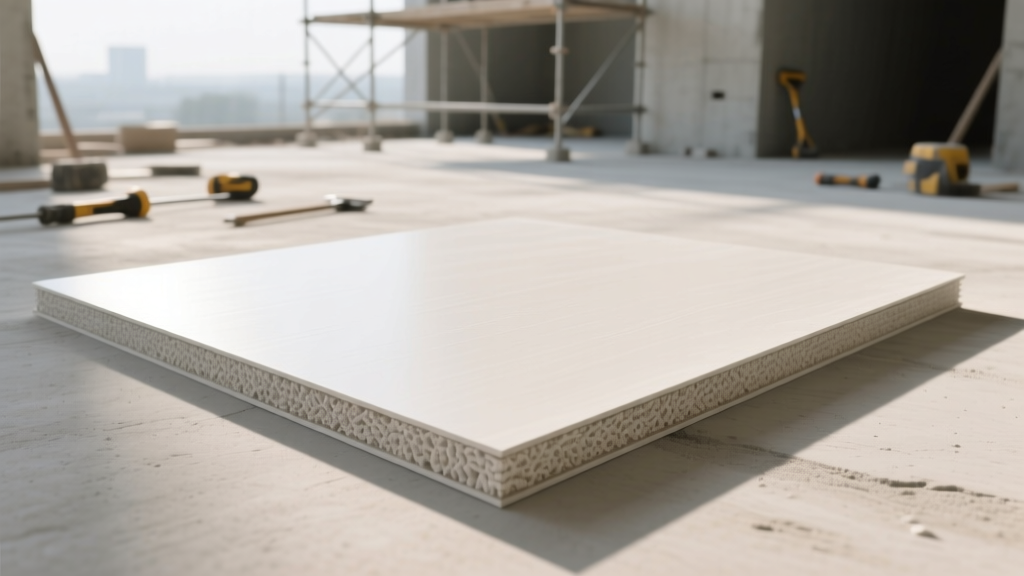
The Physics of High Density Gypsum Facers and Cores
High density gypsum board, engineered for abuse resistance, impact resistance, and enhanced acoustic performance, operates under entirely different mechanical rules than standard drywall. Classified under ASTM C1629 standards, these panels feature a reinforced, tightly compacted core with densities ranging from 45 to 55 lbs/ft³, compared to the 35 to 40 lbs/ft³ found in standard commercial panels. This increased core density fundamentally alters how the surface reacts to mechanical abrasion, chemical solvents, and moisture intrusion during routine facility maintenance.
The maintenance playbook for these panels must also account for the specialized facers. While some high-density boards utilize heavy, multi-ply natural paper (such as National Gypsum’s Gold Bond Abuse-Resistant), others utilize fiberglass mats (like USG Securock) for extreme moisture and mold resistance. The facer material dictates the chemical boundaries of your cleaning protocol; applying the wrong solvent can delaminate the facer from the dense core, compromising the panel's structural integrity and fire rating.
Chemical Compatibility and Cleaning Restrictions
Facility maintenance crews frequently default to high-alkaline degreasers or abrasive melamine sponges (magic erasers) to remove scuffs from high-traffic corridors. On high density gypsum assemblies, this approach causes catastrophic surface degradation. Melamine foam acts as micro-sandpaper, burnishing the paint and eventually exposing the underlying paper or mat facer to ambient moisture. High-alkaline cleaners (pH > 9) break down the sizing agents in paper facers, leading to edge-swelling and joint ridge telegraphing.
The approved baseline for routine cleaning is a pH-neutral surfactant (pH 6.5 to 7.5) applied via a high-GSM microfiber mop. The neutral solution lifts particulate matter and lipid-based scuffs without attacking the acrylic or polyurethane paint binders sealing the gypsum facer. Dwell time should not exceed three minutes before mechanical agitation and wipe-down to prevent moisture from migrating through micro-fissures in the paint film into the dense core.
Stain Removal Matrix for Abuse-Resistant Panels
High density gypsum walls in hospitals, schools, and commercial corridors face specific staining vectors. The following matrix provides targeted remediation protocols based on the stain chemistry and the specific facer type of the dense core panel.
| Stain Vector | Facer Type | Approved Solvent / Agent | Application Method | Max Dwell Time |
|---|---|---|---|---|
| Rubber Scuffs (Carts/Shoes) | Paper or Fiberglass | Isopropyl Alcohol (70%) | Spray and immediate microfiber wipe | < 60 seconds |
| Lipid / Food Grease | Paper | pH-Neutral Enzymatic Cleaner | Agitate with soft-bristle nylon brush | 3 minutes |
| Lipid / Food Grease | Fiberglass Mat | Mild Alkaline Degreaser (pH 8.5) | Microfiber mop, rinse with distilled water | 5 minutes |
| Ink / Marker (Permanent) | Paper | Denatured Alcohol / Solvent | Dab with cotton swab; do not rub | Immediate |
| Betadine / Iodine (Medical) | Fiberglass Mat | Sodium Thiosulfate Solution | Saturate stain, neutralize, rinse heavily | 10 minutes |
Impact Damage and Core Repair Protocol
High density boards are engineered to resist dents and punctures, but when an impact exceeds the panel's threshold (typically a concentrated force exceeding 150 ft-lbs), the dense core fractures differently than standard gypsum. Standard drywall crumbles; high density gypsum shears and creates highly compacted, low-porosity fracture edges. Standard lightweight spackling or drying-type joint compounds will fail to bond to these compacted edges and will inevitably flash or pull away as they cure via evaporation.
Repairing a fractured high density core requires a chemical-cure approach. Follow this precise protocol to restore the panel's impact resistance:
- Scarify the Fracture Edges: Use a coarse rasp or 60-grit sanding block to aggressively roughen the compacted edges of the dense core. This increases the surface area for mechanical adhesion.
- Apply a Bonding Agent: Brush a liquid plaster bonding agent (e.g., USG Plaster Bonder) into the scarified fissure. Allow it to become tacky (approximately 15 minutes).
- Fill with Setting-Type Compound: Pack the void with a 45-minute setting-type compound (e.g., DuraBond 45 or Easy Sand 45). Setting compounds undergo a chemical crystallization process that locks into the dense core, providing structural rigidity that evaporation-based compounds cannot achieve.
- Reinforce the Facer: Once the base fill is flush, apply a self-adhesive fiberglass mesh tape over the repair line. High density panels experience higher localized stress; paper tape will blister under the torque of shifting abuse-resistant panels.
- Skim and Finish: Apply two topcoats of a high-build finishing compound, feathering the edges out to a minimum 16-inch radius to hide the repair from oblique corridor lighting.
Fastener and Penetration Maintenance
Because high density gypsum is frequently used as a substrate for heavy wall-mounted equipment—such as hospital handrails, commercial cabinetry, and impact guards—the maintenance playbook must include fastener inspection. The dense core provides superior screw pull-out strength (often exceeding 80 lbs per screw in 1/2-inch panels), but the cyclic loading of handrails can slowly enlarge the pilot holes over time.
During bi-annual maintenance, facility teams must check the torque on all heavy wall-mounted hardware. If a fastener spins freely in the dense core, do not simply upscrew. Inject a two-part epoxy anchor or a specialized gypsum cavity anchor into the void, allow it to cure, and re-drive the fastener. Furthermore, all penetrations through high density boards in wet areas (like commercial kitchens or locker rooms) must be sealed with a high-modulus, paintable polyurethane sealant. This prevents vapor drive from migrating behind the panel and degrading the back-facer, which is a common failure mode in dense core assemblies.
Bi-Annual Facility Inspection Checklist
To maximize the lifecycle of high density gypsum installations, facility managers should execute the following inspection checklist every six months, paying special attention to the unique failure modes of dense core panels:
- Joint Ridge Telegraphing: Inspect walls under oblique (glancing) light. High density panels are heavier and more rigid; if the framing deflects, the joints will not flex and will instead ridge. Note any ridging for structural framing reinforcement.
- Facer Delamination Check: Tap the surface within 12 inches of all floor and ceiling intersections. A hollow sound indicates the dense core has separated from the facer due to capillary moisture wicking from concrete slabs.
- Moisture Mapping: Use a pinless moisture meter calibrated for gypsum. Readings exceeding 15% on high density boards require immediate HVAC intervention, as the dense core retains moisture longer than standard board, increasing the risk of internal mold proliferation.
- Hardware Sealant Integrity: Inspect the polyurethane sealant around all wall guards and handrails. Re-caulk any joints where the sealant has lost adhesion or cracked due to dynamic impact loading.
- Impact Guard Compression: Check vinyl and aluminum corner guards mounted directly over high density drywall. Ensure the underlying gypsum has not crushed behind the guard, which can cause the guard to loosen and detach.