Mold Tough Gypsum Board: 2026 Specs, Costs & Top Brands
Compare top mold tough gypsum board brands for 2026. Explore pricing, fiberglass vs. paper-faced options, and critical installation specs.

The Science of Mold Resistance: Core vs. Face Technologies
Mold tough gypsum board is engineered to inhibit the growth of mold and mildew on both the surface and the core of the panel. However, not all mold-resistant drywall achieves this through the same mechanism. Understanding the distinction between chemical biocides and inorganic facers is critical for specifying the right product for high-humidity environments in 2026.
According to the National Institute of Building Sciences, moisture control is the primary determinant of indoor fungal growth. Mold-resistant drywall does not make a wall assembly waterproof; rather, it buys time and removes the cellulose food source that mold requires to colonize.
- Paper-Faced (Treated): Uses standard cellulose paper that has been chemically treated with fungicides, paired with a gypsum core treated with biocides. (e.g., USG Sheetrock Mold Tough).
- Fiberglass-Mat Faced (Inorganic): Replaces the cellulose paper entirely with an inorganic fiberglass mat. Since mold cannot feed on fiberglass, this method provides superior long-term resistance in chronically damp conditions. (e.g., Georgia-Pacific DensArmor Plus).
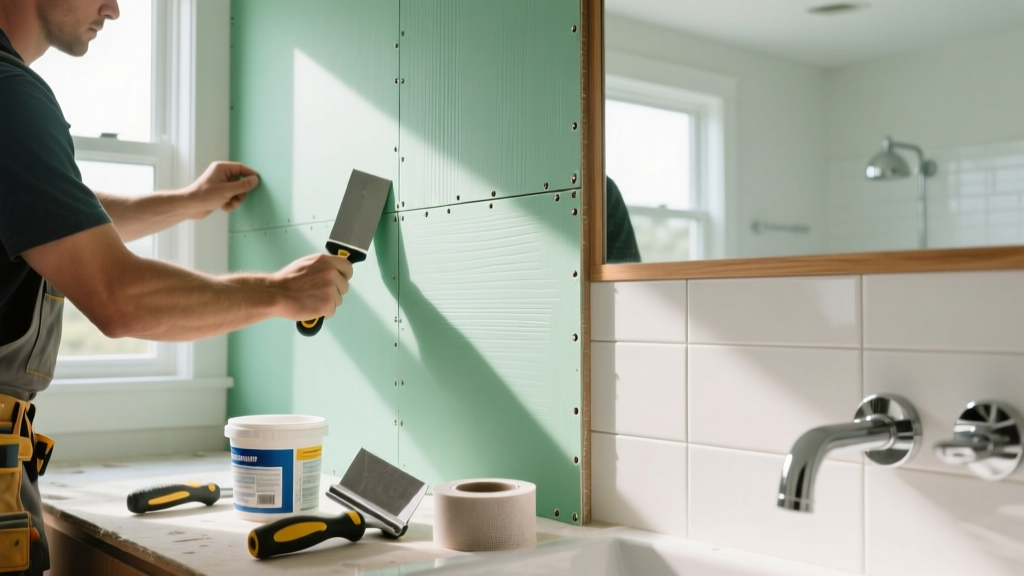
2026 Product Comparison Matrix: Top Mold-Resistant Brands
The market for moisture and mold-resistant gypsum panels is dominated by four major manufacturers. Below is a technical comparison of their flagship mold tough products, including face type, core treatment, and optimal use cases.
| Brand & Product Line | Face Material | Core Treatment | Best Application | Approx. Cost (4x8 Sheet) |
|---|---|---|---|---|
| USG Sheetrock Mold Tough | Green Treated Paper | Biocide-treated | Bathroom ceilings, kitchen walls, laundry rooms | $22.00 - $25.00 |
| GP DensArmor Plus | Fiberglass Mat | Moisture-resistant | Basements, high-humidity commercial, tile backer (dry areas) | $32.00 - $38.00 |
| National Gypsum Gold Bond XP | Green Treated Paper | Biocide-treated | Residential damp areas, utility rooms | $21.00 - $24.00 |
| CertainTeed M2Tech | Purple Treated Paper | Biocide-treated | Residential bathrooms, kitchens, mudrooms | $24.00 - $28.00 |
Cost Analysis: Material Premium and Labor Implications
Upgrading from standard 1/2-inch drywall (which averages $14.00 to $16.00 per 4x8 sheet in 2026) to mold tough gypsum board introduces a material premium of approximately 50% to 120%. However, material cost is only one variable in the total assembly price.
Labor and Finishing Considerations
- Paper-Faced Panels: Install and finish exactly like standard drywall. No labor premium. Tapers can use standard pre-mixed joint compounds.
- Fiberglass-Mat Panels: Require a slight labor adjustment. The fiberglass mat can fray if cut with a dull utility knife, and the surface texture requires a specific approach to taping. Installers must use setting-type joint compounds (e.g., Durabond 45 or 90) for the bedding coat to ensure proper adhesion to the non-porous mat, followed by pre-mixed topping compounds for the final skim coat.
ROI Insight: The EPA notes that mold remediation in residential cavities can cost between $3,000 and $10,000. Spending an extra $150 to $300 per bathroom to upgrade to mold tough gypsum board yields an immediate return on investment by mitigating catastrophic failure risks from minor plumbing leaks or condensation buildup.
Critical Installation Rules and Common Failure Modes
Even the most advanced mold-resistant drywall will fail if installed incorrectly. The most common failure modes stem from misunderstanding the limits of the product's resistance ratings, which are typically tested under ASTM D3273 (Standard Test Method for Resistance to Growth of Mold on the Surface of Interior Coatings).
Never use paper-faced mold tough gypsum board as a tile backer inside a shower or tub surround. While the fungicides delay mold growth, the cellulose paper will eventually rot if the waterproofing membrane is compromised or if water migrates behind the tile grout. For direct wet areas, you must use cement backer board (e.g., Durock, HardieBacker) or a foam-based waterproof tile backer (e.g., Schluter Kerdi-Board, Wedi Board). Mold tough drywall is strictly for damp areas, not wet areas.
Fastener and Framing Specifications
To maintain the integrity of the moisture-resistant core, fastener schedules must be strictly adhered to. Over-driving screws breaks the fiberglass mat or treated paper, exposing the untreated gypsum core to ambient humidity.
- Wall Framing (16" o.c.): Space screws a maximum of 16 inches apart along the studs. Use 1-1/4" coarse-thread drywall screws for wood framing, or fine-thread for steel.
- Ceiling Framing (12" o.c.): Space screws a maximum of 12 inches apart. Ceiling panels are highly susceptible to sagging if humidity fluctuates; ensure the board is rated for 1/2" ceiling applications (e.g., USG Sheetrock Mold Tough UltraLight).
- Bottom Edge Clearance: Maintain a 1/2-inch gap between the bottom edge of the gypsum board and the subfloor. Capillary action will wick standing water into the core if the board touches the floor. Cover this gap with baseboard trim after painting.
Finishing and Priming Protocols for Maximum Efficacy
The mold resistance of the wall assembly is only as strong as its weakest layer. Covering mold tough gypsum board with standard, unprimed latex paint negates the benefits of the treated face paper.
Joint Compound Selection
Standard pre-mixed joint compounds contain starches and cellulose thickeners that serve as a food source for mold spores. For the taping and bedding coats in high-humidity rooms, always use a setting-type joint compound (chemical-curing powder). These compounds are inorganic and do not support microbial growth. For the final finishing coat, use a mold-inhibiting pre-mixed topping compound.
Primer and Paint Requirements
Before applying the final topcoat, the entire surface must be sealed with a mold-inhibiting primer. According to guidelines supported by the Centers for Disease Control and Prevention (CDC), controlling indoor humidity and using appropriate surface coatings are vital for preventing spore germination.
- Recommended Primers: Zinsser Perma-White Mold & Mildew-Proof Interior Primer, or KILZ Mold & Mildew Interior/Exterior Primer.
- Topcoat: Use a high-quality semi-gloss or satin acrylic latex paint. Flat paints are more porous and trap moisture against the drywall face, increasing the risk of surface mildew in poorly ventilated bathrooms.
Summary: Making the Right Specification Choice
When specifying mold tough gypsum board in 2026, match the face technology to the risk profile of the room. For standard residential bathrooms, kitchens, and laundry rooms where occasional condensation occurs, chemically treated paper-faced boards (like USG Sheetrock Mold Tough or CertainTeed M2Tech) offer the best balance of cost and performance. For below-grade basements, commercial restrooms, or areas with chronic humidity issues where the drywall may remain damp for extended periods, the inorganic fiberglass-faced panels (like GP DensArmor Plus) provide a failsafe barrier against cellulose-based mold colonization.
Written by
David NakamuraDavid Nakamura is a licensed architect (AIA) and construction technology writer focused on sustainable building methods, mass timber engineering, and high-performance building envelopes. He holds a Master of Architecture from the University of Washington and is a certified Passive House Consultant (CPHC). David spent eight years at the Seattle firm Mithun, where he led the design of three LEED Platinum projects, before founding his own practice specializing in net-zero residential design. He serves on the editorial advisory board of GreenBuilder Magazine and has authored peer-reviewed papers on cross-laminated timber (CLT) connections for the Journal of Structural Engineering. In his spare time, David teaches woodworking at Pratt Fine Arts Center and kayaks the Puget Sound.
More from David Nakamura
View all
Construction Cost
Labor Cost to Build a Deck Per Sq Ft: 2026 Installation Guide
Discover the exact labor cost to build a deck per sq ft in 2026. This installation guide breaks down contractor rates, complexity factors, and hidden fees.
Aug 4, 2026

Construction Cost
How Much Does It Cost to Build a 3 Bedroom House? Financing Guide
Learn exactly how much it costs to build a 3 bedroom house and explore 2026 financing options, construction loan types, and budget frameworks for your build.
Aug 4, 2026

Construction Cost
Cost to Build a Tennis Court: 2026 Guide
How much does it cost to build a tennis court in 2026? Breakdowns for asphalt, concrete, and synthetic surfaces plus fencing and lighting.
Jul 30, 2026