How to Use Drywall Anchors: Material Selection & Load Guide
Master how to use drywall anchors with our material taxonomy guide. Compare load capacities, zinc vs steel toggles, and gypsum board installation steps.
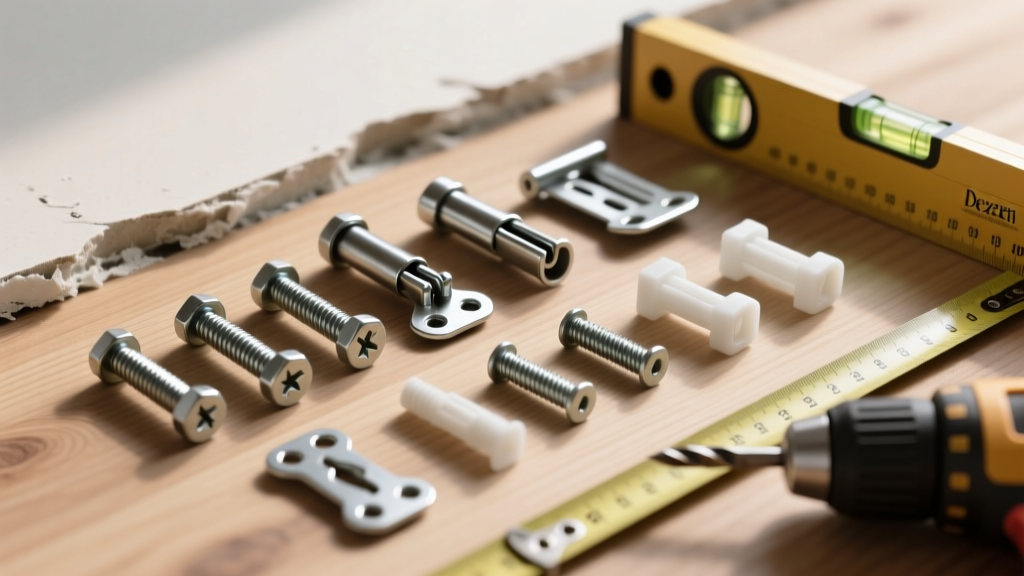
The Physics of Gypsum Fastening
The structural integrity of a gypsum board wall relies on a core of calcium sulfate dihydrate sandwiched between two layers of heavy face paper. Standard 1/2-inch regular gypsum board has a core density of approximately 40 to 45 pounds per cubic foot. While this provides excellent compressive strength and fire resistance, it lacks the tensile and shear strength of wood or metal framing. A standard #8 coarse-thread drywall screw driven directly into the gypsum core relies entirely on friction and the brittle core, yielding a pull-out strength of merely 10 to 15 pounds. To mount anything heavier, you must understand how to use drywall anchors to distribute the load across a wider surface area behind the gypsum face paper, engaging the structural tension of the backside paper and the broader core matrix.
Drywall Anchor Material Taxonomy
Selecting the correct anchor requires matching the anchor material to both the load requirement and the specific type of gypsum board you are penetrating. The market is dominated by three primary material categories:
1. Zinc-Alloy Die-Cast Anchors
Manufactured from cast zinc, these rigid, self-drilling threaded anchors feature deep, wide threads designed to cut into the gypsum core without pre-drilling. They are ideal for medium-duty applications (20 to 75 lbs). Because zinc is relatively brittle, these anchors can snap under extreme torque or sudden impact loads, but they excel in static, sustained loads like shelving brackets or heavy mirrors.
2. Glass-Filled Nylon and Thermoplastic Anchors
Expansion anchors made from engineered thermoplastics or glass-filled nylon rely on radial expansion. When a screw is driven into the anchor, the material flares outward, compressing against the walls of the pilot hole. These are best for light-duty loads (up to 20 lbs) and are the mandatory choice for moisture-resistant (green or purple) gypsum board in bathrooms, as they will not suffer from galvanic corrosion in high-humidity environments.
3. Carbon Steel Strap Toggles
For heavy-duty applications, carbon steel strap toggles (such as the Hillman ToggleLock or Cobra SmartStrap) represent the pinnacle of drywall fastening. They utilize a pivoting steel crossbar that passes through a 1/2-inch hole and snaps flat against the backside of the drywall. The load is distributed across a 2-inch to 3-inch steel plate, bypassing the weak gypsum core entirely and relying on the tensile strength of the backside face paper and the steel itself.
According to the Gypsum Association, Type X gypsum board contains glass fibers to achieve a 1-hour fire rating. Drilling large holes (1/2-inch or larger) for heavy-duty toggle bolts severs this glass fiber mesh. If the anchor is ever removed, the void must be patched with an ASTM C474 compliant fire-rated setting-type joint compound, not standard lightweight spackle, to maintain the wall's fire-resistance rating.
Selection Matrix: Anchor Type vs. Load Capacity
The following matrix outlines the maximum safe working loads for common anchor categories across the two most prevalent residential and commercial board thicknesses. Data is based on static, straight-out pull testing on intact, unpainted gypsum board.
| Anchor Category | Primary Material | Max Load (1/2" Board) | Max Load (5/8" Type X Board) | Required Pilot Hole |
|---|---|---|---|---|
| Ribbed Expansion | Thermoplastic | 15 lbs | 20 lbs | 3/16" |
| Self-Drilling Threaded | Zinc-Alloy | 50 lbs | 75 lbs | None (Self-Tapping) |
| Traditional Toggle Bolt | Spring Steel | 100 lbs | 140 lbs | 1/2" to 5/8" |
| Strap Toggle (Snaptoggle) | Carbon Steel / Zinc | 265 lbs | 350+ lbs | 1/2" |
Step-by-Step Installation by Anchor Category
Proper installation technique dictates the success of the fastener. Below are the precise methodologies for the two most critical anchor types.
Threaded Metal Anchors (e.g., E-Z Ancor Twist-N-Lock)
- Preparation: Do not pre-drill a pilot hole. The cutting threads on the zinc anchor are designed to displace the gypsum core.
- Driving the Anchor: Using a #2 Phillips bit, drive the anchor into the drywall at a low RPM. Stop driving exactly when the flange sits flush against the drywall surface. Over-driving will crush the gypsum core and strip the anchor's bite.
- Fastening the Fixture: Insert the provided #8 or #10 sheet metal screw through your fixture and into the anchor. Drive until snug, but do not apply high-torque impacts.
Strap Toggles (e.g., Hillman ToggleLock / Cobra SmartStrap)
- Drilling: Use a sharp 1/2-inch spade bit or twist bit to drill a clean hole through the drywall. Avoid dull bits, which will tear the face paper and weaken the structural rim of the hole.
- Insertion: Pinch the steel toggle wings together and push them through the hole until they clear the backside of the drywall.
- Setting the Strap: Pull the plastic straps toward you to seat the steel crossbar flat against the back of the drywall. Slide the plastic collar along the straps until it clicks into the drywall hole.
- Snapping and Screwing: Snap off the excess strap length flush with the collar. Drive the included machine screw through your fixture and into the threaded collar.
When procuring materials for commercial or high-load residential projects, refer to Hillman Fastener Specifications or USG Corporation's fastening guidelines. Avoid generic, unbranded bulk anchors from discount suppliers, as the zinc casting quality and steel gauge thickness can vary wildly, leading to catastrophic shear failures under load.
Edge Cases: Moisture-Resistant and Soundproof Boards
Standard anchoring rules change when dealing with specialized gypsum boards. Moisture-resistant boards (often faced with green or purple paper) feature a silicone-treated core and face paper to repel water. Metal anchors in these environments can oxidize, creating rust stains that bleed through the paint. Always specify glass-filled nylon or stainless-steel toggles for bathroom installations.
Soundproof gypsum board (such as USG Quiet Solution or CertainTeed SilentFX) features a viscoelastic polymer layer sandwiched between two dense gypsum cores. This polymer layer is soft and lacks structural rigidity. Standard expansion anchors will fail in soundboard because the polymer layer compresses and allows the anchor to pull through. You must exclusively use heavy-duty strap toggles that bridge entirely past the polymer layer, anchoring against the rigid backside gypsum core.
Failure Modes and Troubleshooting
Even with the correct material taxonomy, field conditions can lead to fastener failure. Recognizing these failure modes is critical for structural safety.
- The "Spin-Out" (Pulverized Core): If a threaded anchor spins freely without tightening, the local gypsum core has been pulverized into dust. Do not pack the hole with toothpicks or wood glue—this is a wood-framing trick that fails in gypsum. Instead, abandon the hole, move the fixture 2 inches vertically, and use a strap toggle that bridges the damaged zone.
- Face Paper Tearing: If the drywall paper tears around the anchor head, the load is no longer distributed. This usually occurs when using flat-head screws in oversized fixture holes. Always use washers to increase the bearing surface area against the drywall face.
- Galvanic Corrosion in Exterior Soffits: If anchoring into moisture-resistant gypsum board used in exterior soffits or high-humidity pool enclosures, zinc anchors will degrade within 12 to 18 months. Specify 304 or 316 stainless steel toggle bolts to prevent catastrophic dropping of heavy exterior light fixtures.
Understanding how to use drywall anchors is not merely about twisting a screw into a wall; it is an exercise in applied material science. By matching the anchor's material composition and mechanical design to the specific density, thickness, and environmental rating of the gypsum board, you ensure a secure, long-lasting installation that respects the structural limits of the building materials.