Water Resistant Gypsum Board vs Alternatives for Wet Areas
Compare water resistant gypsum board to cement, foam, and glass-mat alternatives. Expert specs, 2026 pricing, and wet-area installation codes.

The Moisture Matrix: Where Water-Resistant Gypsum Board Wins (and Fails)
Selecting the correct substrate for high-humidity and direct-wet environments is one of the most frequent failure points in residential and commercial construction. While gypsum board water resistant variants (commonly known as green or purple board) offer enhanced protection against ambient humidity and occasional splashes, they are fundamentally different from true waterproof backer boards. Misapplying paper-faced or glass-mat gypsum in direct wet zones—like shower pans or steam rooms—leads to core degradation, mold proliferation, and catastrophic tile failure.
Head-to-Head: Substrate Comparison Matrix
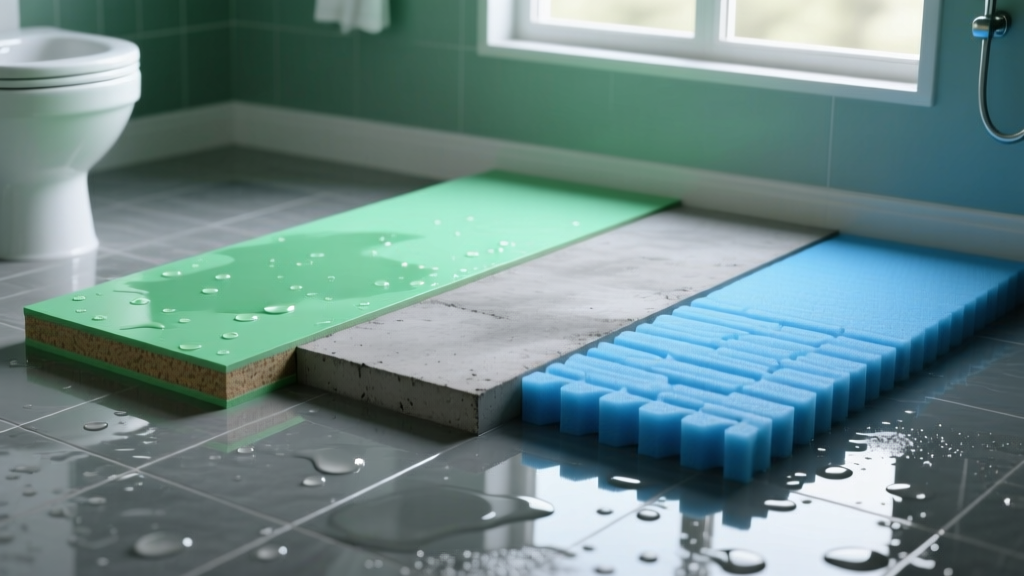
To make an informed material decision, contractors and architects must evaluate substrates across weight, water absorption limits, and cost. The table below benchmarks standard water-resistant gypsum against the three primary wet-area alternatives using 2026 market data and ASTM C1396 testing standards.
| Material Type | Core Composition | Max Water Absorption (ASTM C473) | Weight (per 4x8 Sheet, 1/2") | 2026 Avg. Cost (4x8 Sheet) |
|---|---|---|---|---|
| Paper-Faced WR Gypsum (Green/Purple) | Silicone-treated gypsum + treated paper | 5% (Core) / 10% (Surface) | ~52 lbs | $16.00 - $24.00 |
| Glass-Mat Gypsum (e.g., DensArmor) | Moisture-resistant gypsum + fiberglass mats | 5% (Core) / 3% (Surface) | ~50 lbs | $26.00 - $32.00 |
| Cement Board (e.g., Durock, HardieBacker) | Portland cement + aggregate/mesh | Impervious to degradation (Absorbs water but retains structural integrity) | ~45 lbs (3x5 sheet) / 95 lbs (4x8) | $14.00 - $18.00 (3x5) / $35.00+ (4x8) |
| XPS Foam Backer (e.g., Kerdi-Board, Wedi) | Extruded polystyrene + cementitious coating | 0% (Core is 100% closed-cell waterproof) | ~15 lbs | $55.00 - $75.00 |
Deep Dive: Product Specs and Real-World Performance
1. Paper-Faced Water-Resistant Gypsum (Green/Purple Board)
Products like USG Sheetrock Mold Tough and CertainTeed M2Tech utilize a core treated with wax and silicone additives to repel liquid water, while the facing paper is embedded with mold inhibitors.
- Best Application: Bathroom ceilings, kitchen backsplashes, and exterior soffits (protected).
- Failure Mode: If the paper face is punctured or left exposed to standing water, the core will wick moisture, swell, and lose its structural bond to the framing.
2. Glass-Mat Gypsum Panels
By replacing the organic paper face with inorganic fiberglass mats (e.g., Georgia-Pacific DensArmor Plus), manufacturers eliminate the primary food source for mold.
- Best Application: Basement interior walls, high-humidity commercial corridors, and exterior sheathing behind rain screens.
- Advantage: Can withstand prolonged exposure to high ambient humidity (up to 90% RH) without degrading, making it ideal for pre-dryout construction phases where standard board would fail.
3. Cementitious Backer Boards
Portland cement boards like USG Durock and James Hardie's HardieBacker do not contain organic materials that can rot. However, they are water-permeable. Water will pass through them, meaning a secondary waterproofing membrane or vapor retarder is mandatory behind or on top of the board in shower assemblies.
- Best Application: Shower walls, tub surrounds, and heavy stone tile installations requiring high sheer-strength.
- Drawback: Extreme weight and difficult cutting (requires carbide scoring tools or wet saws, generating silica dust).
4. Extruded Polystyrene (XPS) Foam Boards
Foam boards like Schluter Kerdi-Board and Wedi Building Panel represent the premium tier of wet-area substrates. The XPS core is entirely impervious to water, acting as its own vapor barrier.
- Best Application: Custom steam showers, curbless wet rooms, and multi-story commercial bathrooms where weight reduction is critical.
- Advantage: Can be cut with a standard utility knife, weighs 70% less than cement board, and integrates seamlessly with proprietary waterproofing band systems.
Decision Framework: Which Board for Which Room?
Room-by-Room Substrate Guide
- Bathroom Ceilings (Non-Shower): 5/8" Purple Board (Mold/Moisture Resistant Gypsum). The 5/8" thickness prevents sagging between 24" o.c. joists, while the treated core handles steam condensation.
- Standard Shower Walls (Tile over Board): 1/2" Cement Board (e.g., HardieBacker 500) paired with a liquid-applied waterproofing membrane (e.g., Custom Building Products RedGard). Do not use paper-faced gypsum here.
- Steam Showers & Wet Rooms: 1/2" XPS Foam Board (e.g., Wedi). Steam carries immense vapor pressure that will penetrate cement board and degrade gypsum cores over time. Foam provides an impermeable thermal and vapor break.
- Kitchen Backsplashes: Standard 1/2" Gypsum Board or Green Board. Splashes are incidental and wipeable; the premium cost of cement board is unjustified here.
- Basement Interior Framing: Glass-Mat Gypsum (e.g., DensArmor Plus). Basements experience inward vapor drive from surrounding concrete. Fiberglass-faced gypsum prevents mold growth if minor condensation occurs behind the insulation.
Installation Gotchas: Why Water-Resistant Gypsum Fails
Even when used in code-approved, non-direct-wet areas, water-resistant gypsum board will fail if installation protocols are ignored. According to USG technical specifications, contractors must adhere to the following parameters:
- Fastener Corrosion: In high-humidity zones, standard phosphate-coated drywall screws will rust, bleeding through the joint compound and paint. Use hot-dipped galvanized or Type 304 stainless steel screws for all bathroom ceiling and wall applications.
- The Tub Flange Gap: Never rest the bottom edge of water-resistant gypsum board directly on the tub flange or shower pan lip. Capillary action will wick standing water into the core. Maintain a strict 1/4" gap between the board and the flange, and seal the joint with 100% silicone caulk, not drywall mud.
- Joint Compound Selection: Standard paper tape and all-purpose joint compound will mold in high humidity. Use fiberglass mesh tape and a setting-type compound (e.g., Durabond 90) for the bedding coat, followed by a mold-resistant topping compound for the final skim.
"The most common callback we see in bathroom remodels isn't the tile failing; it's the drywall ceiling above the shower peeling because the contractor used standard board and skipped the exhaust fan timer. Upgrading to mold-tough gypsum and ensuring continuous ventilation is the cheapest insurance policy in residential construction."
Frequently Asked Questions
Can I tile directly over water-resistant green board?
You can tile over green board in dry or damp areas like kitchen backsplashes or wainscoting using standard thin-set mortar. However, building codes prohibit tiling directly over green board in wet areas (showers/tubs). In wet areas, you must use cement board, foam board, or apply a continuous waterproof membrane over the green board (though cement/foam is still structurally preferred).
Is purple board better than green board?
Yes. While green board is strictly water-resistant (focusing on liquid water repulsion), purple board (like CertainTeed M2Tech or USG Mold Tough) includes enhanced biocides in both the core and the face paper to actively resist mold and mildew growth. For a marginal cost increase of $2 to $4 per sheet, purple board offers significantly better long-term performance in humid bathrooms.
Do I need a vapor barrier behind water-resistant gypsum?
For interior bathroom walls separating conditioned spaces, a separate polyethylene vapor barrier behind the studs is generally not required and can trap moisture inside the wall cavity. However, if the wall is an exterior-facing wall, consult local climate zone codes. In cold climates, a Class II vapor retarder on the interior warm-in-winter side is required to prevent condensation inside the fiberglass insulation.
Written by
David NakamuraDavid Nakamura is a licensed architect (AIA) and construction technology writer focused on sustainable building methods, mass timber engineering, and high-performance building envelopes. He holds a Master of Architecture from the University of Washington and is a certified Passive House Consultant (CPHC). David spent eight years at the Seattle firm Mithun, where he led the design of three LEED Platinum projects, before founding his own practice specializing in net-zero residential design. He serves on the editorial advisory board of GreenBuilder Magazine and has authored peer-reviewed papers on cross-laminated timber (CLT) connections for the Journal of Structural Engineering. In his spare time, David teaches woodworking at Pratt Fine Arts Center and kayaks the Puget Sound.
More from David Nakamura
View all
Construction Cost
Labor Cost to Build a Deck Per Sq Ft: 2026 Installation Guide
Discover the exact labor cost to build a deck per sq ft in 2026. This installation guide breaks down contractor rates, complexity factors, and hidden fees.
Aug 4, 2026

Construction Cost
How Much Does It Cost to Build a 3 Bedroom House? Financing Guide
Learn exactly how much it costs to build a 3 bedroom house and explore 2026 financing options, construction loan types, and budget frameworks for your build.
Aug 4, 2026

Construction Cost
Cost to Build a Tennis Court: 2026 Guide
How much does it cost to build a tennis court in 2026? Breakdowns for asphalt, concrete, and synthetic surfaces plus fencing and lighting.
Jul 30, 2026