Choosing Corten Steel Edging: Gauge, Profile & Grade Taxonomy
Master corten steel edging selection. Compare ASTM A588 vs A606 grades, gauge thicknesses, and bend profiles for lasting landscape retaining walls.
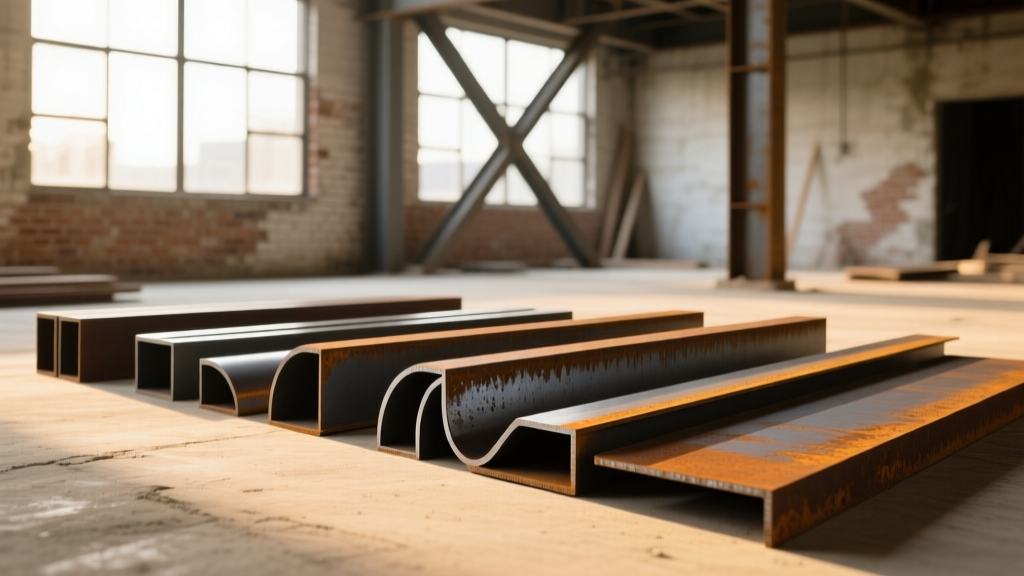
Selecting the correct weathering steel for landscape architecture requires moving beyond the generic "Corten" label. True material performance depends on a precise taxonomy of metallurgical grades, gauge thicknesses, and profile geometries. When specifying corten steel edging for retaining soil, defining planting beds, or managing topography transitions, contractors and landscape architects must match the material's structural properties to the specific soil loads, moisture profiles, and chemical environments of the site.
Metallurgical Taxonomy: ASTM A588 vs. ASTM A606 Type 4
The term "Corten" is a proprietary trademark originally developed by U.S. Steel, but it has become the industry shorthand for all weathering steels. In modern procurement, you must specify the exact ASTM standard to ensure the alloying elements (copper, chromium, nickel, and phosphorus) are present in the correct ratios to form the protective, self-healing oxide patina.
- ASTM A606 Type 4: This is the standard specification for high-strength, low-alloy steel sheet and strip. It is the primary material used for 14-gauge and 10-gauge landscape edging. It offers excellent formability for tight radius curves and is the most cost-effective choice for standard residential and commercial planting beds.
- ASTM A588: This specification covers structural steel shapes, plates, and bars. When your project requires 3/16-inch or 1/4-inch thick plate edging for heavy retaining walls, vehicular load-bearing edges, or tiered terracing, A588 is the mandatory specification. It provides higher yield strengths (50 ksi minimum) compared to standard carbon steels.
According to the Federal Highway Administration's guidelines on uncoated weathering steel, the protective patina only stabilizes when the steel undergoes alternating wet and dry cycles. If the alloy composition falls short of these ASTM standards, the steel will corrode continuously rather than forming the dense, impermeable oxide layer.
Gauge and Thickness Selection Matrix
The most common failure in landscape edging is hydrostatic bowing—where the lateral pressure of wet soil pushes the steel outward. This is strictly a function of gauge thickness and stake spacing. The following matrix dictates the maximum retained soil height based on the steel's decimal thickness.
| Nominal Gauge | Decimal Thickness | Max Retained Soil Height | Required Stake Spacing | Bend Radius Capability |
|---|---|---|---|---|
| 14-Gauge | 0.0747" | 10" - 12" | Every 24" | Tight (12"+ radius) |
| 10-Gauge | 0.1345" | 20" - 24" | Every 36" | Moderate (24"+ radius) |
| 3/16" Plate | 0.1875" | 36"+ | Every 48" (Welded rebar) | Requires brake press/heat |
For 10-gauge and thicker materials, standard manual bending will kink the steel. Fabricators must use a press brake or score-and-fold techniques to achieve clean, geometric corners without compromising the structural integrity of the alloy.
Profile Geometry and Structural Rigidity
Flat strips of weathering steel are inherently flexible. To increase the moment of inertia without increasing the gauge (and therefore the cost), manufacturers utilize specific profile geometries.
Flat Strip with Top Lip
The most prevalent profile for 14-gauge and 10-gauge edging features a 1-inch folded lip at the top. This lip serves a dual purpose: it drastically increases the lateral rigidity of the top edge, preventing it from wavering under foot traffic, and it eliminates the sharp, hazardous shear edge that flat-cut steel presents to pedestrians and pets.
Corrugated and Ribbed Profiles
For long, sweeping curves where a top lip is aesthetically undesirable, some manufacturers offer vertically corrugated corten steel edging. The corrugations act as structural ribs, allowing 14-gauge steel to perform like 10-gauge flat stock in terms of soil retention. However, corrugated profiles cannot be used for tight radii, as the ribs will buckle on the inside of the curve.
Weathering steel relies on atmospheric oxygen to regenerate its patina. It will catastrophically fail in two specific environments:
- Coastal Zones: Airborne chlorides (salt spray) within 1,500 feet of an ocean break the oxide layer faster than it can reform, leading to rapid pitting and structural loss.
- Constant Submersion: If the bottom 4 inches of the edging is buried in perpetually saturated, poorly draining clay, the lack of oxygen prevents patina formation. The subterranean section will rot through in 3 to 5 years. Always install a 2-inch gravel drainage channel behind the steel in heavy clay soils.
Soil Chemistry and Corrosion Edge Cases
The ASTM A588 specification assumes standard atmospheric and soil conditions. However, landscape architects must test soil pH before specifying weathering steel. Soils with a pH below 4.5 (highly acidic) or above 9.0 (highly alkaline) will chemically strip the protective copper-enriched oxide layer. In highly acidic environments, such as those surrounding heavy peat moss or pine needle accumulations, the steel will experience uniform corrosion at a rate of 1 to 2 mils per year, significantly shortening the 40-year expected lifespan of the edging.
Installation Hardware and Welding Protocols
The structural integrity of the edging is only as strong as its anchoring system. Do not use standard galvanized steel stakes with weathering steel. The dissimilar metals will create a galvanic cell, accelerating the corrosion of the zinc coating and eventually causing the stake to snap at the soil line.
- Stake Material: Always use matching ASTM A606 or A588 weathering steel stakes, or heavy-duty 304 stainless steel stakes.
- Welding Consumables: If field-welding corners or attaching rebar anchors to 3/16" plate, you must use low-alloy welding rods that match the weathering properties of the base metal. The AISC Design Guide 15 recommends E7018 stick electrodes or ER70S-6 MIG wire for single-pass welds on weathering steel to ensure the weld bead itself develops a matching patina and does not become a localized corrosion node.
2026 Procurement and Cost Baselines
Pricing for weathering steel fluctuates with global copper and nickel markets. As of early 2026, contractors should budget within the following ranges for material-only costs (excluding freight and installation):
- 14-Gauge (6" height): $3.50 – $5.00 per linear foot.
- 10-Gauge (12" height): $8.00 – $12.00 per linear foot.
- 3/16" Plate (24" height): $18.00 – $26.00 per linear foot (custom fabricated).
- Weathering Steel Stakes (24" length): $4.50 – $6.00 per piece.
When ordering, specify "mill-rolled" finish if you want the steel to arrive with the initial dark, oily scale intact, which will begin rusting immediately upon exposure. If you require an instant, uniform rust appearance for a high-profile commercial opening, specify "pre-weathered" or "pickled" stock, which the fabricator has chemically treated to accelerate the patina process before shipping. Pre-weathering adds approximately 15% to the base material cost.
Frequently Asked Technical Questions
Will the rust runoff stain adjacent concrete pavers?
Yes. During the initial 6-to-12-month oxidation phase, corten steel will bleed tannin-rich, iron-oxide heavy water. If the edging borders light-colored concrete, limestone, or porous sandstone, this runoff will cause permanent staining. To mitigate this, apply a clear, penetrating silane-siloxane sealer to the adjacent hardscape, or install a 2-inch wide strip of dark gravel between the steel and the paving to catch and filter the runoff.
Can I use corten steel edging for a vegetable garden?
Weathering steel is generally safe for agricultural use once the patina has fully stabilized. The alloying elements are locked within the dense oxide matrix and do not leach into the soil in biologically significant quantities. However, during the initial rusting phase, minor iron leaching occurs, which is actually beneficial for most vegetable crops. Avoid using it for highly acid-loving plants like blueberries until the patina is fully mature.
How deep should the stakes be driven?
For 14-gauge and 10-gauge edging, stakes should be driven a minimum of 12 inches into the subgrade below the bottom edge of the steel. In regions with deep frost lines (exceeding 36 inches), the stakes must extend below the frost line to prevent frost heave from pushing the edging upward and breaking the soil retention seal.