Top Galvanized Metal Roofing Brands & Product Lines 2026
Compare top galvanized metal roofing brands, product lines, gauge specs, and 2026 pricing. Find the right G90 or Galvalume steel panels for your build.
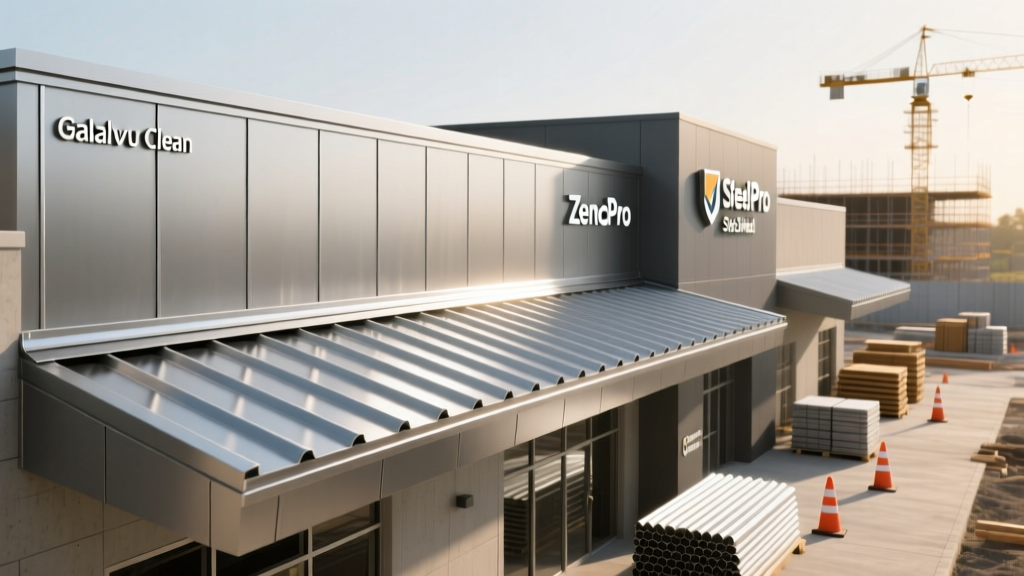
The Metallurgical Reality: G90 Galvanized vs. AZ50 Galvalume
When sourcing galvanized metal roofing for commercial, agricultural, or residential projects in 2026, the first critical decision involves clarifying terminology. The construction industry frequently uses 'galvanized' as a catch-all term for zinc-coated steel, but true galvanized steel (ASTM A653, G90 coating) and Galvalume (ASTM A792, AZ50/AZ55 coating) serve fundamentally different applications.
G90 Galvanized: Pure zinc coating (0.90 oz/sq ft). Best used as a substrate for painted roofing systems. Zinc provides sacrificial protection but oxidizes quickly when left bare.
AZ50 Galvalume: Zinc-aluminum alloy (55% aluminum, 43.4% zinc, 1.6% silicon). The aluminum provides long-term barrier protection, making it the industry standard for bare, unpainted metal roofing. According to BIEC International, Galvalume outlasts pure G90 galvanized by up to 4-to-1 in bare atmospheric exposure.
If your architectural plans call for a bare, bright silver roof, you need Galvalume. If the panels will receive a factory-applied PVDF (Kynar 500) paint finish, a G90 galvanized substrate is often preferred because paint adheres more predictably to pure zinc than to the aluminum-rich Galvalume surface. Below, we dissect the dominant manufacturers and their specific product lines dominating the 2026 market.
Brand Deep-Dive: McElroy Metal
McElroy Metal remains a dominant force in the galvanized metal roofing sector, particularly for projects requiring high structural spanning capabilities without a continuous deck.
The 138T Mechanical Seam Line
For low-slope commercial applications (down to 1/4:12 pitch), the 138T is McElroy’s premier standing seam product. It features a 1.5-inch tall rib and a mechanical double-lock seam. The critical E-E-A-T advantage of the 138T is its availability in Grade 80 steel (80,000 psi minimum yield strength). While standard 24-gauge steel is often Grade 50, upgrading to Grade 80 allows the 24-gauge 138T panels to span up to 5 feet over structural purlins without deflection, reducing the need for intermediate Z-purlins and lowering overall framing costs.
R-Panel & PBR Lines
For exposed-fastener applications, McElroy’s R-Panel (36-inch coverage, 1.25-inch rib height) is the workhorse of agricultural and light commercial roofing. In 26-gauge Galvalume, the R-Panel provides an optimal balance of rigidity and cost. McElroy rolls these panels regionally, which minimizes transit damage—a common failure point for long-haul metal shipments.
Brand Deep-Dive: MBCI
MBCI targets the architectural and high-end commercial sectors, focusing heavily on thermal movement and concealed fastener engineering.
Ultra-Dek & Snap-Clad Systems
MBCI’s Ultra-Dek (trapezoidal rib) and Snap-Clad (vertical rib) are their flagship standing seam lines. The differentiator for MBCI in 2026 is their proprietary sliding clip technology. Metal roofs expand and contract significantly with temperature fluctuations (up to 1 inch per 100 feet of panel length). MBCI’s sliding clips allow the panel to float over the substrate without stressing the fastener holes or the seam itself.
For buyers specifying galvanized substrates for painted finishes, MBCI offers their Signature 300 PVDF coating over a G90 galvanized base. This combination provides a 30-year chalk resistance warranty, making it the standard for municipal and educational facilities where long-term color retention is mandated.
Brand Deep-Dive: FABRAL
FABRAL dominates the residential, post-frame, and agricultural markets. Their product lines prioritize ease of installation, wide coverage, and aggressive pricing on lighter gauges.
Grandrib 3 & Ag-Tuff
The Grandrib 3 profile is FABRAL’s most recognized exposed-fastener panel. Featuring a 36-inch coverage width and a 3/4-inch rib height, it is specifically engineered to be installed over solid decking or existing asphalt shingles (where local building codes permit). FABRAL’s 29-gauge Grandrib 3 is heavily utilized in residential pole barns and barndominiums. However, structural engineers caution against using 29-gauge for primary roof diaphragms in high-wind zones; 26-gauge is the minimum recommendation for structural shear resistance in hurricane-prone regions.
2026 Pricing Matrix & Gauge Selection Guide
Material costs for galvanized and Galvalume steel fluctuate with global zinc and aluminum indices. The table below outlines average 2026 material-only pricing (excluding freight, tax, and trim) for standard profiles.
| Gauge | Thickness (Inches) | Coating Type | Avg. Price / Sq. Ft. | Primary Application |
|---|---|---|---|---|
| 29-Gauge | ~0.0149' | AZ50 Galvalume | $2.40 - $3.10 | Residential, Ag, Interior Liners |
| 26-Gauge | ~0.0179' | AZ50 / G90 | $3.20 - $4.50 | Commercial R-Panel, Post-Frame |
| 24-Gauge | ~0.0239' | G90 (Painted) | $5.80 - $8.20 | Architectural Standing Seam |
| 22-Gauge | ~0.0299' | G90 (Painted) | $8.50 - $11.00 | Heavy Industrial, High-Snow Load |
Critical Installation Gotchas & Failure Modes
Even the highest-grade galvanized metal roofing will fail prematurely if installation protocols ignore the chemical and physical properties of the coating. The Metal Construction Association (MCA) frequently highlights the following field failures:
- Wet Storage Stain (White Rust): When bare G90 or AZ50 panels are bundled tightly and exposed to condensation or rain without airflow, the zinc oxidizes into a white, chalky powder. This 'white rust' destroys the aesthetic of bare panels and compromises the coating thickness. Fix: Never store bundled panels flat on the ground; always stack them at an angle under a breathable tarp to allow moisture evaporation.
- Galvanic Dissimilar Metal Corrosion: Zinc and aluminum coatings are highly anodic. If copper flashing, untreated aluminum drip edges, or carbon steel fasteners come into direct contact with the galvanized roof in the presence of an electrolyte (rainwater), rapid galvanic corrosion will eat through the steel panel in months. Fix: Use only hot-dipped galvanized or stainless steel (300 series) fasteners. Isolate copper flashing using butyl tape or EPDM separation membranes.
- Fastener Washer Degradation: For exposed-fastener lines like the R-Panel or Grandrib 3, the neoprene washer is the single point of failure. Standard neoprene dries out and cracks under UV exposure within 7-10 years. Fix: Mandate the use of screws with EPDM rubber washers and a corrosion-resistant head coating (e.g., PVDF painted heads to match the panel).
Sourcing, Lead Times, and Regional Logistics
In 2026, the logistics of procuring galvanized metal roofing heavily favor regional manufacturing. Standing seam panels exceeding 40 feet in length cannot be shipped via standard flatbed freight without risking edge damage or mid-span buckling. Consequently, brands like McElroy Metal and MBCI utilize a network of regional roll-forming plants.
When specifying a product line, verify the proximity of the manufacturer's nearest roll-forming facility to your job site. Projects within a 500-mile radius of a plant typically enjoy 2-to-3-week lead times and lower freight surcharges. For remote sites requiring 50+ foot continuous panels, you must budget for mobile roll-forming equipment, where the manufacturer trucks the coil and the forming machine directly to the job site—a service that adds roughly $1.50 to $2.50 per square foot but eliminates lap joints and drastically reduces leak potential.