Installing a Black Metal Roof: Concealed Clip Procedures
Learn the exact procedures for installing a black metal roof using concealed clips, including substrate prep, thermal expansion gaps, and fastener torque.
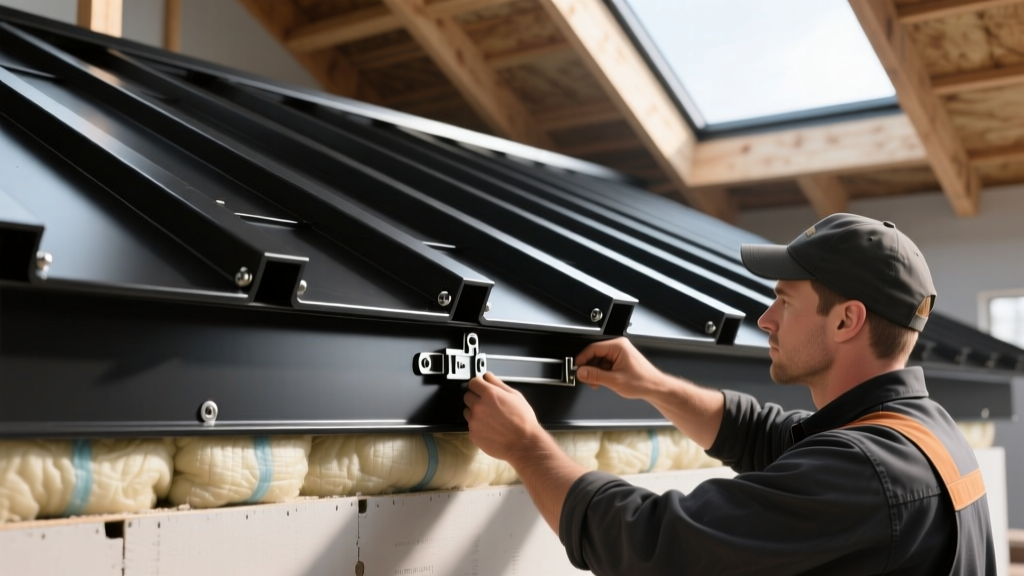
Material Selection and Coating Specifications
Installing a black metal roof requires strict adherence to material specifications that differ from lighter-colored roofing. Black steel panels absorb significantly more solar radiation, demanding specific substrate and coating choices to prevent premature failure. The industry standard substrate is Galvalume (AZ50 or AZ55 coating), which provides superior cut-edge corrosion resistance compared to standard galvanized steel.
For the paint system, you must exclusively specify a PVDF (Polyvinylidene Fluoride) resin coating, commonly marketed as Kynar 500 or Hylar 5000. SMP (Silicone Modified Polyester) coatings are unacceptable for black panels; while SMP may hold up on white or tan roofs, the intense UV and thermal degradation on black panels will cause SMP to chalk, fade, and lose its gloss within 5 to 7 years. PVDF maintains color stability and chalk resistance for 30 to 40 years, even under extreme thermal cycling.
Thermal Dynamics and Expansion Engineering
Black steel roofs can reach surface temperatures exceeding 160°F (71°C) on a 90°F summer day. Steel expands at a rate of approximately 1/16 inch per 10 linear feet for every 100°F change in temperature. A 30-foot black panel installed at 40°F in the morning can expand nearly 3/4 of an inch by mid-afternoon.
This extreme thermal movement dictates the use of a sliding concealed clip system rather than fixed fasteners. If panels are pinned directly to the deck with exposed screws, the restricted thermal movement will cause the panels to ripple, tear the screw holes, and ultimately compromise the roof's weathertightness. According to the Metal Roofing Alliance (MRA), proper clip engagement and placement are the most common failure points in standing seam installations.
Substrate Preparation and High-Temp Underlayment
Standard asphalt-saturated felt underlayment is incompatible with black metal roofs. The extreme heat transfer through the steel will cause standard felt to soften, melt, and adhere to the back of the panels, voiding warranties and trapping moisture against the deck.
Approved Underlayment Matrix
| Underlayment Type | Max Temp Rating | Suitability for Black Steel | Application Zone |
|---|---|---|---|
| Standard Asphalt Felt (#30) | 140°F | Do Not Use (Will melt/degrade) | N/A |
| Synthetic Polyolefin (e.g., Titanium UDL30) | 240°F | Excellent (Highly recommended) | Main roof deck |
| Self-Adhered Ice & Water Shield | 240°F (High-Temp variant) | Required (Must use high-temp formula) | Eaves, valleys, penetrations |
| Peel-and-Stick (Standard) | 170°F | Do Not Use (Will bleed/ooze) | N/A |
Ensure the high-temperature ice and water shield extends at least 24 inches past the interior warm wall line at the eaves, as mandated by the National Roofing Contractors Association (NRCA) for regions with freezing climates.
Step-by-Step Concealed Clip Installation
Follow this precise sequence to ensure structural integrity and accommodate thermal movement.
- Starter Trim and Eave Preparation: Install the eave trim using #10 x 1" hex washer head self-drilling screws spaced 12 inches on center. Apply a continuous 3/8" bead of butyl sealant tape between the eave trim and the underlayment to prevent wind-driven rain intrusion.
- Fixed Clip Placement: For panels under 20 feet, install fixed clips at the eave. For panels exceeding 20 feet, install fixed clips at the center of the panel's run. Secure fixed clips to the structural framing (not just the OSB/plywood deck) using #12 x 1.5" structural screws. This anchors the panel and forces thermal expansion outward toward the ridge and eave.
- Sliding Clip Installation: Install sliding clips along the rest of the panel ribs. Crucial Step: Ensure the sliding mechanism within the clip is centered in its track before fastening. If installed at the extreme end of the track, the panel will only be able to expand in one direction, leading to binding. Fasten sliding clips with #10 x 1" pancake head screws to avoid piercing the clip's moving parts.
- Panel Engagement: Hook the female leg of the black steel panel over the eave trim and snap it down onto the clips. Verify that the clip's upper flange is fully seated inside the panel seam. A partially engaged clip will fail under wind uplift.
- Mechanical Seaming: For roof slopes below 3:12, or in high-velocity hurricane zones (HVHZ), use a double-lock mechanical seamer. Run the electric seamer up the panel rib to fold the seams 180 degrees. For slopes 3:12 and above, a snap-lock system is generally sufficient, but mechanical locking provides superior wind uplift resistance (often achieving UL 580 Class 90 ratings).
Preventing Oil Canning in Dark Panels
Oil canning—minor, visible waviness in the flat areas of the steel panels—is the most common aesthetic complaint with black metal roofs. The dark color acts as a magnifying glass for shadows, making even microscopic deviations in the panel plane highly visible.
Mitigation Strategies
- Striations vs. Flat Pans: Never install flat-pan panels on a black roof unless the deck is perfectly planar. Specify panels with minor striations, clip-relief ribs, or pencil ribs rolled into the flat pan. These structural breaks disrupt light reflection and hide thermal bowing.
- Substrate Isolation: Install a 1/4" rigid polyisocyanurate insulation board or a specialized synthetic separation mat over the wood decking before applying the underlayment. This prevents the steel from telegraphing the seams, knots, and warps of the underlying OSB or plywood.
- Handling Procedures: Train the crew to carry panels vertically or with rigid support frames. Bending a 24-gauge black panel horizontally to carry it up a ladder will permanently stretch the steel, creating an oil-canning wave that no amount of field adjustment can fix.
2026 Cost Breakdown for Black Steel Roofing
Pricing for architectural standing seam systems has stabilized following the supply chain fluctuations of the early 2020s. Below is the current 2026 installed cost matrix for a 24-gauge PVDF black steel roof.
| Component | Material Cost (per sq. ft.) | Labor Cost (per sq. ft.) | Total Installed (per sq. ft.) |
|---|---|---|---|
| 24-Gauge PVDF Panels | $4.50 - $6.00 | $5.50 - $7.50 | $10.00 - $13.50 |
| High-Temp Synthetic Underlayment | $0.60 - $0.90 | $0.40 - $0.60 | $1.00 - $1.50 |
| Trim, Flashing, and Closures | $1.50 - $2.50 | $2.00 - $3.50 | $3.50 - $6.00 |
| Total Project Average | $6.60 - $9.40 | $7.90 - $11.60 | $14.50 - $21.00 |
Note: Complex roof geometries (multiple valleys, dormers, steep pitches over 8:12) will push labor costs toward the higher end of the spectrum due to increased flashing fabrication and safety rigging requirements.
Expert FAQs
Can I install a black metal roof over existing asphalt shingles?
Yes, but only if local building codes permit a second roofing layer and the structural framing can support the dead load. However, installing black steel directly over shingles without a batten or strapping system is highly discouraged. The shingles will trap moisture and accelerate the corrosion of the Galvalume substrate. Always install 1x4 or 2x4 wood battens vertically (aligned with framing) and horizontally to create a vented air gap, allowing the black roof to shed heat and moisture effectively.
Does a black metal roof increase cooling costs?
While black steel absorbs more heat than white steel, modern "cool roof" PVDF pigments are engineered to reflect a significant portion of the infrared (IR) spectrum, even in dark colors. Furthermore, a properly vented standing seam assembly with an air gap between the deck and the panels will convect the absorbed heat out at the ridge, minimizing thermal transfer into the conditioned space. The energy penalty of a black roof compared to a white roof is typically less than 3% in cooling costs when installed over a vented batten system.
"The longevity of a black metal roof is entirely dependent on the resin chemistry of the coating and the mechanical freedom of the clips. If the panel cannot move, the roof will fail." — Architectural Sheet Metal Manual, SMACNA