Metal Roof Repair Lifespan: When to Patch, Seal, or Replace Panels
Analyze metal roof repair durability, compare sealants and fasteners, and learn exact protocols to extend patch lifespans from 3 to 20+ years.
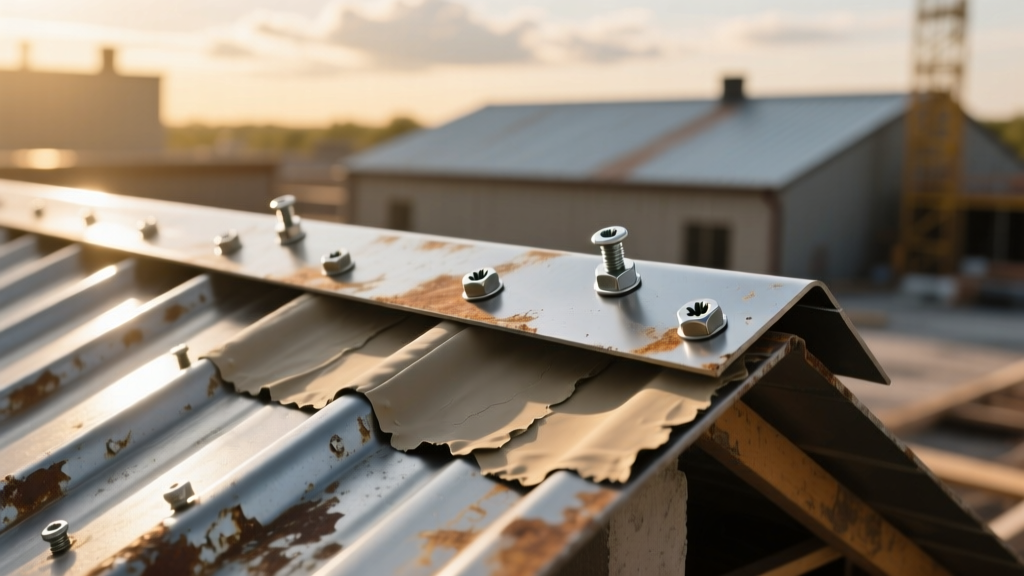
The Reality of Metal Roof Degradation: Why Repairs Fail
A properly installed standing seam or exposed fastener metal roof can last 40 to 60 years. However, the metal roof repair patches applied to these systems frequently fail within 3 to 7 years. This massive discrepancy in lifespan is rarely due to the base steel failing; rather, it is caused by material incompatibility, ignored thermal dynamics, and the use of consumer-grade sealants on industrial coatings.
According to guidelines published by the Metal Construction Association (MCA), the most common cause of premature repair failure is the misuse of silicone-based sealants on roofs coated with PVDF (Kynar 500/Hylar 5000) fluoropolymer paints. Silicone lacks the adhesive strength to bond permanently to these slick, chalk-resistant surfaces, leading to micro-leaks that accelerate sub-surface corrosion.
Thermal Cycling and Fastener Back-Out
Steel expands and contracts at a coefficient of approximately 0.0000065 inches per inch per degree Fahrenheit. On a 40-foot roof panel subjected to a 100°F temperature swing between winter nights and summer afternoons, the panel will move nearly 0.32 inches. If a repair screw is over-driven (crushing the washer) or under-driven (leaving a gap), this daily thermal shearing will destroy the washer seal in less than two years, rendering the repair useless.
Decision Matrix: Spot Repair vs. Panel Replacement
Before purchasing materials, accurately diagnose the failure mode. Applying sealant over a structural failure is a temporary bandage that traps moisture and accelerates rust. Use this framework to determine the correct intervention level.
| Failure Mode | Root Cause | Repair Protocol | Expected Post-Repair Lifespan |
|---|---|---|---|
| Leaking Lap Seam | Original butyl tape desiccation or wind-driven rain capillary action | Clean with MEK, apply 4-inch butyl rubber tape with UV backing | 20+ Years |
| Backed-out Fasteners | Thermal expansion shearing EPDM washers; stripped threads | Remove, fill hole with polyurethane, install oversized #12 screw with TPO washer | 15-25 Years |
| Galvanic Corrosion | Dissimilar metals (e.g., copper flashing touching galvalume) | Remove dissimilar metal, install EPDM separation membrane, replace corroded panel | Panel: 30+ Years |
| Oil Canning / Ponding | Insufficient purlin support or thermal bowing | Sealant will fail. Must add structural strutting or replace with higher-rib profile | Permanent (Structural fix) |
Material-Specific Repair Protocols
The chemistry of your roof dictates the chemistry of your repair materials. The ATAS International Technical Manual emphasizes that treating all metal roofs as identical leads to catastrophic galvanic reactions.
Galvalume (AZ55) Roofs
Galvalume steel is coated with an alloy of 55% aluminum, 43.4% zinc, and 1.6% silicon. The aluminum provides barrier protection, while the zinc offers galvanic (sacrificial) protection at the cut edges. Rule: Never use a wire wheel or steel-bristle brush to clean a Galvalume roof before repairing. This embeds raw steel particles into the coating, which will rust and stain the roof within weeks. Always use a Scotch-Brite pad or a stiff nylon brush with a solvent like denatured alcohol or MEK (Methyl Ethyl Ketone).
PVDF / Kynar Painted Roofs
These premium architectural coatings are designed to resist UV degradation and chalk, which also means they resist adhesives. Rule: Never use standard asphalt-based roof cements or 100% silicone sealants. You must use high-solids polyurethane sealants or specialized polyether formulations that chemically bite into the PVDF resin.
⚠ The Galvanic Corrosion Warning
Never use copper or untreated steel flashings, gutters, or fasteners on a Galvalume or zinc-aluminum roof. In the galvanic series, copper is highly cathodic compared to the anodic zinc/aluminum coating. Even a single copper nail or copper drip edge runoff will cause the Galvalume coating to dissolve and the base steel to perforate within a single season.
Exact Products and Costs for Metal Roof Repair
Consumer-grade hardware store products are engineered for asphalt shingles and DIY convenience, not for the extreme thermal and UV environment of a commercial or agricultural steel roof. Budget for professional-grade materials.
- Sealant (Polyurethane/Polyether): Products like Geocel 2300, NP1 Pro, or Henry 885. Expect to pay $12 to $16 per 10.1 oz tube. These remain flexible down to -40°F and withstand 25% joint movement.
- Seam Tape (Butyl Rubber): Eternabond or equivalent 4-inch wide butyl tape with a micro-pure UV-resistant backing. Cost: $65 to $85 per 50-foot roll. This is the only acceptable repair for horizontal lap seams.
- Fasteners: #10 x 1" or #12 x 1-1/4" HWH (Hex Washer Head) TEK screws. Crucially, specify TPO (Thermoplastic Polyolefin) washers rather than standard EPDM. EPDM degrades under UV exposure in 10-15 years; TPO lasts 30+ years. Cost: $0.12 to $0.18 per screw.
- Rust Encapsulator: Rust-Oleum Stops Rust or POR-15 for localized edge rust. Cost: $25 to $40 per quart.
Step-by-Step Fastener and Hole Restoration
When a fastener backs out, the hole in the steel is often enlarged or stripped. Simply putting a larger screw in without filling the void will result in a leak. Follow this protocol for a permanent fix:
- Extract and Clean: Remove the failed screw. Clean the surrounding 2-inch radius with MEK to remove dirt, oxidation, and old sealant residue.
- Inject Polyurethane: Inject a high-solids polyurethane sealant directly into the stripped hole. Do not use silicone.
- Drive the Oversized Screw: While the sealant is wet, drive a #12 x 1-1/4" HWH screw with a TPO washer into the hole using a torque-controlled drill. Critical Detail: Set the drill clutch so it stops exactly when the washer is compressed and bulges slightly past the metal edge of the screw head (the "kiss" mark). Over-driving cuts the washer; under-driving leaves a gap.
- Cap the Head: Apply a dime-sized dollop of polyurethane sealant over the screw head and washer edge to protect it from direct UV and ice damming.
Expert FAQ: Longevity of Metal Roof Patches
Can I use flex tape or bitumen flashing tape on a metal roof?
No. Bitumen (asphalt) tapes bleed oils that degrade PVDF paint warranties and melt in high summer heat. Standard PVC or PE-backed tapes cannot handle the 0.3-inch thermal expansion of steel panels and will tear at the seams within 18 months. Only UV-backed butyl rubber tapes are approved for metal roofing by the National Roofing Contractors Association (NRCA).
How do I repair a rusted hole that is larger than a screw head?
For perforations up to 2 inches in diameter, clean the area to bare metal, apply a rust encapsulator, and embed a piece of galvanized steel mesh into a layer of polyurethane mastic. Trowel a second layer of mastic over the mesh. Once cured, this creates a structural, waterproof composite patch that moves with the panel. For holes larger than 2 inches, cut out the damaged section and rivet a matching sheet metal patch with a 3-inch overlap, sealing the perimeter with butyl tape.
Does painting over a repaired seam void the manufacturer warranty?
Yes, if you use the wrong paint. Touching up scratches or repair patches with standard exterior latex or oil-based enamels will result in peeling and accelerated rust. You must use a two-part epoxy primer followed by a PVDF-matched touch-up paint supplied by the original panel manufacturer to maintain the 20-year finish warranty.