Protecting 12 Gauge Steel Framing From Corrosion: A Complete Guide
Learn how to protect 12 gauge steel framing from corrosion. Discover coating types, G60 vs G90 galvanization, and best practices for moisture management.
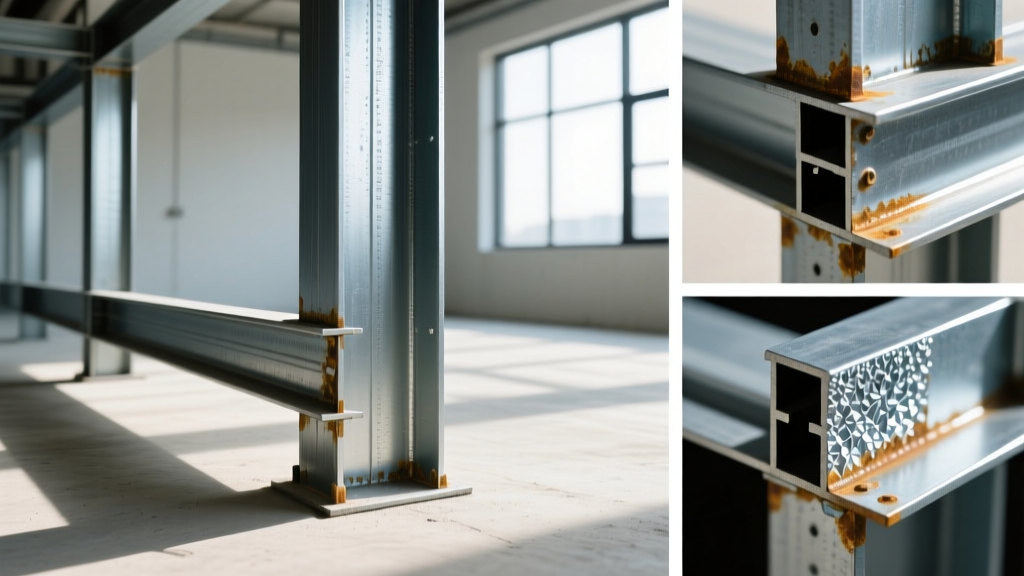
The Structural Stakes of 12 Gauge Steel Framing
In commercial and heavy-duty residential construction, 12 gauge steel framing (approximately 0.1046 inches or 105 mils thick) serves as the backbone for load-bearing walls, exterior shafts, and high-wind shear walls. Unlike lighter 20 or 25 gauge non-structural studs, the structural integrity of 12 gauge members is directly tied to their cross-sectional area. When corrosion compromises this thickness, the load-bearing capacity drops precipitously, leading to potential deflection, fastener pull-through, and structural failure.
Corrosion protection for 12 gauge framing is not merely about aesthetics; it is a critical structural requirement governed by strict building codes and material science. The primary defense is the hot-dip galvanized zinc coating applied during manufacturing, but field conditions, improper material pairing, and poor moisture management can bypass this protection. Understanding the metallurgy of galvanized steel and the environmental factors that degrade it is essential for specifying and installing 12 gauge framing that will last the lifespan of the building.
Decoding Galvanization: G60, G90, and Beyond
The baseline corrosion resistance of steel framing is dictated by its galvanization coating weight, standardized under ASTM A653. The coating is measured in ounces per square foot (oz/ft²) of total surface area (both sides combined). For 12 gauge structural framing, selecting the correct coating weight based on the building's environmental exposure is the first critical decision.
| Coating Designation | Total Zinc Weight (oz/ft²) | Approx. Thickness Per Side (mils) | Recommended Application for 12 Ga. Framing |
|---|---|---|---|
| G60 | 0.60 | 0.50 | Interior, climate-controlled commercial partitions, dry shaft walls. |
| G90 | 0.90 | 0.75 | Exterior load-bearing walls, high-humidity interiors (pools, bathrooms), unconditioned attics. |
| G165 | 1.65 | 1.38 | Coastal zones, heavy industrial environments, agricultural facilities with chemical exposure. |
According to guidelines published by the Steel Framing Industry Association (SFIA), G60 is the industry minimum for interior applications. However, for any 12 gauge framing that forms part of the exterior envelope or is exposed to condensation cycles, G90 is the mandatory specification. The zinc coating acts as both a physical barrier and a sacrificial anode; when scratched, the zinc oxidizes preferentially to the underlying steel, protecting bare edges up to approximately 1/8 inch away from the damage.
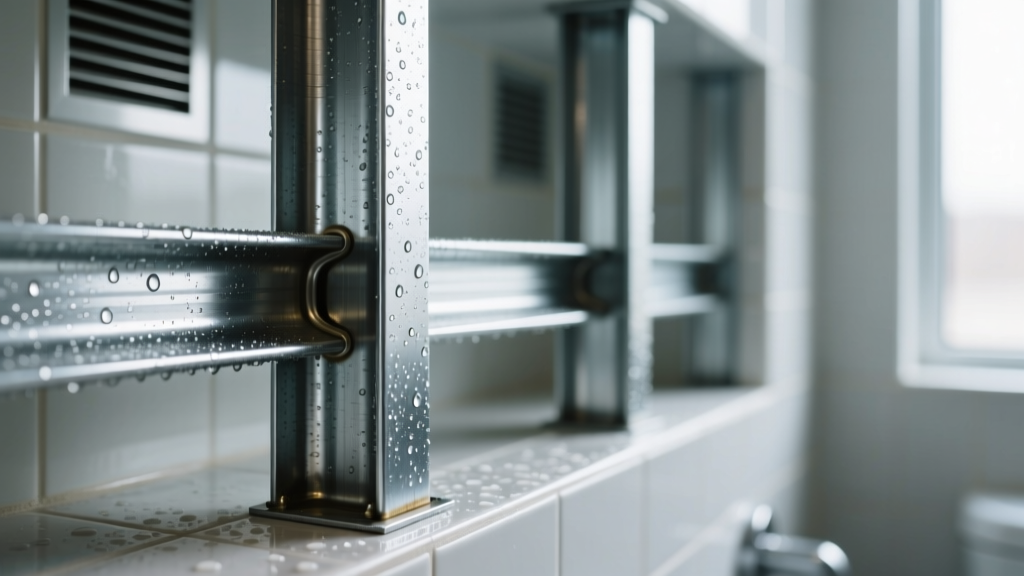
The Hidden Threat: Galvanic Corrosion and Material Pairing
One of the most frequent causes of premature failure in 12 gauge steel framing is galvanic corrosion, which occurs when galvanized steel comes into direct contact with a dissimilar, more noble metal in the presence of an electrolyte (moisture). In this galvanic cell, the zinc coating rapidly sacrifices itself to protect the other metal, leading to localized, aggressive rusting of the steel stud.
Critical Material Incompatibilities
- Copper Flashings and Pipes: Never allow copper roof flashings, HVAC condensate lines, or copper wiring to rest against or drip onto galvanized steel studs. The galvanic potential between zinc and copper is extreme.
- Aluminum Windows and Copings: Direct contact between aluminum sill pans and 12 gauge steel tracks will cause rapid zinc depletion. Always separate these metals using dielectric tape, closed-cell EPDM foam, or heavy-duty peel-and-stick membranes.
- ACQ Pressure-Treated Wood: Modern pressure-treated lumber uses Alkaline Copper Quaternary (ACQ) or Copper Azole preservatives. These chemicals are highly corrosive to zinc. When 12 gauge steel bottom tracks sit on ACQ-treated sill plates, the zinc coating can be consumed in a matter of months.
To mitigate the ACQ lumber threat, installers must use a physical barrier. A minimum 15-mil thick polyethylene sill sealer or a specialized butyl-backed membrane (such as Vycor Protect) must be placed between the treated wood and the steel track. Furthermore, fasteners penetrating the treated wood and into the steel must be hot-dip galvanized or feature a proprietary zinc-flake coating meeting ASTM F1941 standards, rather than standard electroplated screws.
Field Remediation: Protecting Cut Edges and Welds
While the galvanization process coats the entire coil, field modifications inevitably expose bare steel. Cutting 12 gauge studs with abrasive saws generates intense heat that burns off the zinc coating at the kerf, while welding completely destroys the zinc-iron alloy layers in the heat-affected zone. Because 12 gauge steel is thick, the exposed cross-section represents a significant surface area for moisture ingress.
Step-by-Step Field Protection Protocol
- Preparation: Remove any slag, burn marks, or loose debris from the cut edge or weld using a wire brush. Do not grind the steel down to a bright finish, as slight surface profile improves primer adhesion.
- Application: Apply a cold-galvanizing compound. These are not standard 'galv-look' paints; they must contain a minimum of 93% zinc dust by weight in the dry film (e.g., ZRC Cold Galvanizing Compound or Rust-Oleum Cold Galv).
- Thickness Verification: Brush or spray the compound to achieve a minimum dry film thickness (DFT) of 2.0 to 3.0 mils. A single heavy coat is preferable to multiple thin coats to ensure continuous electrical contact with the base steel.
- Curing: Allow the zinc-rich primer to cure fully before enclosing the wall cavity or applying fireproofing sprays, which can trap solvents and cause blistering.
Designing for Moisture Evacuation
Corrosion requires an electrolyte. If water cannot accumulate on the steel, corrosion cannot propagate, even if the zinc coating is compromised. Designing the framing layout to facilitate moisture evacuation is a core tenet of modern building envelope science, heavily emphasized by the American Galvanizers Association.
- Weep Holes in Tracks: Bottom tracks of exterior 12 gauge walls must be slotted or punched with weep holes at 24-inch intervals to allow incidental condensation or wind-driven rain to drain out of the cavity.
- Deflection Tracks: Use slotted deflection tracks at the top of the wall to accommodate structural movement while preventing water pooling at the floor deck above.
- Vapor Retarder Placement: In cold climates, ensure the Class I or II vapor retarder is placed on the warm-in-winter side of the 12 gauge framing to prevent interstitial condensation within the stud cavity. In hot, humid climates, the vapor retarder must be on the exterior, or the cavity must be designed to dry to the interior.
Diagnostic Matrix: Identifying Early-Stage Corrosion
Not all discoloration on 12 gauge steel framing indicates structural failure. Site superintendents and inspectors must differentiate between benign surface oxidation and active section loss.
| Visual Symptom | Technical Diagnosis | Structural Impact | Required Action |
|---|---|---|---|
| Chalky, white, powdery deposits | White Rust (Zinc Hydroxide) | None. The zinc is oxidizing, but the underlying steel is intact. | Improve site ventilation. Wipe with a stiff brush if aesthetics matter. No structural repair needed. |
| Small, isolated brown spots | Early Red Rust | Negligible. Zinc is actively sacrificing itself at a cut edge or scratch. | Monitor. If spots expand, apply cold-galvanizing touch-up paint. |
| Flaking, scaling brown/orange layers | Advanced Red Rust (Section Loss) | Severe. The base 105-mil steel is actively degrading, reducing load capacity. | Engineer evaluation required. Sistering with new studs or complete replacement is usually necessary. |
By strictly adhering to ASTM coating specifications, isolating dissimilar metals, and executing rigorous field protection protocols, contractors can ensure that 12 gauge steel framing delivers its full structural promise without degradation. Proper detailing at the design phase prevents costly remediation and ensures the longevity of the structural envelope.
Written by
Priya KapoorPriya Kapoor is a real estate market analyst and construction economics researcher with expertise in housing affordability, development feasibility, and infrastructure investment. She holds a Master of Regional Planning from Cornell University and previously worked as a senior analyst at CBRE's Investment Properties group, where she modeled returns for $4B in mixed-use development pipelines. Priya now runs an independent research practice advising developers, municipalities, and REITs on construction cost forecasting and market timing. She publishes the quarterly "BuildMat Market Pulse" report tracking material price indices across 12 commodity categories. Based in Austin, TX, Priya serves on the board of Habitat for Humanity Austin and is a marathon runner.
More from Priya Kapoor
View all
Construction Cost
Cost to Build a 1600 Sq Ft Home in 2026: Full Breakdown
Accurate 2026 cost to build a 1600 sq ft home—material, labor, and regional pricing breakdowns included. Plan your budget with real-time estimates.
Aug 11, 2026

Wood & Lumber
Name the Types of Wood for Pressure Treatment and Preservation
Learn how to name the types of wood best suited for pressure treatment. Compare species treatability, chemical retention levels, and 2026 preservation costs.
Aug 4, 2026

Stone & Masonry
Stone Veneer Suppliers Lindenhurst: 2026 Cost Analysis
Analyze 2026 stone veneer costs in Lindenhurst, NY. Compare local supplier pricing, delivery fees, and Suffolk County installation labor rates.
Aug 4, 2026