Best Class a Fire Extinguisher Wood Paper Fabric
Discover what type of fire extinguisher is used for wood, paper, and fabric. Compare Class A options and protect your space. Read our expert guide now!

A Class A fire extinguisher is the correct type used for wood, paper, and fabric fires. Specifically, pressurized water, water mist, foam, and multipurpose dry chemical (ABC) extinguishers effectively cool and suppress ordinary combustible materials. This guide is designed for homeowners, woodworkers, and facility managers seeking to protect spaces with high concentrations of ordinary combustibles.
Key Takeaways
- Class A extinguishers are mandatory for wood, paper, and fabric fires.
- Pressurized water and water mist provide the deepest cooling penetration for solid fuels.
- Multipurpose dry chemical (ABC) offers versatility but leaves a corrosive residue.
- Numerical ratings (e.g., 2-A, 12-A) indicate the square footage of fire the unit can suppress.
Understanding Class A Fire Extinguishers
A Class A fire involves ordinary combustible materials such as wood, paper, cloth, rubber, and certain plastics. These fires leave an ash residue after burning. Extinguishing them requires cooling the fuel source below its ignition temperature using water, foam, or specific chemical agents.
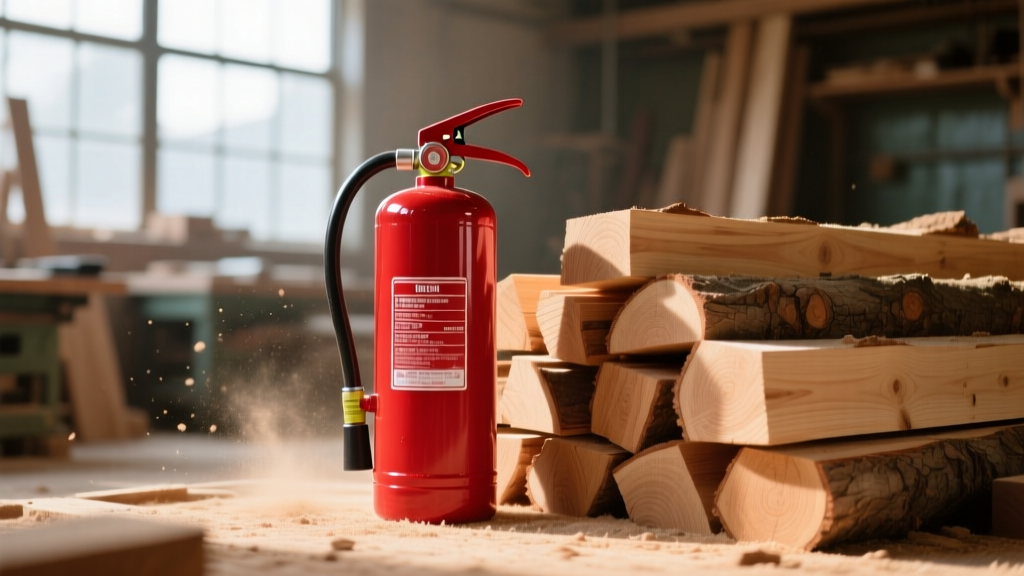
According to the National Fire Protection Association (NFPA) 10 Standard, facilities storing ordinary combustibles must maintain Class A rated extinguishers. Relying on Class B (flammable liquids) or Class C (electrical) specific units will fail to penetrate the deep-seated embers typical of burning wood.
Comparing Extinguisher Types for Wood
Pressurized Water and Water Mist
Water remains the most effective agent for wood fires due to its high latent heat of vaporization. When water hits burning lumber, it absorbs massive amounts of thermal energy, dropping the wood temperature below its ignition point. Water mist variants use deionized water and fine nozzles, making them safe for use near energized electrical equipment up to 100,000 volts.
Aqueous Film Forming Foam (AFFF)
Foam extinguishers blanket the burning wood, cutting off the oxygen supply while the water content cools the fuel. This dual-action makes foam highly effective for preventing reignition in woodworking shops where sawdust accumulation poses a secondary flash hazard.
Multipurpose Dry Chemical (ABC)
Multipurpose dry chemical extinguishers use a monoammonium phosphate agent to suppress Class A, B, and C fires. When applied to burning wood, the chemical melts at approximately 350°F, creating a sticky barrier that separates the fuel from oxygen and halts the combustion chain reaction. However, the residue is highly corrosive and can ruin precision woodworking machinery.
Comparison Matrix: Best Extinguishers for Wood, Paper, and Fabric
| Extinguisher Type | Primary Mechanism | Residue Level | Best Use Case |
|---|---|---|---|
| Pressurized Water | Cooling | None | Lumber yards, paper storage |
| Water Mist | Cooling | None | Historic buildings, fabric archives |
| AFFF Foam | Smothering/Cooling | Low | Woodworking shops, garages |
| ABC Dry Chemical | Chemical Inhibition | High (Corrosive) | General commercial, mixed hazards |
Sizing and Rating Requirements
The numerical rating on a Class A extinguisher dictates its maximum coverage area. A 2-A rated extinguisher covers 25 square feet of fire, while a 12-A rating covers 150 square feet. The Occupational Safety and Health Administration (OSHA) Portable Fire Extinguisher Guidelines mandate that employees must not have to travel more than 75 feet to access a Class A unit.
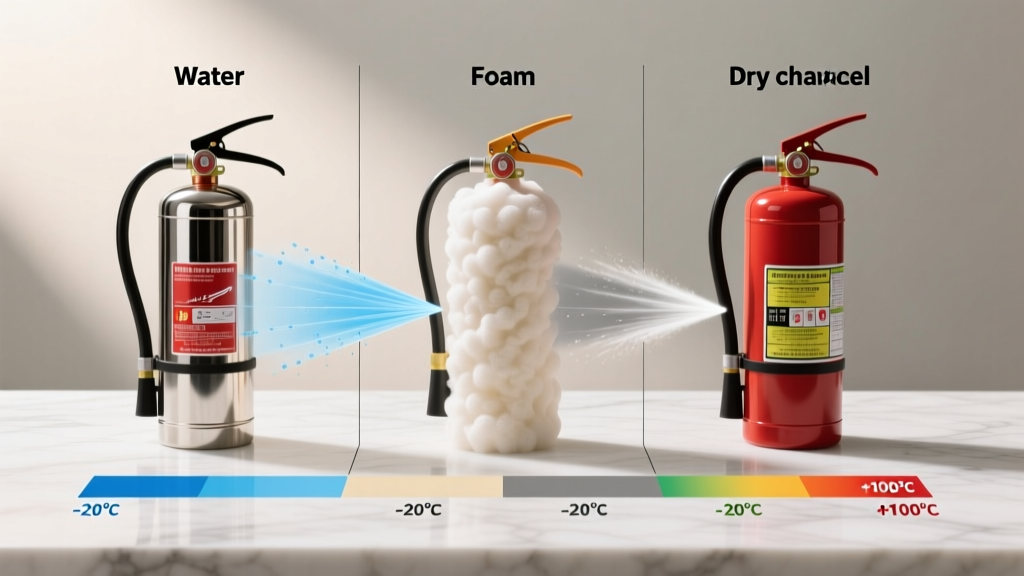
For a standard 2.5-gallon water extinguisher, expect a 15-foot discharge range and an operating temperature minimum of 40°F. If your woodshop drops below freezing in winter, you must install antifreeze-loaded water units or switch to ABC dry chemical canisters, which function down to -40°F.
Frequently Asked Questions
What extinguisher for woodworking shop environments is safest for tools?
AFFF foam or water mist extinguishers are safest for woodworking shops. Unlike ABC dry chemical units, foam and water leave minimal corrosive residue, preventing catastrophic damage to expensive lathes, table saws, and CNC routers.
Water vs foam for wood fires: which is more effective?
Water provides deeper cooling penetration into thick timber, while foam excels at smothering surface-level sawdust and preventing reignition. For solid structural wood, water is superior; for finish carpentry and dust-heavy environments, foam offers better secondary protection.
Can I use CO2 on wood fires?
Carbon dioxide (CO2) extinguishers are ineffective on wood fires. CO2 displaces oxygen but lacks the cooling capacity to lower the temperature of deep-seated wood embers. Once the gas dissipates, the hot wood will immediately reignite upon contact with ambient oxygen.

Conclusion and Next Steps
Selecting the correct Class A fire extinguisher ensures rapid suppression of wood, paper, and fabric fires. Your immediate next step is to audit your current fire safety equipment, verify the UL rating on your existing units, and replace any expired or incorrectly classed canisters today.
Written by
Priya KapoorPriya Kapoor is a real estate market analyst and construction economics researcher with expertise in housing affordability, development feasibility, and infrastructure investment. She holds a Master of Regional Planning from Cornell University and previously worked as a senior analyst at CBRE's Investment Properties group, where she modeled returns for $4B in mixed-use development pipelines. Priya now runs an independent research practice advising developers, municipalities, and REITs on construction cost forecasting and market timing. She publishes the quarterly "BuildMat Market Pulse" report tracking material price indices across 12 commodity categories. Based in Austin, TX, Priya serves on the board of Habitat for Humanity Austin and is a marathon runner.
More from Priya Kapoor
View all
Construction Cost
Cost to Build a 1600 Sq Ft Home in 2026: Full Breakdown
Accurate 2026 cost to build a 1600 sq ft home—material, labor, and regional pricing breakdowns included. Plan your budget with real-time estimates.
Aug 11, 2026

Wood & Lumber
Name the Types of Wood for Pressure Treatment and Preservation
Learn how to name the types of wood best suited for pressure treatment. Compare species treatability, chemical retention levels, and 2026 preservation costs.
Aug 4, 2026

Stone & Masonry
Stone Veneer Suppliers Lindenhurst: 2026 Cost Analysis
Analyze 2026 stone veneer costs in Lindenhurst, NY. Compare local supplier pricing, delivery fees, and Suffolk County installation labor rates.
Aug 4, 2026