Wood Preservation at Westside Building Materials Oakland: 2026 Guide
Guide to wood treatment and preservation for timber from Westside Building Materials Oakland. Covers sealing, borates, and Bay Area climate tips.

The Bay Area Microclimate Challenge for Structural Timber
Sourcing high-quality, dense-grain, and reclaimed timber from local hubs like Westside Building Materials Oakland provides Bay Area contractors with exceptional structural and aesthetic wood. However, the Oakland microclimate—characterized by heavy marine layer moisture, salt-laden coastal winds, and intense, dry summer UV exposure—creates a highly aggressive environment for exterior and semi-exposed wood. Standard preservation methods that work in inland or humid-continental climates often fail here, leading to premature checking, tannin bleed, and fungal decay.
This guide details the specific treatment protocols, chemical preservatives, and moisture management strategies required to protect lumber sourced from local Oakland suppliers, ensuring longevity in coastal-adjacent builds.
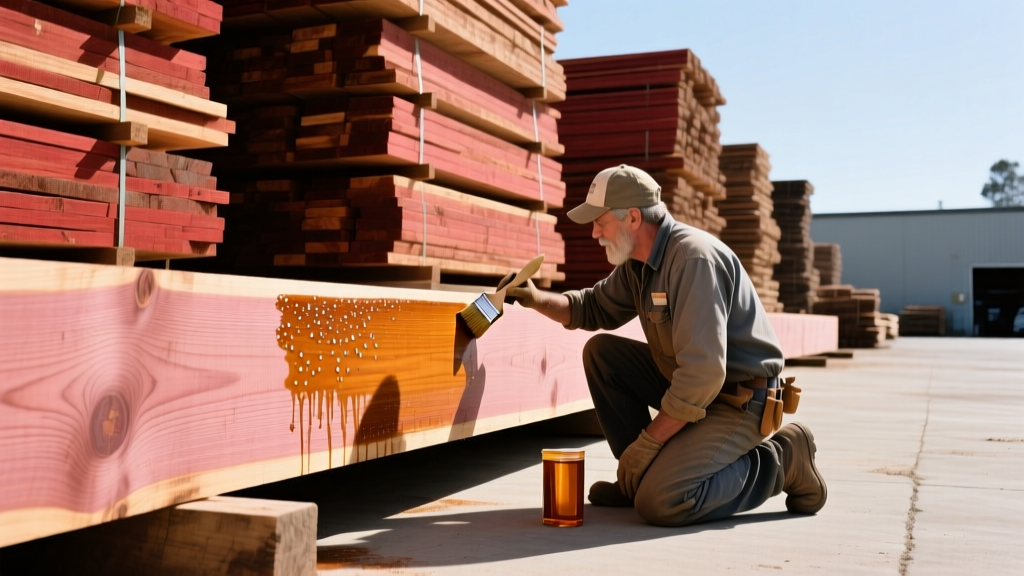
Species Profile and Preservation Matrix
Different species react uniquely to the Bay Area's wet-dry cycling. Below is a preservation matrix for the most common structural and finish woods sourced locally.
| Wood Species | Natural Durability (Heartwood) | Primary Vulnerability in Oakland | Recommended AWPA Use Category | Optimal Treatment Strategy |
|---|---|---|---|---|
| Old-Growth Redwood | High (Decay resistant) | UV degradation, tannin bleed, surface checking | UC3B (Above Ground) | Oxalic acid brightener + UV-inhibiting penetrating oil |
| Western Red Cedar | Moderate-High | Moisture trapping in end-grain, black mildew staining | UC3B / UC4A (Ground Contact) | End-grain sealing + borate diffusion treatment |
| Douglas Fir (Structural) | Low-Moderate | Wood-boring insects, rot at beam-to-post connections | UC4A (Ground Contact) | Copper naphthenate (green) or heavy borate saturation |
| Reclaimed Mixed Oak | Moderate | Iron-tannin reaction (black staining) with fasteners | UC2 (Interior / Protected) | Stainless steel hardware only + clear water-based alkyd |
Managing Reclaimed Redwood and Cedar
Reclaimed timber sourced through local yards often possesses a high extractive content. When exposed to the alkaline moisture typical of Bay Area fog and concrete contact, these extractives (tannins) leach to the surface, creating dark, unsightly streaks. According to the USDA Forest Products Laboratory Wood Handbook, tannin bleed cannot be sealed in with standard primers. The wood must first be treated with an oxalic acid-based wood brightener to neutralize the tannins, followed by a thorough rinsing and drying cycle before any hydrophobic sealer is applied.
Protecting Structural Douglas Fir Beams
Douglas Fir is highly susceptible to moisture intrusion through its end-grain. When structural beams are cut on-site to fit steel post bases or concrete piers, the exposed end-grain acts as a straw, wicking moisture deep into the heartwood. Applying a wax-based end-sealer like Anchorseal 2 immediately after cutting reduces end-checking and moisture uptake by up to 90%.
4-Step Treatment Protocol for Coastal-Adjacent Builds
To achieve maximum service life for exterior wood in Oakland's climate, follow this sequential treatment protocol. Skipping steps compromises the entire system.
- Moisture Metering and Acclimation: Do not apply any preservative until the wood's internal moisture content (MC) stabilizes between 12% and 15%. Use a pinless moisture meter (e.g., Wagner Meters Orion 910) calibrated to the specific gravity of your wood species. Applying oil-based sealers to wood with an MC above 18% traps moisture, guaranteeing sub-surface fungal growth.
- Borate Pre-Treatment (For Vulnerable Species): For Douglas Fir or sapwood-heavy cedar, apply a disodium octaborate tetrahydrate (DOT) solution like Bora-Care. Borates are highly effective against drywood termites and decay fungi. Apply at a rate of 1 gallon per 800 board feet for above-ground applications. Borates are water-soluble, so this step must occur before final water-repellent sealing.
- Surface Preparation and Brightening: If the wood has been exposed to the elements or is reclaimed, scrub the surface with an oxalic acid wood brightener. This opens the wood pores, removes surface oxidation, and neutralizes tannins. Rinse with low pressure (under 800 PSI) to avoid furring the grain.
- Penetrating Oil Application: Apply a BAAQMD-compliant, UV-stabilized penetrating oil (e.g., Penofin Hardwood Formula or Sikkens Proluxe Cetol SRD). Unlike film-forming polyurethanes that peel and blister in the coastal sun, penetrating oils soak into the wood fibers and repel water without creating a surface film. Apply via HVLP sprayer and back-brush immediately to ensure even saturation.
Chemical Preservatives: Borates vs. Copper vs. Oils
Selecting the right chemical treatment depends on the wood's exposure level and structural role. The EPA's guidelines on wood preservatives categorize these chemicals based on their toxicity and environmental impact, which is heavily regulated in California.
| Treatment Type | Active Ingredient | Best Use Case | Pros | Cons |
|---|---|---|---|---|
| Borate Diffusion | Disodium Octaborate Tetrahydrate (DOT) | Interior framing, protected exterior beams, termite zones | Colorless, odorless, highly toxic to insects/fungi, low human toxicity | Water-soluble; will leach out if exposed to direct rain without a topcoat |
| Copper Naphthenate | Copper (Cu) | Ground contact posts, sill plates, retaining walls | Exceptional rot resistance, waterproof, AWPA UC4A rated | Strong odor, dark green color (requires painting or hiding), high VOCs |
| Penetrating Alkyd-Oil | Alkyd resins, linseed/tung oil, UV blockers | Exterior siding, decks, architectural beams | Enhances grain, sheds water, UV protection, no peeling | Requires reapplication every 2-4 years, susceptible to mildew if shaded |
2026 Material and Application Cost Breakdown
Budgeting for wood preservation requires accounting for both the chemical treatments and the labor required for proper surface preparation. Below are the estimated 2026 costs for the Bay Area market.
| Treatment / Material | Unit of Measure | Material Cost (2026) | Labor Cost (Bay Area) | Total Estimated Cost |
|---|---|---|---|---|
| Borate Solution (Bora-Care) | Per Gallon (covers ~800 bf) | $85.00 - $95.00 | $1.50 / sq ft | Varies by volume |
| Wax End-Sealer (Anchorseal) | Per Gallon | $45.00 - $55.00 | N/A (Applied by framer) | $0.15 / linear ft |
| Oxalic Acid Brightener | Per Gallon (concentrate) | $35.00 - $45.00 | $1.25 / sq ft | $1.75 / sq ft |
| Penetrating Oil Sealer (VOC Compliant) | Per Gallon (covers ~300 sq ft) | $75.00 - $110.00 | $2.50 - $3.50 / sq ft | $2.75 - $3.85 / sq ft |
Troubleshooting Common Preservation Failures
Even with high-quality lumber from Westside Building Materials Oakland, improper application leads to specific failure modes. Use this diagnostic matrix to identify and correct issues.
- Symptom: Milky white haze or 'blushing' under the sealer.
Cause: Moisture was trapped beneath the penetrating oil, or the oil was applied when ambient humidity exceeded 85% (common during Oakland summer mornings).
Fix: Allow the wood to dry completely. If the haze persists, lightly sand the affected area and reapply a thin coat of oil mixed with a solvent to re-emulsify the trapped moisture. - Symptom: Dark black or blue staining around fastener holes.
Cause: Iron-tannin reaction. Galvanized or zinc-coated fasteners were used on high-tannin woods like redwood or oak.
Fix: Remove the fasteners. Clean the stains with an oxalic acid solution. Re-fasten using 304 or 316-grade stainless steel hardware. - Symptom: Deep longitudinal splitting (checking) on beam ends.
Cause: End-grain was left unsealed, causing rapid moisture loss compared to the face-grain.
Fix: Checking cannot be fully reversed. Clean the checks, inject a flexible polyurethane sealant to prevent water pooling, and heavily saturate the end-grain with a wax-based sealer.
FAQs on Local Lumber Sourcing and Maintenance
How often should exterior penetrating oils be reapplied in the Bay Area?
South-facing and west-facing elevations exposed to direct afternoon sun and salt spray typically require reapplication every 24 to 36 months. North-facing and heavily shaded elevations may last 48 to 60 months, though shaded wood is more prone to mildew and may require a borate pre-treatment during the maintenance cycle.
Can I use pressure-treated lumber instead of treating raw timber?
While pressure-treated Southern Yellow Pine is available, it lacks the structural span capabilities and aesthetic qualities of local Douglas Fir or Redwood. Furthermore, modern pressure treatments (like Micronized Copper Azole) can be highly corrosive to standard aluminum flashing and fasteners, requiring expensive hot-dipped galvanized or stainless steel hardware. Treating raw, locally sourced timber with borates and penetrating oils offers superior structural performance and architectural flexibility.
For further reading on industry standards for wood preservation and retention levels, consult the American Wood Protection Association (AWPA) Book of Standards.
Written by
David NakamuraDavid Nakamura is a licensed architect (AIA) and construction technology writer focused on sustainable building methods, mass timber engineering, and high-performance building envelopes. He holds a Master of Architecture from the University of Washington and is a certified Passive House Consultant (CPHC). David spent eight years at the Seattle firm Mithun, where he led the design of three LEED Platinum projects, before founding his own practice specializing in net-zero residential design. He serves on the editorial advisory board of GreenBuilder Magazine and has authored peer-reviewed papers on cross-laminated timber (CLT) connections for the Journal of Structural Engineering. In his spare time, David teaches woodworking at Pratt Fine Arts Center and kayaks the Puget Sound.
More from David Nakamura
View all
Construction Cost
Labor Cost to Build a Deck Per Sq Ft: 2026 Installation Guide
Discover the exact labor cost to build a deck per sq ft in 2026. This installation guide breaks down contractor rates, complexity factors, and hidden fees.
Aug 4, 2026

Construction Cost
How Much Does It Cost to Build a 3 Bedroom House? Financing Guide
Learn exactly how much it costs to build a 3 bedroom house and explore 2026 financing options, construction loan types, and budget frameworks for your build.
Aug 4, 2026

Construction Cost
Cost to Build a Tennis Court: 2026 Guide
How much does it cost to build a tennis court in 2026? Breakdowns for asphalt, concrete, and synthetic surfaces plus fencing and lighting.
Jul 30, 2026