Grading the Best Types of Wood Siding for Homes: A Quality Guide
Master lumber grades for exterior cladding. Compare pricing, moisture specs, and quality tiers for the top types of wood siding for homes.

The Hierarchy of Wood Siding Grades: Decoding Industry Standards
Selecting the right exterior cladding requires looking past surface aesthetics to evaluate structural integrity and milling precision. The performance, paintability, and lifespan of the most popular types of wood siding for homes are dictated by strict grading rules established by organizations like the National Lumber Grades Authority (NLGA) and the Western Wood Products Association (WWPA). Understanding these tiers is the only way to ensure you are not overpaying for unnecessary perfection or under-specifying for critical weather exposure.
Softwood siding grades are broadly divided into two categories: Clear Grades (intended for paint and high-end natural finishes) and Knotty Grades (intended for stains and rustic aesthetics). According to the Western Wood Products Association, the grading hierarchy for clear siding is as follows:
- Grade A (Clear All Heart): 100% clear heartwood on the exposed face. No knots, splits, or wane. Extremely rare and expensive; used primarily for premium clear-finished applications.
- Grade B (Clear): One face completely clear. The reverse face may contain minor defects that do not affect structural integrity or the finished appearance.
- Grade C (Select): The standard for high-quality painted siding. Allows for minor pin knots and slight imperfections that will be completely hidden beneath primer and topcoats.
- Grade D (Utility Clear): Permits larger knots and minor wane. Suitable for utility structures or applications where a rustic painted look is acceptable.
Evaluating Species-Specific Quality Metrics
Different wood species have unique grading nuances that directly impact their viability as exterior cladding. The USDA Forest Products Laboratory emphasizes that cellular structure and natural extractive content vary wildly by species, meaning a 'Grade B' in Cedar performs differently than a 'Grade B' in Pine.
Western Red Cedar and Redwood
For premium dimensional stability and natural rot resistance, Western Red Cedar and California Redwood dominate the market. The Real Cedar association outlines that for natural, unpainted finishes, you must specify Select Tight Knot (STK) or higher. STK guarantees that all knots are solid, tightly fixed, and will not fall out over time. Avoid 'Quality Knotty' grades for horizontal lap siding, as loose knots will create moisture intrusion points when they inevitably drop out due to seasonal shrinkage.
Spruce-Pine-Fir (SPF) and Southern Yellow Pine
SPF and Southern Yellow Pine are highly economical but lack natural decay resistance. When using these species, you must specify Pressure-Treated (PT) cladding rated for above-ground use (UC3B) or apply a rigorous factory-applied primer envelope. For Pine, insist on 'D & Better' (D & Btr) grades to minimize the occurrence of pitch pockets, which can bleed through paint films when exposed to direct solar heat.
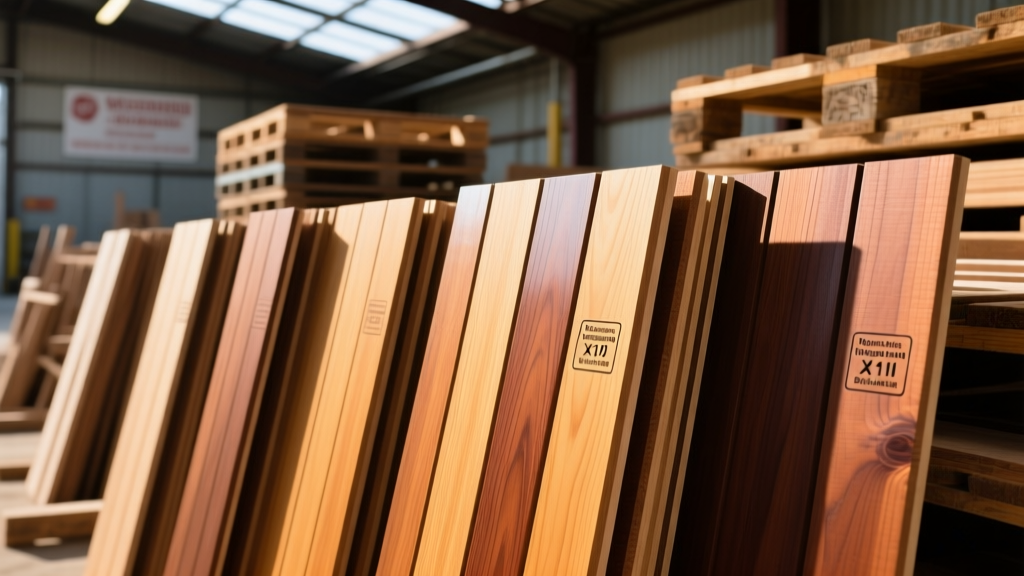
Moisture Content and Milling Tolerances: The Hidden Metrics
Lumber grade is only half the quality equation. Moisture content (MC) at the time of installation dictates whether your siding will cup, check, or gap. The industry standard for exterior wood siding is Kiln-Dried (KD) to 12% - 15% MC.
Equally critical is the milling profile tolerance. High-quality siding features precise interlocking profiles that shed bulk water. The most reliable profiles for horizontal applications include:
- Tongue-and-Groove (T&G): Provides the tightest seal and highest wind-driven rain resistance. Requires a minimum 1/2-inch tongue engagement.
- Shiplap: Features overlapping rabbeted edges. Excellent for shedding water while allowing for slight lateral expansion without exposing the substrate.
- Bevel (Clapboard): Tapered profile. Ensure the 'thin edge' is a minimum of 3/16-inch to prevent edge-curling (feather-edge checking) during dry winter months.
2026 Pricing Breakdown: What You Pay for Premium Grades
Material costs fluctuate based on timber harvest yields and milling demand. Below is a current market matrix detailing the installed and material-only costs for the most common types of wood siding for homes, segmented by grade and species.
| Species & Grade | Milling Profile | Material Cost (per sq. ft.) | Best Application |
|---|---|---|---|
| Clear A Western Red Cedar | T&G / Bevel | $11.50 - $16.00 | Premium natural stain finishes |
| Select Tight Knot (STK) Cedar | Shiplap / Bevel | $6.50 - $9.00 | Semi-transparent stain applications |
| Clear All Heart Redwood | Bevel | $14.00 - $21.00 | High-end coastal or luxury builds |
| Grade C Select SPF (Primed) | Shiplap | $3.50 - $5.50 | Painted traditional exteriors |
| Southern Yellow Pine (PT UC3B) | Channel Rustic | $4.00 - $6.00 | Humid climates, painted or stained |
Common Failure Modes and Grade-Selection Prevention
Improper grade selection leads to specific, predictable failure modes. Use this diagnostic framework to match your environmental challenges with the correct lumber specifications.
Symptom: Extractive Bleeding (Brown stains weeping through paint)
Cause: Using flat-sawn boards with high sapwood content or failing to specify 'Vertical Grain' (VG) or 'All Heart' grades in Cedar and Redwood. Water-soluble tannins migrate through latex primers.
Solution: Specify Clear All Heart (Grade A) or Vertical Grain (VG) lumber. VG boards expose the dense, low-porosity edge-grain to the weather, drastically reducing tannin leaching and moisture absorption.
Symptom: Severe Cupping and Warping
Cause: Installing wide-profile bevel siding (8-inch exposure or greater) cut from the pith (center) of the log, or installing material with >19% MC.
Solution: Limit bevel siding exposure to a maximum of 6 inches for flat-sawn boards. For wider exposures, mandate Quarter-Sawn (QS) or Vertical Grain milling, which restricts tangential shrinkage to near zero.
Symptom: Premature Paint Peeling at Joints
Cause: Utilizing 'Utility' grades with excessive wane (bark edge) on the overlapping joints, creating capillary draws that trap water.
Solution: Strictly enforce Grade C or Better with a 'No Wane' specification on all shiplap and T&G profiles.
Expert Procurement Checklist for Contractors and Homeowners
Before signing a material purchase order for wood siding, verify the following specifications on the invoice to ensure you receive the exact quality tier required for your project:
- Grade Stamp Verification: Ensure the invoice explicitly states the NLGA or WWPA grade (e.g., 'WWPA Grade C Select', not just 'Premium Pine').
- Moisture Content Designation: Look for 'KD15' or 'KD19' on the grading stamp. Reject any bundles stamped 'S-GRN' or 'MC15' (Moisture Content 15% or higher, which is too wet for immediate priming).
- Grain Orientation: If specifying Vertical Grain, ensure the contract states 'VG 90%' or 'VG 100%', meaning 90-100% of the growth rings must intersect the face at a 45-to-90-degree angle.
- Pre-Priming Requirements: If ordering factory-primed siding, mandate an alkyd-oil or high-solids acrylic primer applied to all six sides (including end cuts and the reverse face) within 48 hours of milling to prevent tannin lock-in.
- Waste Factor Calculation: For Clear grades, order a 5% waste factor. For Knotty or Rustic grades, order a 10-12% waste factor to account for cutting around structural defects and loose knots during installation.
"The longevity of a wood-clad structure is rarely determined by the thickness of the paint, but rather by the cellular orientation and moisture equilibrium of the lumber beneath it. Specifying the correct grade and grain orientation is the most cost-effective weatherproofing measure a builder can execute." — USDA Forest Products Laboratory, Wood Handbook Guidelines.
By prioritizing precise grading standards, moisture metrics, and species-specific milling profiles, you ensure that the types of wood siding for homes you select will deliver decades of structural resilience and aesthetic excellence, justifying the initial material investment.
Written by
David NakamuraDavid Nakamura is a licensed architect (AIA) and construction technology writer focused on sustainable building methods, mass timber engineering, and high-performance building envelopes. He holds a Master of Architecture from the University of Washington and is a certified Passive House Consultant (CPHC). David spent eight years at the Seattle firm Mithun, where he led the design of three LEED Platinum projects, before founding his own practice specializing in net-zero residential design. He serves on the editorial advisory board of GreenBuilder Magazine and has authored peer-reviewed papers on cross-laminated timber (CLT) connections for the Journal of Structural Engineering. In his spare time, David teaches woodworking at Pratt Fine Arts Center and kayaks the Puget Sound.
More from David Nakamura
View all
Construction Cost
Labor Cost to Build a Deck Per Sq Ft: 2026 Installation Guide
Discover the exact labor cost to build a deck per sq ft in 2026. This installation guide breaks down contractor rates, complexity factors, and hidden fees.
Aug 4, 2026

Construction Cost
How Much Does It Cost to Build a 3 Bedroom House? Financing Guide
Learn exactly how much it costs to build a 3 bedroom house and explore 2026 financing options, construction loan types, and budget frameworks for your build.
Aug 4, 2026

Construction Cost
Cost to Build a Tennis Court: 2026 Guide
How much does it cost to build a tennis court in 2026? Breakdowns for asphalt, concrete, and synthetic surfaces plus fencing and lighting.
Jul 30, 2026